
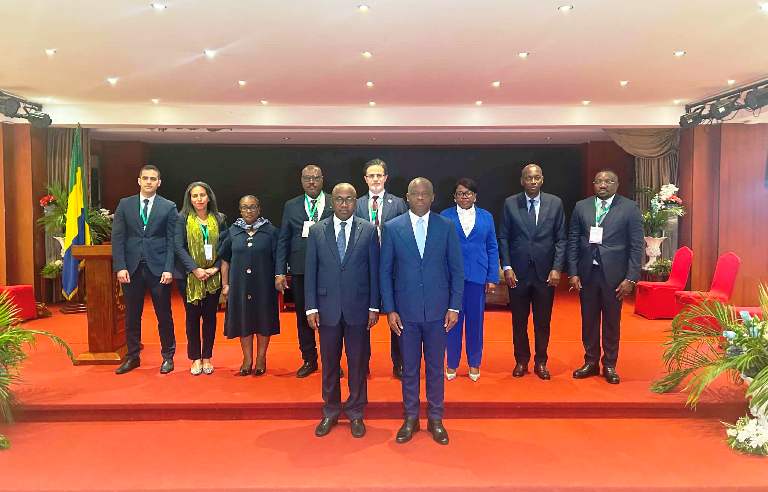
The government of Gabon has taken a significant step forward in its fight against corruption by launching a four-day direct dialogue in Libreville on June 29, 2026. This session marks the second cycle of the country’s evaluation under the United Nations Convention against Corruption (UNCAC) mechanism.
The event, chaired by Vice-President of the Government Hermann Immongault, brought together technical experts from various Gabonese ministries, international partners, and officials from the United Nations Office on Drugs and Crime (UNODC). Their mission: to assess the nation’s progress in preventing and combating corruption, with a sharp focus on transparency and accountable governance.
Gabon has been a signatory to the UNCAC since October 1, 2007, and has since pursued sweeping reforms to strengthen institutional integrity. Speaking at the opening, Immongault emphasized the pivotal role of integrity in driving economic growth, safeguarding investments, and fostering sustainable development. « Public integrity enhances government performance, secures investments, boosts economic competitiveness, and lays the groundwork for inclusive, fair development », he stated.
Evaluating progress and shaping future policies
This evaluation, running from June 29 to July 1, 2026, is part of a structured peer-review process conducted every five years. Unlike the first cycle in 2010—which focused on criminalization, law enforcement, and international cooperation—the current review zeroes in on preventive measures and asset recovery, two critical pillars of the UNCAC.
Séraphin Ondoumba, UNODC focal point and member of Gabon’s National Commission against Corruption and Illicit Enrichment (CNLCEI), highlighted the broader significance of the dialogue. « This direct exchange is more than a technical assessment; it’s a platform to strengthen cooperation among states and promote best practices in corruption prevention », he noted.
Mohamed Cherbal, UNODC Chief of Mission, underscored the depth of the review. « Over the next four days, our team will conduct an in-depth analysis of Gabon’s anti-corruption frameworks, with special attention to preventive measures and asset recovery mechanisms », he explained.
From assessment to actionable reform
Nestor Mbou, President of the CNLCEI, framed the dialogue as a cornerstone for continuous improvement. « This session is not just about measuring legal or institutional progress; it’s about identifying strengths, addressing gaps, and crafting concrete recommendations to accelerate our national strategy », he asserted.
The outcomes of this evaluation will guide future reforms, aiming to bolster national prevention, oversight, and recovery systems. The ultimate goal: a more transparent, efficient, and citizen-responsive administration.