Gabon: african diplomacy takes center stage in mbanié island dispute
Gabon : Mbanié, l’heure du règlement africain
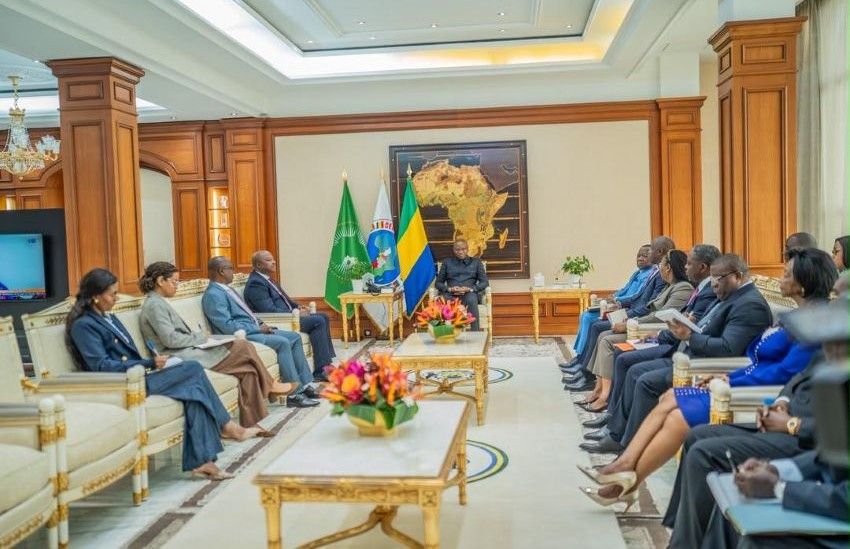
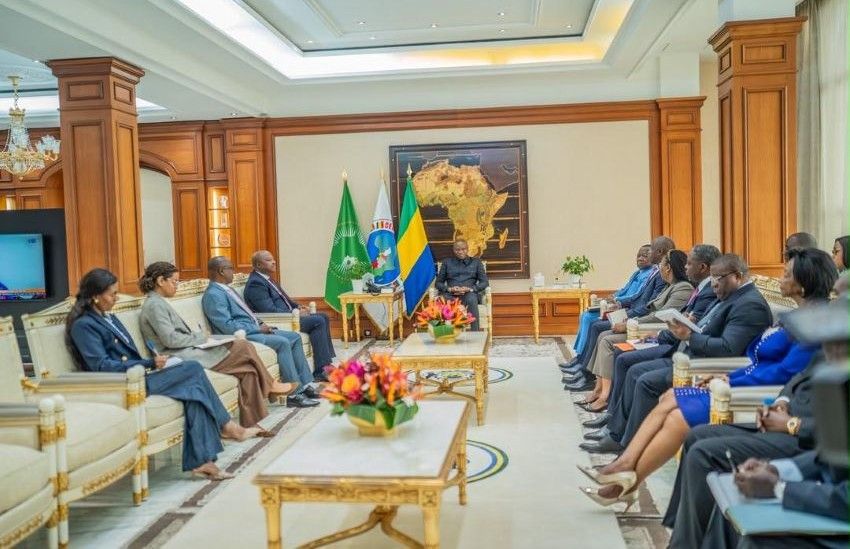
Libreville, Friday, July 10, 2026 – The enduring territorial disagreement between Gabon and Equatorial Guinea concerning Mbanié island has resurfaced as a key item on the African diplomatic agenda. In Libreville, Gabonese President Brice Clotaire Oligui Nguema recently hosted Albert Shingiro, the special envoy representing the Chairperson of the African Union Commission. Shingiro’s visit aimed to evaluate the progress of efforts to resolve one of Central Africa’s most sensitive border disputes.
This engagement signifies a crucial phase in the African Union’s deepening involvement in a matter previously dominated by international legal procedures and bilateral tensions. It underscores a firm political commitment to position African mediation strategies at the forefront of managing the continent’s strategic disagreements.
Far from being merely a land claim, Mbanié has become emblematic of an evolving African diplomacy, striving to address continental crises through constructive dialogue rather than confrontation.
A minuscule island with considerable stakes
Though Mbanié island spans only a few hectares within the Gulf of Guinea, its geopolitical significance far outweighs its diminutive size.
The contention between Libreville and Malabo dates back to the 1970s and extends to the neighboring islets of Conga and Cocotiers. At the heart of this territorial rivalry lie substantial maritime interests, particularly the demarcation of exclusive economic zones and potential access to the region’s rich oil, gas, and fisheries resources.
The Gulf of Guinea currently stands as one of Africa’s most strategically vital maritime regions, accounting for a significant portion of the continent’s oil output and serving as a critical corridor for global trade.
Consequently, asserting control over these maritime areas has become paramount for national sovereignty and economic security. For decades, both nations have presented their respective cases before various international bodies, consistently exercising diplomatic restraint to avert military escalation. This cautious approach has prevented the Mbanié dossier from becoming a source of regional instability.
The African Union champions an African solution
Albert Shingiro’s mission aligns with a broader strategic vision championed by the African Union. The continental organization is actively seeking to enhance its involvement in resolving border disputes among member states, aiming to reduce the automatic reliance on external judicial bodies for African crises.
This guiding principle is founded on a straightforward belief: that African solutions, rooted in dialogue, mediation, and political compromise, offer the most enduring outcomes for African challenges.
During the discussions with the Gabonese head of state, all parties reiterated their unwavering commitment to the tenets of international law, the respect for established borders, and the peaceful conflict resolution mechanisms outlined in the African Union Charter.
Libreville, for its part, reaffirmed its readiness to pursue negotiations with a spirit of responsibility and regional cooperation. This position holds considerable weight in a region where several border disputes continue to fuel political tensions.
Gulf of Guinea stability at stake
The resolution of the Mbanié dossier extends beyond the immediate interests of Gabon and Equatorial Guinea, emerging as a critical factor for the stability of the entire Gulf of Guinea.
This region already confronts numerous security challenges, including maritime piracy, illicit trafficking, transnational criminal networks, and the inherent risks associated with competition over energy resources. In such a complex environment, any territorial ambiguity introduces an additional layer of vulnerability.
Conversely, a successfully negotiated settlement would significantly bolster regional economic cooperation, secure international investments, and cultivate a more conducive atmosphere for the advancement of energy and port infrastructure.
For Gabon, the stakes are also diplomatic; by championing consultation and multilateral mechanisms, Libreville seeks to solidify its reputation as a dependable partner, committed to international law and regional peace.
The African Union, in turn, has substantial institutional credibility riding on this outcome. Should Mbanié find a lasting resolution through African mediation, it would establish a powerful precedent, showcasing the continent’s capability to independently manage its strategic disagreements.
Across the Gulf of Guinea and beyond, sovereignty is increasingly defined not merely by the ability to defend borders, but by the capacity to foster peace around them.
