
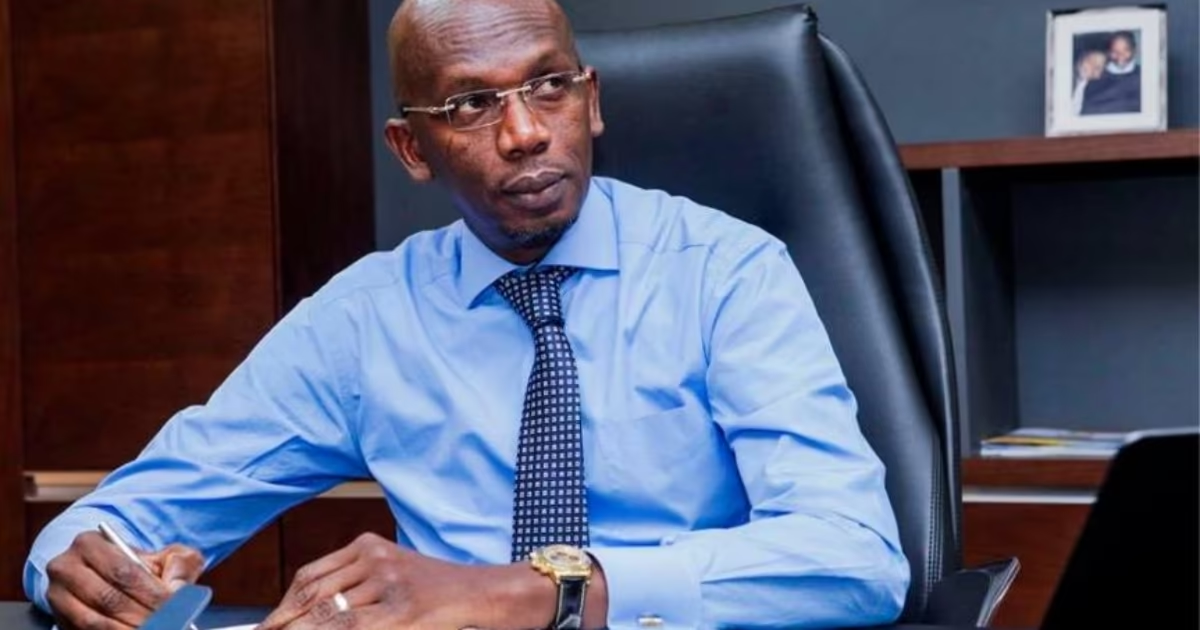
Lansana Gagny Sakho slams Ousmane Sonko: “He never embraced the Republic”
Following the political transition in Senegal, he revealed turning down a high-profile appointment to uphold his core beliefs.
Once a close associate of Ousmane Sonko and now a prominent figure in Kiiraay, the party backing President Bassirou Diomaye Faye, Lansana Gagny Sakho has sharply criticized his former mentor. In a recent radio interview, the Chair of the APIX board of directors reflected on his break from Sonko while defending his decision to prioritize Senegal’s institutions over personal allegiance.
Sakho explained that he initially supported Sonko’s political vision not for the ideology itself, but for the individuals behind it. Post-transition, he claims he was offered the leadership of the water and sanitation sector—a position he declined to maintain his principles. “Positions mean nothing when principles matter more,” he stated. “This stance allowed me to disengage smoothly. From day one, I chose the Republic over personal gain.”
In stark contrast, Sakho accused Sonko of never truly embracing Senegal’s republican values. He pointed to public statements made during President Faye’s official visits abroad as evidence of Sonko’s divisive rhetoric, which allegedly undermined state authority. Sakho argued that such remarks not only embarrassed the head of state but also deepened political fractures at the highest levels.
For Sakho, the essence of politics lies in strengthening institutions and improving governance. While acknowledging past challenges on both sides, he highlighted significant progress—particularly in the justice sector—since the new administration took office.
The former ally also addressed controversies surrounding changes at the Ministry of Justice. He recalled former Justice Minister Ousmane Diagne’s assertion that no one could manipulate him, suggesting that his removal was orchestrated to install a more pliable successor. “That calculation ignored one key reality: judges are not puppets,” Sakho asserted. “The dynamics of power differ vastly from opposition perspectives.”