
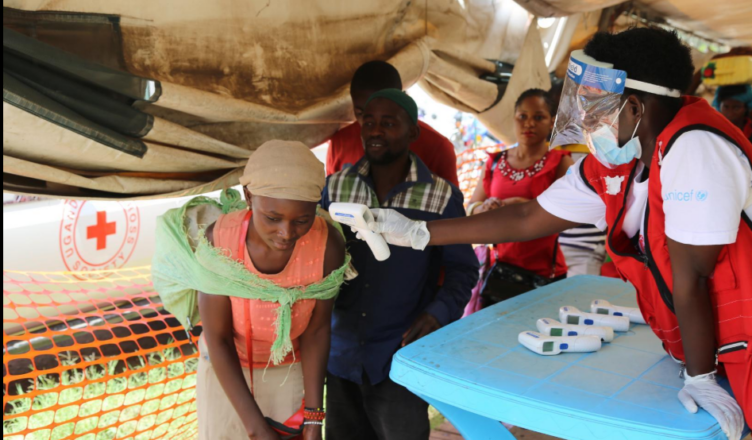
An ongoing Ebola virus outbreak in the Democratic Republic of the Congo (DRC) has now claimed 438 lives out of 1,406 confirmed cases, according to the latest health ministry data. This represents a fatality rate of 31.2%, underscoring the severity of the situation.
The outbreak, which began in mid-May, is caused by the Bundibugyo virus strain—a variant for which no approved vaccine or targeted treatment currently exists. However, clinical trials for potential countermeasures are reportedly in the pipeline, as health officials work to curb the spread.
The Ituri province remains the hardest-hit region, accounting for 91.2% of confirmed cases and 83.6% of fatalities. While neighboring North Kivu and South Kivu have also reported infections, the latter has seen no new confirmed cases since late May.
A concerning development emerged in Kisangani, the capital of Tshopo province, where a 24-year-old pregnant woman tested positive for the virus. Authorities confirmed that her body was secretly transported by motorcycle from the Nia Nia health zone in Ituri—despite the high risk of transmission through deceased Ebola patients, particularly during traditional burial rites. The case highlights the ongoing challenges in controlling cross-border movement and enforcing containment measures.
Further complicating efforts, a new case and a fatality were reported in Haut-Uélé province. Health officials confirmed that the infected individual had traveled from the Nia Nia health zone in Ituri and is now being actively sought for contact tracing.
Despite these additional cases, health authorities maintain that only three provinces—Ituri, North Kivu, and South Kivu—are officially recognized as part of the outbreak zone. The cases detected in Tshopo and Haut-Uélé are classified as ‘imported’ infections originating from Ituri. Contact tracing efforts are underway, with some exposed individuals relocated to Ituri for medical monitoring.
The Ebola virus spreads through direct contact with bodily fluids, and this outbreak marks one of the deadliest in recent decades. In the DRC alone, the 2018–2020 epidemic resulted in nearly 2,300 deaths, reinforcing the urgent need for sustained public health interventions.