
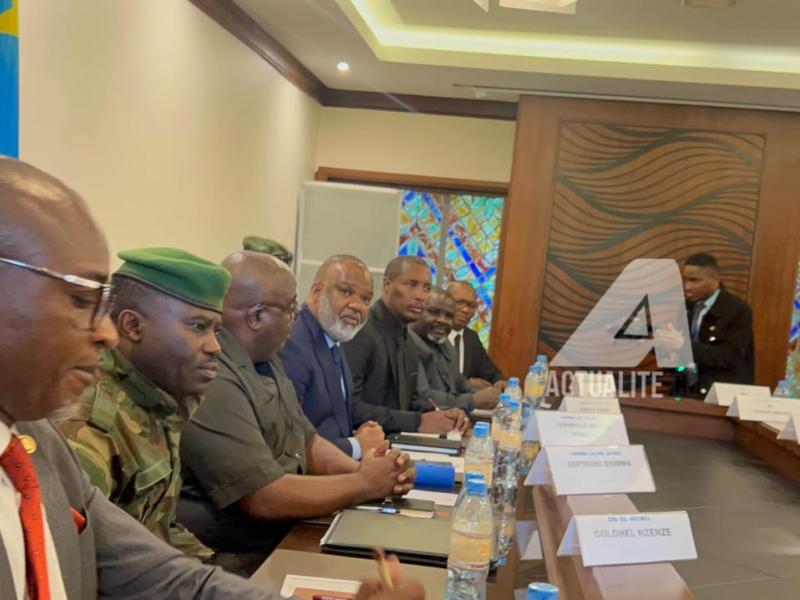
The Alliance Fleuve Congo/Mouvement du 23 Mars (AFC/M23) has sharply criticized the international community and peace mediators for what it calls their deliberate silence amid Kinshasa’s alleged efforts to undermine diplomatic peace initiatives in eastern Democratic Republic of the Congo (DRC).
In a press statement delivered on June 18, 2026, in Goma, North Kivu, AFC/M23’s political coordinator Corneille Nangaa accused the mediation team and global partners of turning a blind eye to what he described as systematic violations of ceasefire agreements by government forces. Nangaa condemned President Félix Tshisekedi’s recent bellicose rhetoric following his address in Houston, where he vowed to retake rebel-held territories in the region.
a chorus of condemnation over escalating violence
Nangaa argued that Tshisekedi’s inflammatory statements—particularly his vow to reclaim occupied zones—directly contradict the spirit of ongoing peace talks in Doha and Washington. The AFC/M23 has released hundreds of prisoners of war as a confidence-building measure, yet Kinshasa has failed to reciprocate with tangible de-escalation steps, he claimed. The movement’s coordinator went further, accusing the international community of complicity in Kinshasa’s alleged campaign to sabotage peace efforts through military escalation.
“The resounding silence of peace mediators and international partners borders on complicity,” Nangaa stated. “Despite having full knowledge of the deteriorating humanitarian and security crisis—including mass civilian casualties and documented war crimes—these actors have taken no decisive action to halt the violence.”
He specifically highlighted the situation in Minembwe Highlands, where he said government-backed offensives continue unabated, in violation of signed agreements. Nangaa emphasized that the AFC/M23 remains committed to defending civilian populations but warned that Kinshasa’s relentless military campaign risks derailing all diplomatic progress.
diplomatic paralysis deepens regional tensions
The diplomatic deadlock comes at a critical juncture, as regional and international actors struggle to reconcile competing narratives of the conflict. While Kinshasa frames its military operations as necessary to restore state authority, critics—including AFC/M23 and human rights observers—argue that these actions exacerbate civilian suffering and violate international humanitarian law.
The AFC/M23 has called for urgent intervention by regional bodies such as the African Union and East African Community, urging mediators to pressure Kinshasa into honoring its commitments. Nangaa warned that unless the international community acts decisively, the DRC risks descending into a prolonged and devastating conflict with regional spillover effects.
Meanwhile, civilian casualties continue to mount. Local reports indicate that recent government offensives in North Kivu and Ituri have displaced tens of thousands, with aid agencies struggling to provide basic necessities amid ongoing clashes.
The AFC/M23’s statement underscores the growing frustration among armed groups and civilians alike, who accuse the international community of failing to hold Kinshasa accountable for its actions. As diplomatic efforts stall and violence intensifies, the humanitarian toll in eastern DRC shows no signs of abating.
—Reporting by field correspondents in Goma and Kinshasa