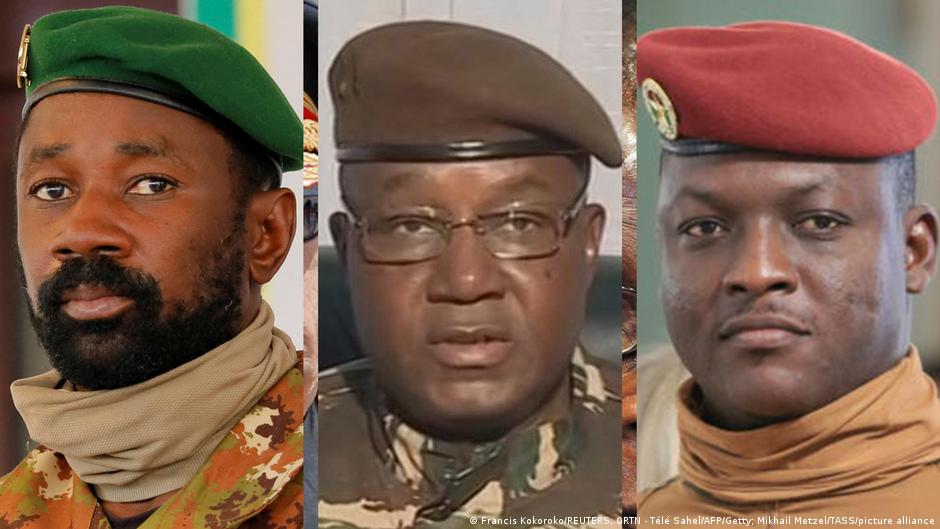
Democracy in the Sahel states alliance under scrutiny
The Alliance of Sahel States (AES)—comprising Mali, Niger, and Burkina Faso—faces mounting questions about the future of democracy within its borders. Since 2020, military juntas have seized power in these nations, citing rampant insecurity and terrorism as primary motivations. However, as transitions drag on, citizens and observers alike are questioning whether these governments truly intend to restore democratic governance and the rule of law.
democracy’s fading promise in the Sahel
The three countries share a turbulent history marked by jihadist insurgencies, political instability, and the collapse of civilian leadership. In Mali, for instance, the 2020 coup ousted President Ibrahim Boubacar Keïta, while Burkina Faso saw two military takeovers in 2022 alone. In Niger, the 2023 coup removed President Mohamed Bazoum, a democratically elected leader, further deepening regional uncertainty.
Public frustration with unchecked violence and governance failures initially fueled support for military rule as a temporary fix. Yet, the prolonged absence of elections, restrictions on political freedoms, and the erosion of institutional checks and balances have left many disillusioned. In Mali, national consultations spearheaded by the junta proposed dissolving all political parties and elevating military leader Assimi Goïta to a five-year renewable presidency—despite his lack of electoral legitimacy.
Soma Abdoulaye, a constitutional law professor at the University of Ouagadougou, argues that Africa’s democratic challenges stem not from flawed institutions but from their misuse by leaders lacking democratic principles. His critique underscores a growing skepticism toward Western-style governance models in the region.
searching for african-led governance models
Across the AES, calls for African sovereignty and alternative political frameworks are intensifying. Critics of the current transitions argue that the juntas are exploiting public sentiment to consolidate power rather than addressing the root causes of instability. The juntas’ rhetoric often dismisses democracy as an ineffective foreign imposition, with figures like Burkina Faso’s Captain Ibrahim Traoré questioning its developmental potential.
This narrative resonates with broader regional movements advocating for the rejection of neocolonial structures. The AES countries’ withdrawal from the Economic Community of West African States (ECOWAS) in 2024 symbolizes their push for greater autonomy, though critics warn this move risks further isolation and authoritarian drift.
the role of political parties and civil society
Political parties and civil society organizations are central to democratic resilience, yet their influence is severely curtailed in the AES. In Mali, Niger, and Burkina Faso, military authorities have restricted opposition activities, dissolved parties, and suppressed dissent under the guise of national security. The case of Guinea—another West African nation under military rule since 2021—illustrates similar patterns, with over 50 political formations banned and a constitutional referendum proposed to extend the junta’s tenure.
Experts emphasize that robust opposition and independent media are vital for democratic accountability. However, in the AES, transitional governments have systematically undermined these pillars, raising concerns about a permanent shift away from democratic norms.
international responses and regional divides
ECOWAS and other international bodies have imposed sanctions to pressure the AES juntas into restoring constitutional order. Yet, these measures are increasingly seen as externally driven, fueling anti-Western sentiment among local populations. The juntas frame such interventions as attempts to undermine sovereignty, further entrenching their narrative of resistance against foreign interference.
Meanwhile, the debate over democracy’s relevance in the Sahel reflects deeper ideological divides. While some advocate for gradual reforms, others argue for radical departures from traditional governance models, prioritizing security and stability over democratic pluralism.
As the AES navigates its uncertain future, the fate of democracy in the region hangs in the balance. Will the juntas deliver on their promises of stability and self-determination, or will their rule further erode the democratic foundations of these nations?
