Dakar 2026: how Senegal is preparing for Africa’s inaugural Olympic games
“Senegal will be ready.” This firm declaration sets the tone as the nation enters the final six months of preparations for the Youth Olympic Games (YOG). From October 31 to November 13, Dakar will host the fourth edition of the summer YOG—an event originally slated for 2022 but delayed by the global pandemic. This competition represents a historic milestone: it is the very first Olympic event to be held on the Africa continent.
The significance of this challenge was a key topic at the “Africa Forward” summit in Nairobi, co-organized by France and Kenya, which focused on leveraging sport for development. For Ahmadou al-Aminou Lo, Minister of State and head of the national monitoring committee, the pressure is matched only by the sense of pride. Lo, a former director at the Central Bank of West African States (BCEAO), now leads a committee that meets twice a month to ensure every institutional and state actor remains on schedule.
A global showcase for Senegal and Africa
The organizers view the success of Dakar 2026 as a testament to the continent’s capabilities. “The image of Senegal and Africa is at stake,” Lo emphasizes. “We have a double responsibility to demonstrate our ability to host world-class sporting events.” This ambition extends to urban transformation; the authorities have launched a major initiative to improve city cleanliness, aiming to emulate the success of Kigali in Rwanda, which currently leads the continent in public hygiene rankings.
The event is set to welcome 2,700 young international athletes, all under the age of 17, competing across 25 competitive sports and 10 demonstration disciplines. The program features 153 events, perfectly balanced between male and female competitions, alongside seven mixed events.
Strategic cooperation and the Alliance Dioko
The road to 2026 is paved with international partnerships, most notably the Alliance Dioko. This convention, signed in 2019, links the organizing committees of Paris 2024 and Dakar 2026. Christine Fages, the French Ambassador to Senegal, highlights that thirty experts from the Paris games have been integrated into the Dakar team to share best practices in security and logistics.
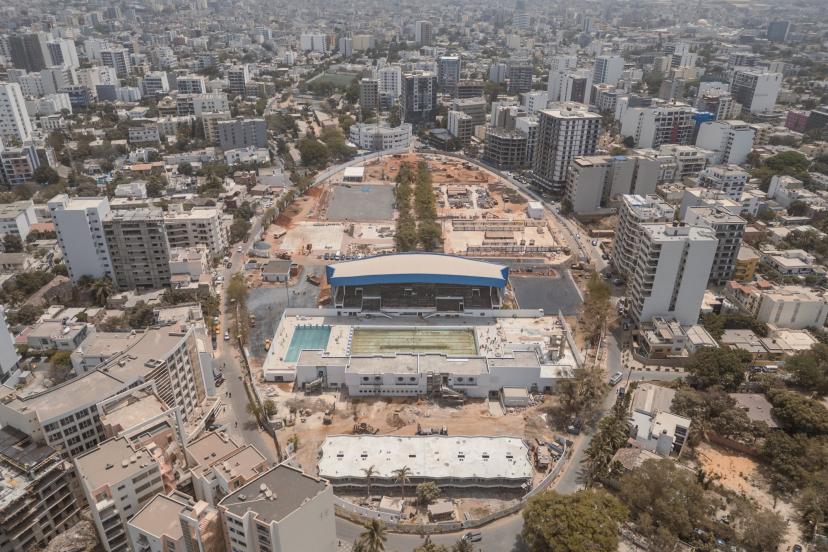
Furthermore, the Learning Academy, supported by a €1 million fund, has already trained 419 young people in sports event management. Financial backing is also significant, with a €80 million sovereign loan from the French Development Agency (AFD) dedicated to refurbishing the Stade Iba-Mar-Diop and the Tour de l’oeuf complex, which houses the Olympic pool.
Infrastructure and the legacy of the games
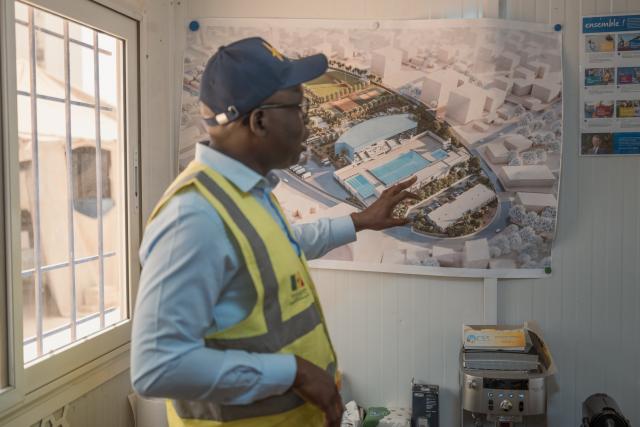
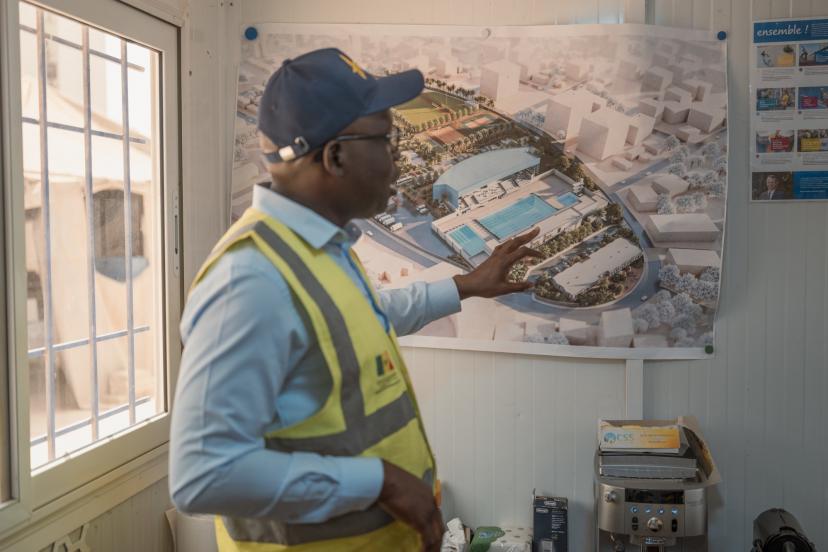
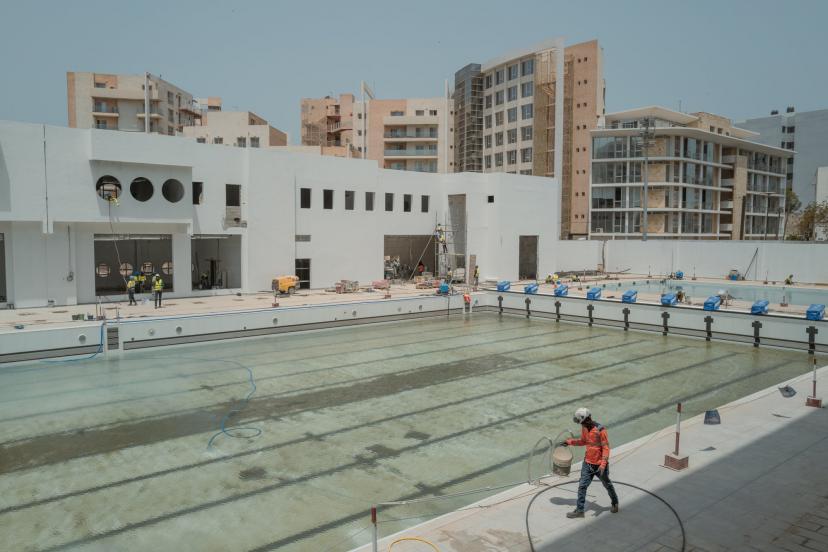
In the Point E district, the Tour de l’oeuf complex is a hive of activity. More than 450 workers are currently finalizing the renovation of the Olympic swimming pool and diving facilities. These venues will also host 3×3 basketball, baseball, breaking, and skateboarding. The pools feature advanced water and energy-saving technology, with a full test fill scheduled for mid-May. The organizing committee is expected to take possession of the facilities by August 15.
Beyond the three-week event, the long-term goal is the “Senegal 2050″ agenda. With half the population under 19, the government aims to use the YOG as a catalyst for a lasting sports economy. While sport currently contributes only €15 million to the national GDP, authorities hope to double this figure by developing training centers of excellence and expanding the business tourism (MICE) sector. After the Games, the facilities will be repurposed for football, handball, and tennis, serving the local community for years to come.
