Côte d’Ivoire leads UEMOA growth while Sahel states lag behind
Côte d’Ivoire solidifies its position as UEMOA’s economic engine despite Sahel rivals
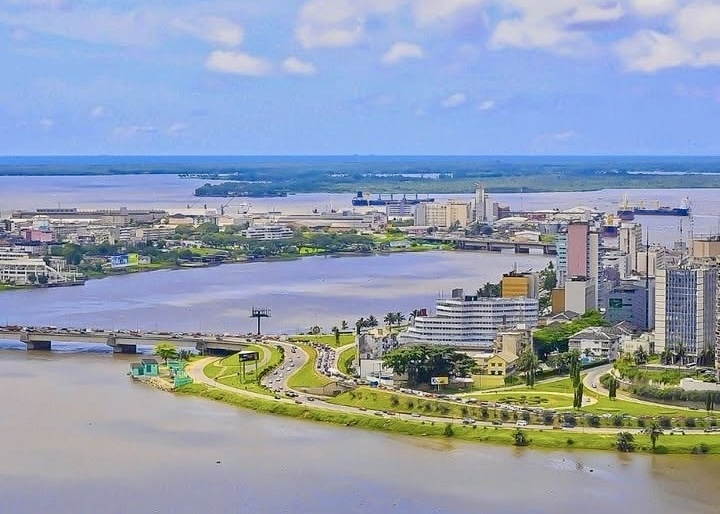
As the dominant economy within the West African Economic and Monetary Union (UEMOA), Côte d’Ivoire continues to set the pace for regional growth. The country’s economic momentum stems from a rare convergence of strengths: a thriving domestic market, cutting-edge infrastructure, Africa’s busiest port, and investment capacity that far outstrips its neighbors. These pillars firmly establish Abidjan as one of Africa’s most influential economic hubs.
- Economic Analysis

Côte d’Ivoire’s unwavering commitment to infrastructure and development is evident in its 4,195 billion FCFA public investment budget for the fiscal year—a figure that dwarfs those of its UEMOA counterparts. This financial firepower enables the country to simultaneously advance major projects across transportation, energy, urban planning, and beyond. The published data underscores this ambition, with Côte d’Ivoire’s allocation nearly doubling the combined investments of Mali, Burkina Faso, and Niger—collectively known as the Sahel States Alliance, whose public investment plans total just 2,100 billion FCFA.
The Ivory Coast’s leadership in regional development is further highlighted when compared to the entire UEMOA bloc. With 44% of the union’s total public investment funds earmarked for its projects, Abidjan commands a share that exceeds the combined allocations of Bénin, Sénégal, and Guinea-Bissau by several multiples. Specifically, Côte d’Ivoire’s investment envelope is nearly three times larger than Bénin’s and more than four times that of Sénégal.
This financial strength is rooted in Côte d’Ivoire’s robust economic dimensions. As the largest economy in UEMOA, the country benefits from a vast domestic market, robust tax revenues, and strong access to international financial markets. These advantages empower the nation to fund critical transformation sectors, including agro-industry, energy, and industrial zones. On a per capita basis, Côte d’Ivoire allocates approximately 116,500 FCFA per citizen toward public investment—surpassing Togo and Bénin, and significantly outpacing Sénégal, Mali, Burkina Faso, and Niger.
Yet financial volume alone does not tell the full story. Some neighboring states, such as Togo and Bénin, dedicate a higher percentage of their budgets to investment. This distinction highlights a key truth: the real measure of economic progress lies not in how much is spent, but in how effectively those funds are deployed. High-impact infrastructure—from roads and ports to universities and power grids—only delivers value when projects are executed with precision and aligned with genuine economic needs.
Looking ahead, Côte d’Ivoire’s trajectory remains promising. Independent projections indicate the country’s GDP could more than double by 2040, driven by sustained industrial growth, a diversified export base (including cocoa, gold, and petroleum products), and the strategic role of the Port of Abidjan as West Africa’s premier logistics gateway. These forward-looking indicators affirm Côte d’Ivoire’s role as the unrivaled engine of UEMOA’s economic future—and the challenge now lies in translating this economic power into tangible benefits for businesses, job creation, and improved living standards across the nation.
