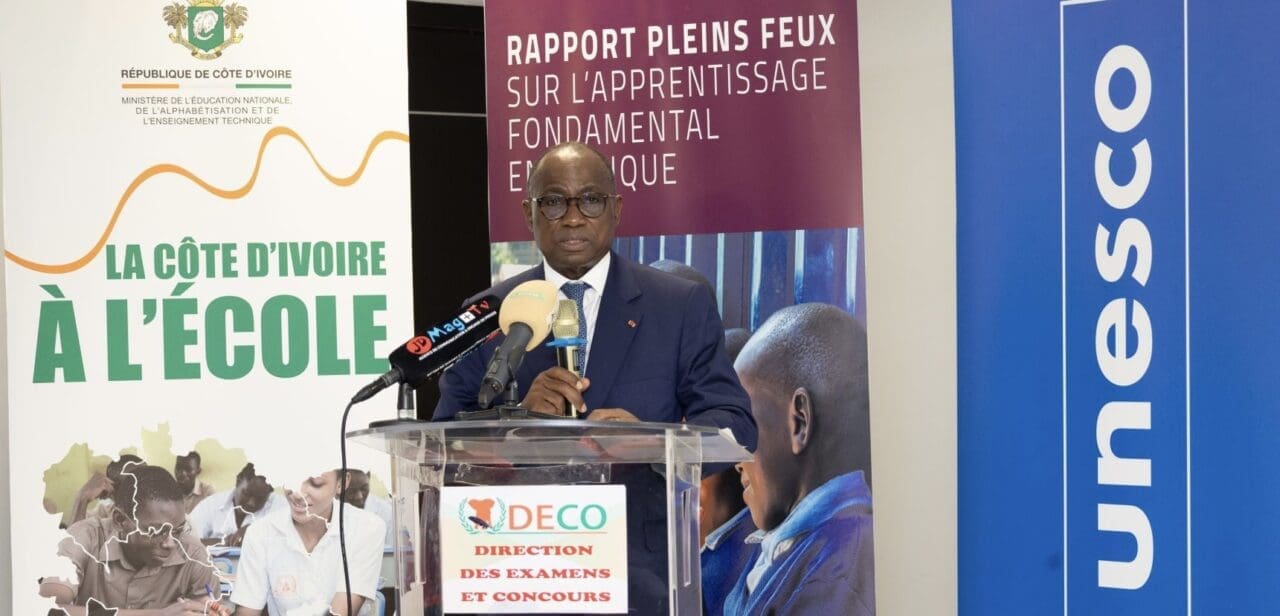
Côte d’Ivoire advances education reform with ‘Pleins Feux’ initiative
In April 2026, the Pleins Feux project was unveiled in Abidjan as a cornerstone of Ivorian education reform. Spearheaded under the leadership of President Alassane Ouattara, this initiative is backed by international partners to optimize the governance of the national education system and enhance the impact of public policies. Its ultimate goal? To sustainably improve learning outcomes across the country.

With a population exceeding 30 million and a rapidly growing youth demographic, Côte d’Ivoire faces mounting pressure on its education system, particularly in rural areas. The government’s response aligns with the United Nations Sustainable Development Goal 4 (SDG 4) and the 2030 Agenda, emphasizing equitable access to quality education. Over the past decade, Ivorian authorities have implemented sweeping reforms to expand access and elevate teaching standards.
Expanding teacher recruitment and infrastructure to bridge gaps
Since 2011, Côte d’Ivoire has significantly bolstered its teaching workforce, recruiting over 69,000 primary school teachers and 30,000 secondary educators. Recent efforts have prioritized STEM disciplines, with the deployment of 1,800 additional teachers in mathematics and physics to meet labor market demands and support economic growth strategies.
Investments in school infrastructure have also accelerated, particularly in underserved rural regions. New schools have been constructed across the country to shorten travel distances, reduce dropout rates, and improve educational coverage. Notable examples include the opening of the CAFOP in Boundiali and the surge in applicants—over 68,000 candidates vying for 7,000 spots in 2026—for teacher training centers, reflecting a structured commitment to strengthening educator quality.
Prioritizing school climate and inclusivity for lasting impact
Enhancing teaching conditions has emerged as a pivotal focus of Ivorian education policy. Between 2011 and 2025, starting salaries for primary teachers rose by over 30%, while secondary educators saw increases of up to 15%. These adjustments aim to boost teacher retention and attract top talent. Concurrently, the government has prioritized creating supportive learning environments.
Efforts to foster inclusivity include the integration of specialized learning materials for students with disabilities, ensuring education is accessible to all. Prevention campaigns targeting school-related challenges, such as early pregnancies, further safeguard student trajectories by minimizing disruptions and encouraging persistence in the education system.
‘Pleins Feux’: a governance-driven education transformation
The Pleins Feux initiative, launched in Abidjan in April 2026, represents a strategic shift in education reform—one focused not on bricks and mortar or teacher numbers, but on refining the efficiency of policy implementation. Developed in collaboration with UNESCO, the African Union, and the Global Education Monitoring Report, the project stems from two years of collaborative research in Côte d’Ivoire, Ghana, and Ethiopia.
By strengthening the capacity of policymakers and school leaders, Pleins Feux aims to translate ambitious reforms into measurable improvements in student performance. As international partners commend Côte d’Ivoire for progress in foundational learning, the government continues to leverage diverse partnerships—international, regional, and private—to sustain the momentum of education transformation.
