
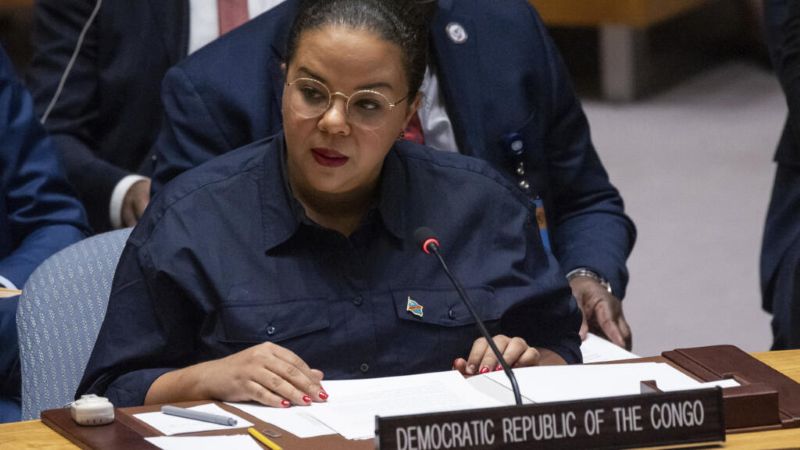
The natural riches of a nation should never be a curse but a foundation for sovereignty and stability. This principle has guided the Democratic Republic of the Congo’s latest diplomatic offensive at the United Nations.
On July 14, 2026, Kinshasa took center stage at the UN’s high-level meeting on critical minerals for the global energy transition. Foreign Minister Thérèse Kayikwamba Wagner delivered a sharp critique of the current international system, arguing that resource-rich nations like the DRC remain trapped in the role of mere suppliers of raw materials, while wealth generated downstream flows to industrialized economies.
From exporter to industrial leader
In a bold departure from past diplomacy, Kayikwamba Wagner did not just defend Congo’s economic interests—she demanded a structural overhaul of global mineral governance. She emphasized that the energy transition cannot be called ‘just’ unless producing countries share in the added value created by processing their own resources.
“The real question is no longer where critical minerals come from, but where the value they generate actually stays,” she declared, calling for massive investments in infrastructure, energy, research, and technology. Her vision includes modernizing artisanal mining—long a lifeline for local communities—to ensure it meets modern standards without stifling livelihoods.
Kinshasa’s new ambition? To become Africa’s leading industrial hub for strategic minerals essential to electric batteries, digital technologies, and renewable energy systems. This transformation, she argued, must be built on international partnerships that prioritize technology transfer, capacity building, and fair distribution of wealth across global value chains.
Rwanda in the crosshairs over mineral exploitation
The Foreign Minister did not limit her remarks to economic reform. She directly linked the issue of critical minerals to regional security, citing the UN Group of Experts’ findings on illicit mineral trafficking in eastern Congo. Rubaya, a key tantalum mining site supplying 15% of global demand, was highlighted as a prime example of exploitation under armed control.
According to the experts, at least 1,400 tons of coltan were illegally smuggled into Rwanda after the M23 rebel group—backed by Kigali—seized control of the area. These operations reportedly generate $800,000 monthly for the armed movement, yet Rwanda has avoided UN sanctions, exposing critical gaps in international mechanisms to curb resource-fueled conflicts.
Linking minerals, peace, and global governance
Under Congo’s presidency of the UN Security Council, Kayikwamba Wagner announced a new push for an international framework that directly ties mineral governance to conflict prevention, peace, security, and sustainable development. She stressed the need to hold all actors accountable—producers, traders, processors, financial institutions, industrial buyers, and consumer nations—ensuring mineral traceability is used to combat fraud, smuggling, and armed group financing, while protecting legitimate artisanal miners.
This diplomatic offensive is not just about minerals—it’s a bid to redefine the global energy transition. No longer content with being a passive supplier, the DRC is demanding a seat at the table where the rules of the game are written. By linking its resource wealth to peace, security, and development, Kinshasa is forcing the international community to confront uncomfortable truths about who really benefits from the green revolution.