
eastern DRC confronts ongoing security crisis amid Rwandan tensions
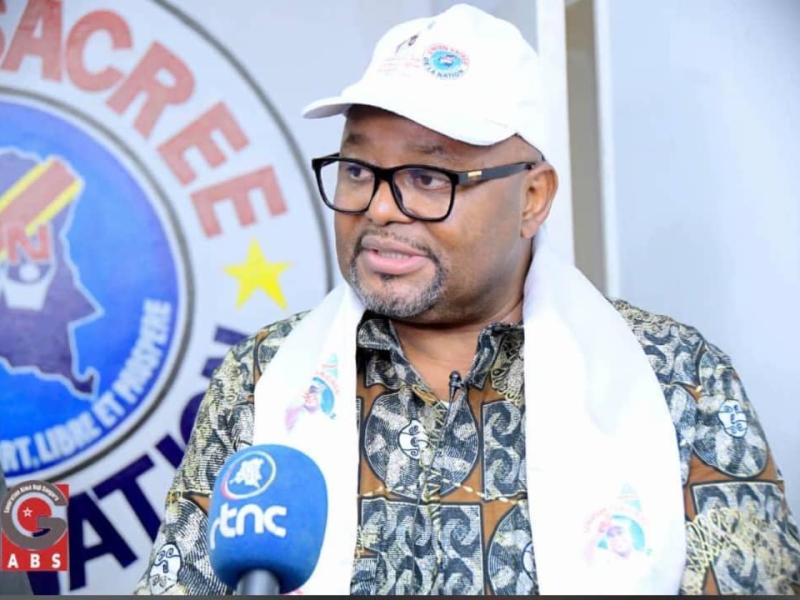
The President of the National Assembly, Aimé Boji Sangara, delivered a forceful address during the closing of the March ordinary session, dedicating significant attention to the escalating security situation in the eastern Democratic Republic of Congo (DRC). The address underscored the gravity of ongoing conflicts in North Kivu, South Kivu, and Ituri provinces, where civilian populations continue to bear the brunt of relentless violence.
Boji Sangara opened his remarks by emphasizing the severity of the crisis, highlighting persistent armed attacks and the humanitarian toll they exact on local communities. “The security situation in the eastern part of our nation remains the primary concern of the National Assembly,” he stated. “As we conclude these proceedings, our thoughts immediately turn to the east, where Rwandan aggression through the M23 terrorist group and the heinous massacres committed by ADF terrorists continue to claim the lives of our compatriots.”
condemnation of violence and tribute to defenders
The Assembly President condemned the ongoing violence and attacks against civilians, while paying tribute to the DRC’s defense forces and auxiliary groups fighting alongside the Congolese army. “From this platform, the National Assembly firmly condemns this unjust and deadly war,” he declared. “We extend a solemn tribute to our Armed Forces, the FARDC, and the Wazalendo volunteers who risk their lives daily. To the suffering populations of South Kivu, North Kivu, and Ituri, we say: the Nation has not forgotten you.”
call for immediate ceasefire and regional cooperation
In a resolute tone, Boji Sangara called for an immediate end to hostilities and external interference in eastern DRC, reaffirming the country’s commitment to preserving its territorial integrity. He urged Kigali to recognize the inevitability of peaceful coexistence, given their shared geography. “To the Rwandan aggressors and their M23 auxiliaries, we say it is time for the Rwandan authorities to halt their destabilization efforts, cease the plundering of our resources, and immediately end the extermination of our people,” he asserted. “Neither expansionist ambitions nor violence will undermine our sovereignty. No portion of our territory will be surrendered. Rwanda must understand that geography condemns us to be neighbors forever. War will only perpetuate a hatred whose price future generations will pay; only lasting peace will benefit all.”
diplomatic efforts fail to alleviate crisis
Despite diplomatic agreements such as the Washington Accord and the Doha Process—facilitated by the United States and Qatar respectively, with support from the African Union—security and humanitarian conditions in eastern DRC remain dire. Civilian populations continue to face violence and forced displacement, worsening an already catastrophic humanitarian situation amid declining international funding for aid efforts.
Calls for compliance with peace agreements have gone unheeded, as stakeholders interpret provisions differently, rendering implementation uncertain. The gap between diplomatic progress and ground realities persists, leaving civilians trapped in the crossfire of unresolved conflicts.
Clément Muamba contributed to this report.