
Congo military law 2027 draft under parliamentary review
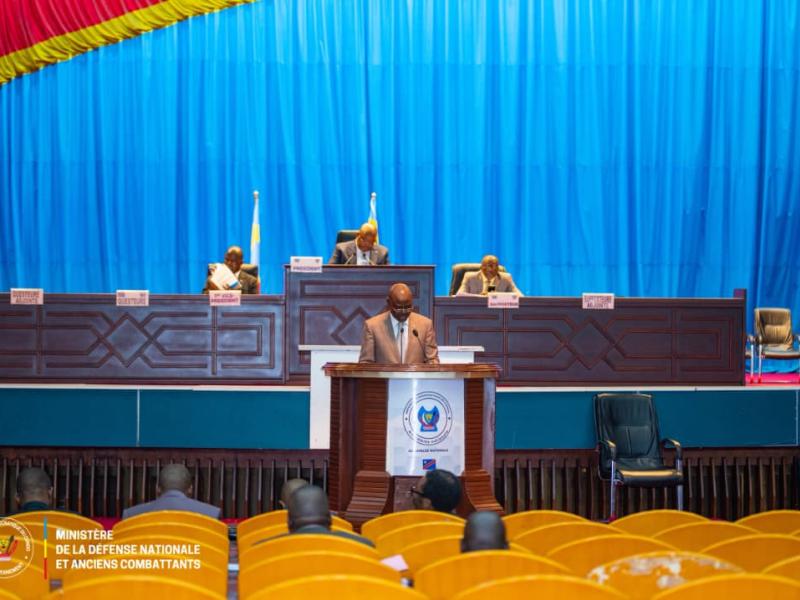
Kinshasa — The National Assembly of the Democratic Republic of the Congo (DRC) has initiated the examination of the draft military programming law for the period 2027-2030. This critical legislative process began on Tuesday, July 14, 2026, during an extraordinary session of Parliament, as confirmed by the Ministry of National Defense and Veterans Affairs.
The proposed law aims to establish a multi-year financial and strategic framework to secure state funding for the modernization and expansion of the Armed Forces of the Democratic Republic of the Congo (FARDC). It seeks to eliminate budgetary improvisation while providing a legal foundation for sustained military efforts. The draft was presented to lawmakers by Vice Prime Minister and Minister of National Defense and Veterans Affairs, Guy Kabombo Muadiamvita, following an official mission to Egypt.
key objectives of the 2027-2030 military programming law
The draft law outlines six major programs designed to structure the defense sector’s growth and professionalization:
- General administration: Prioritizing human resources as the cornerstone of national defense.
- Training and research: Enhancing military education and innovation capabilities.
- Equipment and materials: Accelerating the acquisition of modern defense systems.
- Infrastructure modernization: Upgrading military facilities and logistics.
- Operations and intelligence: Strengthening military training, operations, and intelligence-gathering.
- Defense industry: Fostering domestic defense manufacturing capabilities.
These programs align with President Félix Tshisekedi’s vision to transform the FARDC into a modern, efficient, and structured military force capable of addressing both internal and external threats.
context and strategic importance
The initiative comes at a time of heightened security challenges in the eastern DRC, particularly in North Kivu and South Kivu provinces, where armed groups such as the M23 continue to pose significant threats. The previous military programming law (2022-2025) expired last year, and its successor aims to address the gaps identified during its implementation.
Guy Kabombo Muadiamvita emphasized the urgency of integrating this programming into the national budget to ensure the successful reform and professionalization of the FARDC. He also highlighted the role of the newly established Fonds de soutien au développement des FARDC (FSD-FARDC), a fund designed to mobilize additional resources from public and private donors to support the defense sector.
The draft law reflects the government’s commitment to strengthening the FARDC’s operational capabilities amid ongoing regional tensions, including the recent peace agreement between the DRC and Rwanda, mediated by the United States. However, the security situation in the eastern DRC remains volatile, with armed groups maintaining control over key areas and diplomatic efforts yet to yield tangible results.
next steps and parliamentary process
The National Assembly’s review of the draft law is expected to continue in the coming weeks, with lawmakers scrutinizing its provisions to ensure alignment with national defense priorities. The finalized law will play a pivotal role in shaping the future of the DRC’s military capabilities and strategic preparedness.
The examination of this draft law underscores the government’s determination to modernize the FARDC and address the evolving security landscape in the DRC.