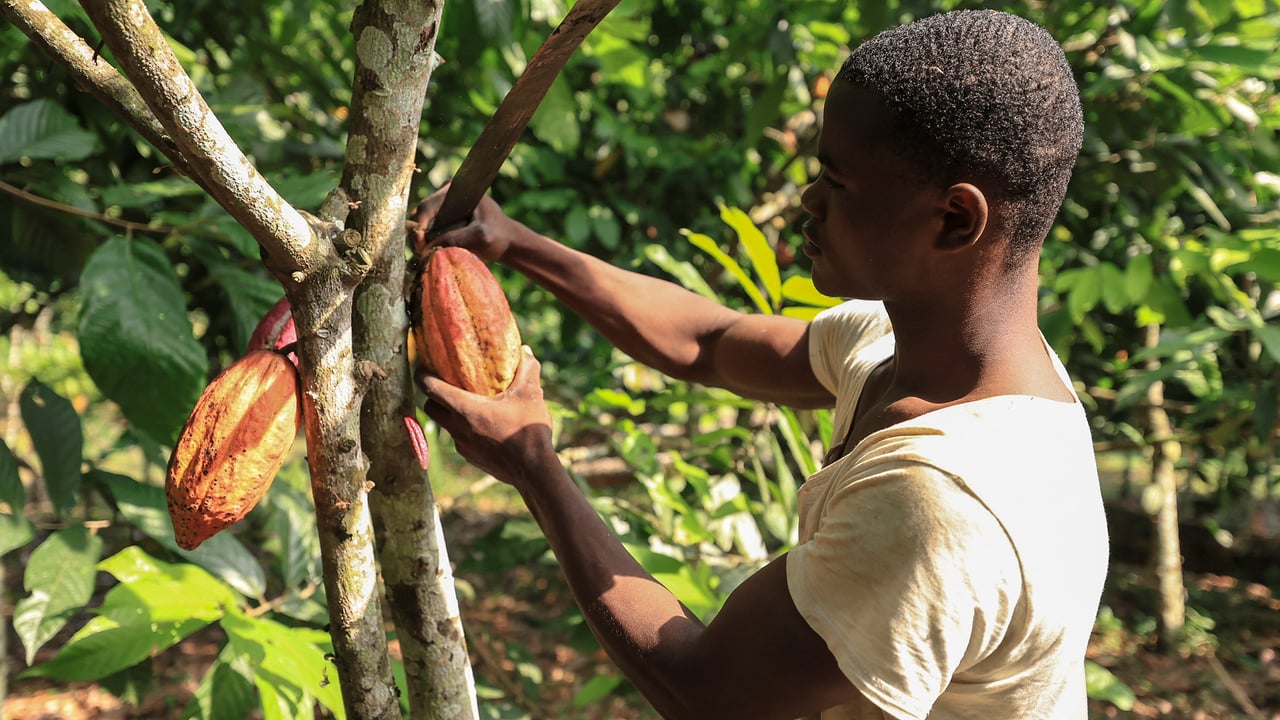
Cocoa farmers in Cameroon seek better livelihoods amid challenges

In the heart of Ebebda’s rolling hills, cocoa farmers are navigating a tough season, battling both economic pressures and climate uncertainties. The challenges they face today are reshaping the future of Cameroon’s cocoa industry, a sector that has long been the backbone of local livelihoods.
With global demand fluctuating and production costs rising, smallholder farmers are rethinking their strategies. Many are turning to sustainable practices, hoping to secure better prices and improve crop yields. Yet, access to training and resources remains limited, leaving many struggling to keep pace with modern agricultural demands.
Climate change casts a shadow over harvests
The unpredictable weather patterns have become a major concern for cocoa producers. Erratic rainfall and prolonged dry spells are taking a toll on harvests, forcing farmers to adapt quickly. Some have begun experimenting with drought-resistant cocoa varieties, while others are exploring irrigation techniques to mitigate the impact of climate shifts.
Local cooperatives are stepping in to provide support, offering guidance on climate-smart farming. These initiatives are crucial, but funding and infrastructure gaps continue to hinder progress. Without reliable access to water and modern farming tools, even the most committed farmers face an uphill battle.
Market dynamics complicate farmers’ lives
Cocoa prices on the global market have seen sharp declines, leaving many Cameroonian farmers with dwindling incomes. The volatility of prices makes it difficult for them to plan ahead, pushing some to diversify into other crops like coffee or rubber. However, shifting to alternative livelihoods is not always a straightforward solution.
The government has introduced initiatives to stabilize prices and boost exports, but critics argue that these measures are not reaching the grassroots level. Farmers in remote regions often remain disconnected from national programs, leaving them vulnerable to market forces beyond their control.
Innovation and community efforts offer hope
Despite the challenges, pockets of innovation are emerging across Cameroon’s cocoa belt. Farmers are forming collectives to pool resources and share knowledge, strengthening their bargaining power with buyers. Fair trade certifications are also gaining traction, enabling producers to access premium markets and secure fairer compensation.
Young entrepreneurs are entering the sector, bringing fresh ideas and technologies that could revolutionize traditional farming. From mobile apps that track soil health to blockchain-based supply chains, these innovations are slowly transforming the industry’s landscape. Yet, scalability remains a hurdle, particularly in areas with limited internet connectivity.
What lies ahead for Cameroon’s cocoa farmers?
The road to recovery for Cameroon’s cocoa farmers is lined with both obstacles and opportunities. As climate change intensifies and global markets evolve, adaptability will be key. Strengthening local cooperatives, improving access to financing, and investing in sustainable practices could pave the way for a more resilient industry.
For now, farmers like those in Ebebda continue to work tirelessly, driven by a deep-rooted belief in the potential of their land. Their perseverance could very well shape the future of cocoa farming in Cameroon, but the path forward demands collective effort and unwavering support.
