
civic space under pressure in the Sahel alliance: Burkina Faso crackdown intensifies
In Burkina Faso, the recent arrest of prominent Imam Mohamed Ishaq Kindo and the subsequent suspension of the leading student union, the General Union of Burkina Faso Students (UGEB), underscore a concerning tightening grip by the military regime. These events signify a week of escalating tensions and a severe curtailment of fundamental freedoms. This is the central theme of our special report on the Sahel region.
Imam Kindo’s disappearance fuels concern
Just before the Tabaski festival, witnesses reported seeing masked individuals—identified as police and military personnel—apprehend Imam Mohamed Ishaq Kindo at his residence. Imam Kindo is a significant figure in Burkina Faso, as noted by Burkinabè journalist in exile, Newton Ahmed Barry:
“Imam Kindo was one of the few prominent figures within the Muslim community who, it must be said, initially supported Ibrahim Traoré, yet maintained a critical perspective and continued to voice concerns regarding public decisions.”
The Imam had reportedly criticized a proposed law aimed at regulating religious practices, particularly public prayers.
A distinct profile from Mali’s Imam Mahmoud Dicko
Some observers have drawn parallels between Imam Kindo and Imam Mahmoud Dicko in Mali. However, Newton Ahmed Barry suggests that such comparisons are limited:
“I don’t believe that was Imam Kindo’s intention or desired stature. He was more focused on civic vigilance concerning issues within his domain. He is, after all, a member of the Ulemas of the Federation of Islamic Associations of Burkina (FAIB), tasked with upholding the tenets of the Muslim faith.”
Tensions and the spread of disinformation
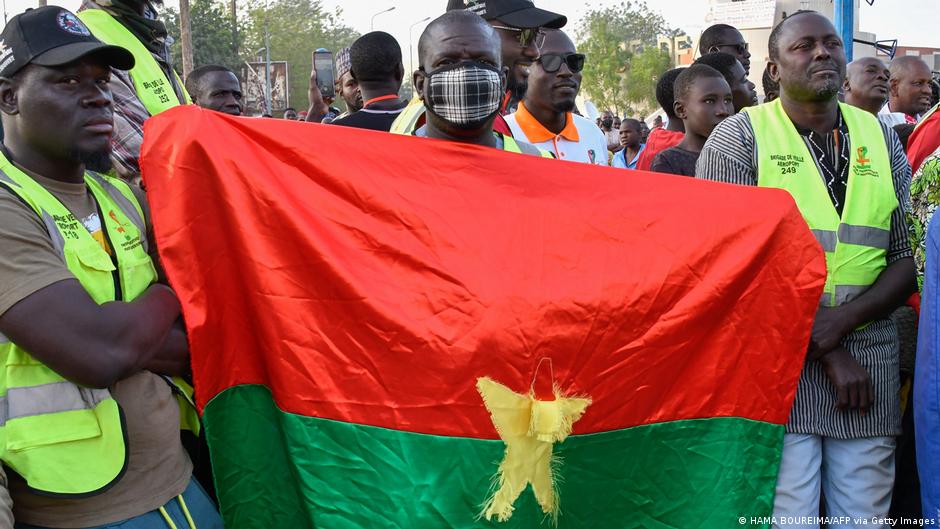
Imam Kindo’s arrest immediately triggered public outcry. Loyal followers attempted to protest, leading to clashes that left several injured and dozens arrested. The Federation of Islamic Associations of Burkina (FAIB) repeatedly appealed for calm.
Concurrently, an information war erupted. A false communiqué announcing the Imam’s death circulated widely but was swiftly debunked by the public prosecutor. Other content, including videos purporting to show abuses, exhibited “inconsistencies” according to AfricaCheck, suggesting potential generation by artificial intelligence.
Sources indicate that some arrested individuals were reportedly transported to Kaya, in the Centre-Nord region of Burkina Faso, where a military camp is located.
A calculated strategy of fear?
For Newton Ahmed Barry, these events are part of a broader strategy: “In essence, I believe the logic of this junta and its leader is that the more people are afraid, the more tranquility they secure. So, the truth is, they traumatize everyone to bring them under their control and thus rule peacefully.”
UGEB suspension: students targeted in the crackdown
Another stark indicator of the Burkina Faso freedoms crackdown is the three-month, renewable suspension of the General Union of Burkina Faso Students (UGEB), an organization established in 1960. Its president, Bazo Wilfried, and several members have been detained.
The union faces accusations of “apology of terrorism” and “demoralization of security forces” after criticizing the security situation, describing it as a “civil war” and highlighting the authorities’ “manifest incapacity” to restore security.
Mahamadou Idder Alghabid, Deputy Secretary General of the Alliance of Sahel Democrats (ADS), views these accusations as part of a regional trend:
“It’s laughable to accuse unarmed students and civilians of advocating terrorism. But this is a familiar refrain in the Sahel today. At the slightest sign of dissent, all opposing voices are silenced and accused of promoting terrorism or being allies of terrorists. This is unfortunately a common language in vogue across these three military-led countries in the Sahel.”
A regional trend within the AES
Across Burkina Faso, Mali, and Niger, human rights defenders report a progressive erosion of public freedoms. The dissolution of organizations, judicial pressures, and restrictions on freedom of expression fuel these concerns. The Alliance of Sahel Democrats suggests that the line between political criticism, union expression, and criminal offense is increasingly blurred in these West Africa nations.
Contestation, though fragile, persists
Despite the inherent risks—including arrests, abductions, and violence—voices of dissent continue to emerge, often from outside the country. Mahamadou Idder Alghabid affirms: “We are aware of the immense struggle ahead because we are opposing three military regimes. But, as you know, every day we gain ground and they lose it. So it’s a matter of time. Propaganda worked at first; they put forward concepts that Africans yearn for, such as sovereignty and the fight against imperialism. But today, all these promises made to Sahelians, whether from Burkina, Niger, or Mali, have proven false. The leaders are unable to honor their commitments, and Sahelians are realizing this daily. They are abandoning the putschists’ ship.”
Newton Ahmed Barry, for his part, believes the dynamic could shift: “By principle, the weakness of force, of course, lies in its excesses. A force always succumbs to its own excesses. And that is what will happen to Ibrahim Traoré and his regime. But people are fighting. I am not suggesting that people have bowed down; no. […] And you will see that Burkinabè society will react.”
Calls to support fundamental freedoms
Human rights organizations are urging international mobilization. Ilaria Allegrozzi, Sahel researcher at Human Rights Watch, emphasizes that “it is essential to continue supporting spaces for expression, civil initiatives, and all peaceful forms of democratic resilience. Crucially, partners of Burkina Faso must stop hiding behind the idea that any condemnation of the junta would be counterproductive. Silences and ambiguity invariably end up legitimizing authoritarian abuses.”
Breaking the silence and naming abuses
More broadly, the legitimacy of military power remains a pressing question, according to HRW: “We must have the courage to name things, denounce infringements on freedoms, and clearly remind everyone that the confiscation of power by military putschists cannot become an acceptable norm, nor can flagrant human rights violations.”