Chad’s decentralization push: exploring provincial councils’ development role
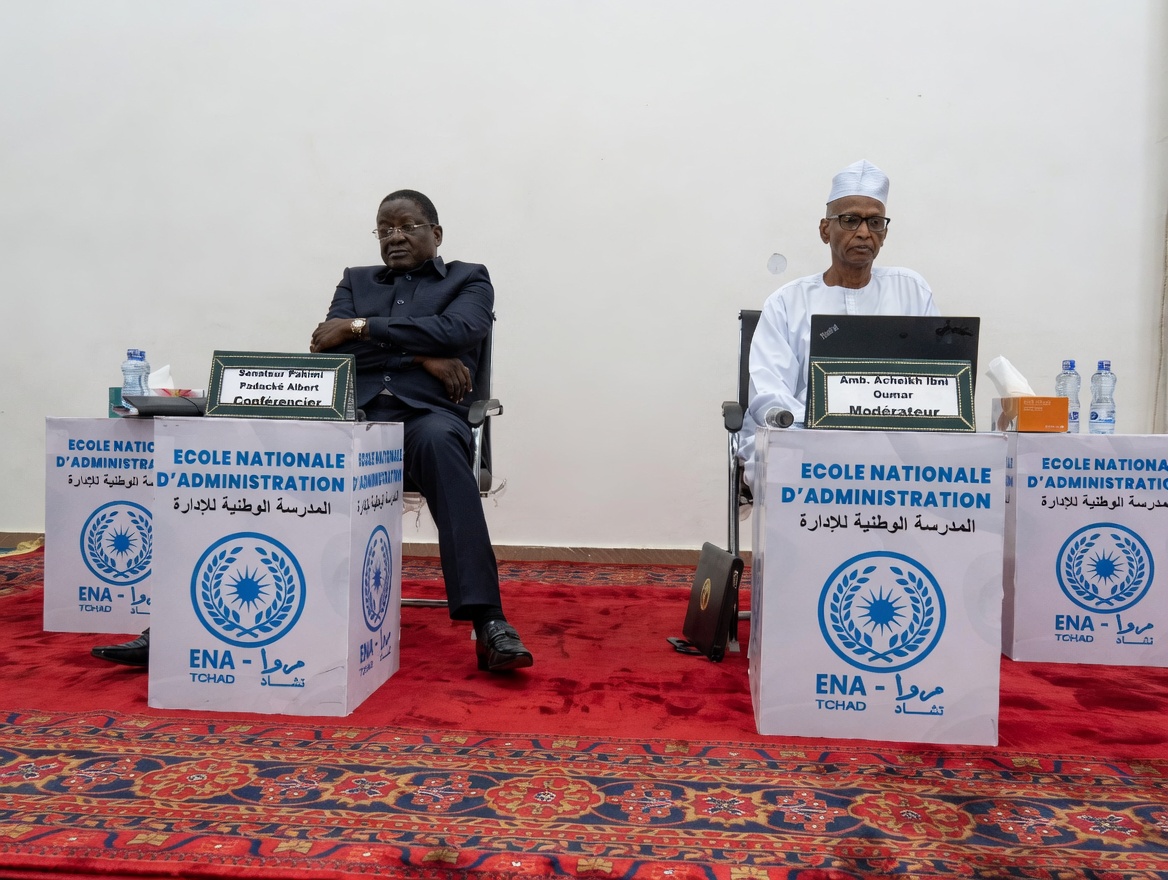
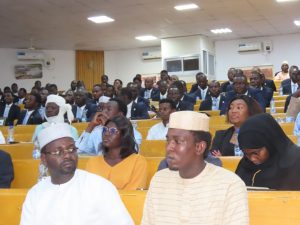
As part of the “ENA’s Major Events” series, the National School of Administration (ENA) hosted a significant conference-debate this past Friday afternoon, May 29. The session was led by Senator and former Prime Minister Albert Pahimi Padacké, addressing the highly pertinent topic: “Decentralization in the dynamic of development: the case of provincial councils.” The amphitheater was filled to capacity with a diverse audience, including students, civil servants undergoing training, civil administrators, and key political figures.
A seasoned political figure, Albert Pahimi Padacké, who has served as Prime Minister on two occasions, currently holds a senatorial position, and is a trained civil administrator, masterfully engaged the audience. His presentation was meticulously structured, insightful, and grounded in practical realities. He began by expressing his pleasure in conversing with the attendees in such a grand setting about the unique subject of decentralization within the context of local development, with a particular focus on the role of provincial councils.
The speaker immediately contextualized his remarks within a historical and international framework. He highlighted that Chad’s decentralization process gained significant momentum in the 1990s. This acceleration was influenced by the wave of democratic transitions across Africa, pressure from international donors, and the emergence of a new governance paradigm that prioritized the needs and participation of local populations.
The central question posed by the conference theme was unequivocal: Do provincial councils currently act as catalysts for development, or do they possess the potential to become so? Pahimi Padacké characterized this discussion as inherently interdisciplinary. He organized his presentation around three core elements:
- The political and normative foundations that establish decentralization as a crucial driver for development.
- The existing obstacles that continue to hinder provincial councils from fully realizing their mandated roles.
- Proposed solutions to transform these councils into genuine cornerstones of local development.
The speaker meticulously traced the origins of this pivotal process. Decentralization in Chad finds its genesis in the vital forces of the nation, which convened during the 1993 National Sovereign Conference. This assembly decisively opted for a unitary state model that was nonetheless strongly decentralized. This fundamental orientation was subsequently enshrined in the Constitution of March 31, 1996, and consistently reaffirmed in subsequent legal frameworks, notably the Constitution of December 29, 2023, which established the 5th Republic.
From a legal standpoint, several organic laws have solidified this strategic choice, including organic law n°14 (2024), which defines the statutes of autonomous communities, and organic law n°28 (2024), which delineates the distribution of powers between the central government and these autonomous entities.
Pahimi Padacké underscored two indispensable principles: the transfer of both competencies and resources, and the principle of subsidiarity, as stipulated in Article 271 of the Constitution. This latter principle advocates for decision-making to occur at the level closest to the citizens, ensuring greater responsiveness and local relevance.
He further highlighted that organic law n°28 indeed transfers significant powers to provincial councils across various sectors. However, he noted that practical implementation still requires the issuance of specific application texts to detail the operational modalities.
In the second segment of his address, the former Prime Minister presented a candid assessment of the current impediments. These include delays in the actual transfer of financial and human resources, a persistent inadequacy in the technical and administrative capacities of provincial councils, prevalent issues in local governance, and difficulties in coordinating between the deconcentrated administration and the elected bodies of autonomous communities.
In his concluding remarks, Pahimi Padacké outlined concrete avenues for progress. These include accelerating the effective transfer of resources, particularly the allocated share of oil and fiscal revenues; enhancing the capacities of elected officials and agents within provincial councils; establishing robust mechanisms for monitoring and evaluation; fostering greater involvement from civil society and development partners; and rigorously adhering to the principle of subsidiarity to ensure that decentralization in Chad is genuinely functional, not merely theoretical.
He urged future administrators to fully grasp these critical stakes, emphasizing that the successful implementation of decentralization is fundamentally conditional upon the balanced development of the country and the essential rapprochement of public administration with its citizens.
