
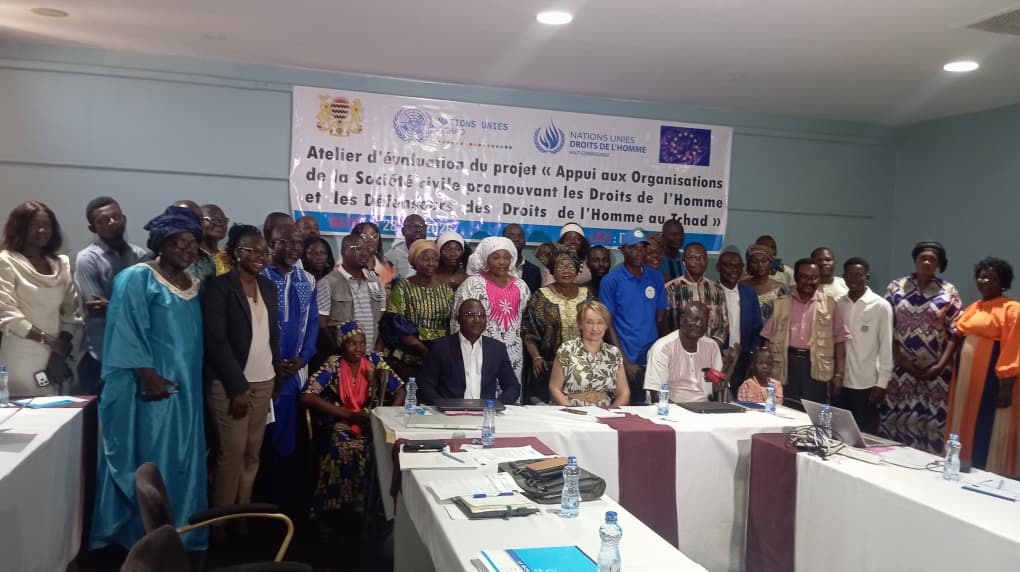
On May 28, the United Nations High Commissioner for Human Rights (OHCHR) country office in N’Djamena hosted a pivotal evaluation workshop. The gathering focused on the “Support for Civil Society Organizations Promoting Human Rights and Human Rights Defenders in Chad” project. This initiative, backed by funding from the European Union and initiated in May 2023, has empowered thirteen local organizations to amplify their efforts in advocating for and safeguarding human rights across the nation.
Félix Ahouansou, who serves as the representative for the UN High Commissioner for Human Rights and head of the country office, along with Agnès Kovacs, the Head of Governance Section at the European Union Delegation, addressed the attendees. Both commended the dedication of all participants and underscored the critical need to bolster the capabilities of civil society organizations, particularly given the ongoing challenges in defending human rights.
Mr. Ahouansou conveyed the High Commissioner’s deep appreciation to the European Union for its unwavering support of human rights initiatives within Chad. He reiterated that this project, which commenced on May 17, 2023, and is slated to run until June 30, 2026, is specifically designed to assist civil society organizations and human rights defenders. These groups are recognized as indispensable pillars in fostering a rule of law that upholds fundamental freedoms.
He further highlighted the persistent obstacles faced by these crucial actors, which include institutional limitations, the shrinking civic space, and prevalent security risks. This underscores the imperative for sustained and tailored assistance to overcome these challenges.
Regarding the tangible outcomes, it was reported that the project successfully provided grants to thirteen organizations actively engaged in human rights work nationwide. A total of 58 individuals who had experienced gender-based violence and other human rights violations received essential legal and judicial aid, with 25 of these cases facilitated through the Chad Bar Association. Additionally, 61 people, including nine men, were provided with crucial material, psychosocial, and medical support by a collaborating partner organization.
Agnès Kovacs, for her part, emphasized the significance of this concluding workshop, which served as a vital platform to assess the project’s implementation progress and its direct impact on beneficiaries. She extended gratitude to the OHCHR country office and the grant-receiving organizations for their dedication.
The workshop brought together dozens of participants, including representatives from various civil society organizations, technical partners, and direct beneficiaries. The discussions were instrumental in reviewing the accomplished actions, exchanging best practices, and formulating key recommendations for future endeavors.