
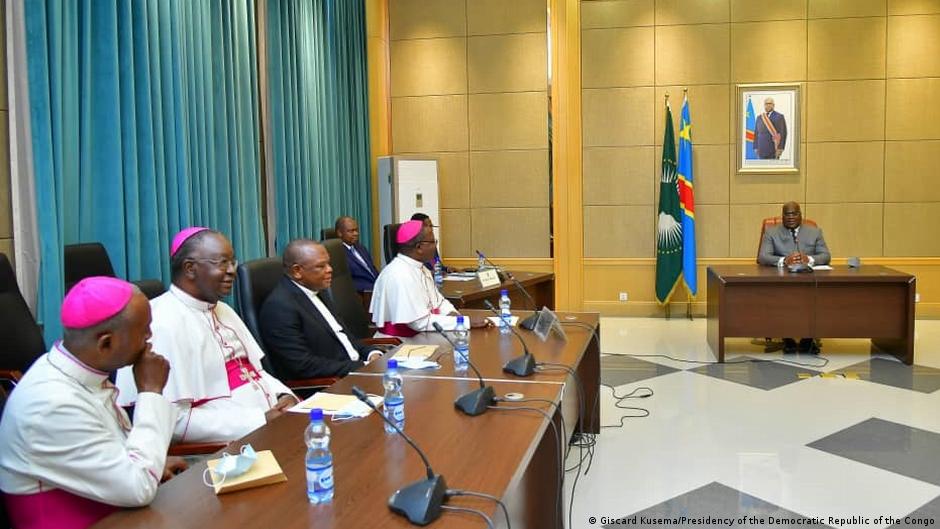
The debate over revising the foundational law of the Democratic Republic of Congo has reached a critical turning point. The National Episcopal Conference of Congo (Cenco) has now officially voiced its opposition, adding significant moral and social weight to a stance previously held primarily by political opponents.
Abbot Donatien Nshole, representing Cenco as its Secretary General, stated clearly that the proposed changes to the February 18, 2006, Constitution are neither timely nor essential for the nation’s current needs. He emphasized that the move lacks the necessary urgency to justify such a shift.
“We urge our clergy and pastoral workers to spread this message and awaken the conscience of the faithful and all people of good will,” Nshole declared. He called for a conscious resistance against what he describes as manipulative efforts to alter the supreme law, hinting that the Church reserves the right to announce specific organized actions in the near future.
Beyond legal concerns, the bishops are primarily focused on the fragile state of the country. With persistent insecurity in the East and rising social discontent, they warn that such political maneuvers could further destabilize the nation.
In the streets of Kinshasa, opinions on Cenco’s position remain diverse. One young resident suggested that the focus should be on the general interest, noting that the President is working for the people’s benefit. Conversely, another citizen questioned the logic of changing the Constitution while parts of the country are under a state of siege or active warfare. A third perspective highlighted the need for a legal framework that allows the state to remain a competitive and sovereign player on the international stage through modern treaties.
The social impact of the Catholic Church
While Cenco lacks formal legislative authority to block reforms, its political and diplomatic influence is immense. Political scientist Christian Moleka notes that while other religious groups, such as the revival churches, are also active, the Catholic Church possesses a unique nationwide network and a powerful diplomatic reach that extends far beyond Kinshasa.
This religious opposition coincides with a period of high political tension. The opposition has already called for a mass protest on July 8 to demand the resignation of President Félix Tshisekedi. Meanwhile, the leadership of the ruling UDPS party has accused these groups of attempting to spark a violent popular uprising across the country.