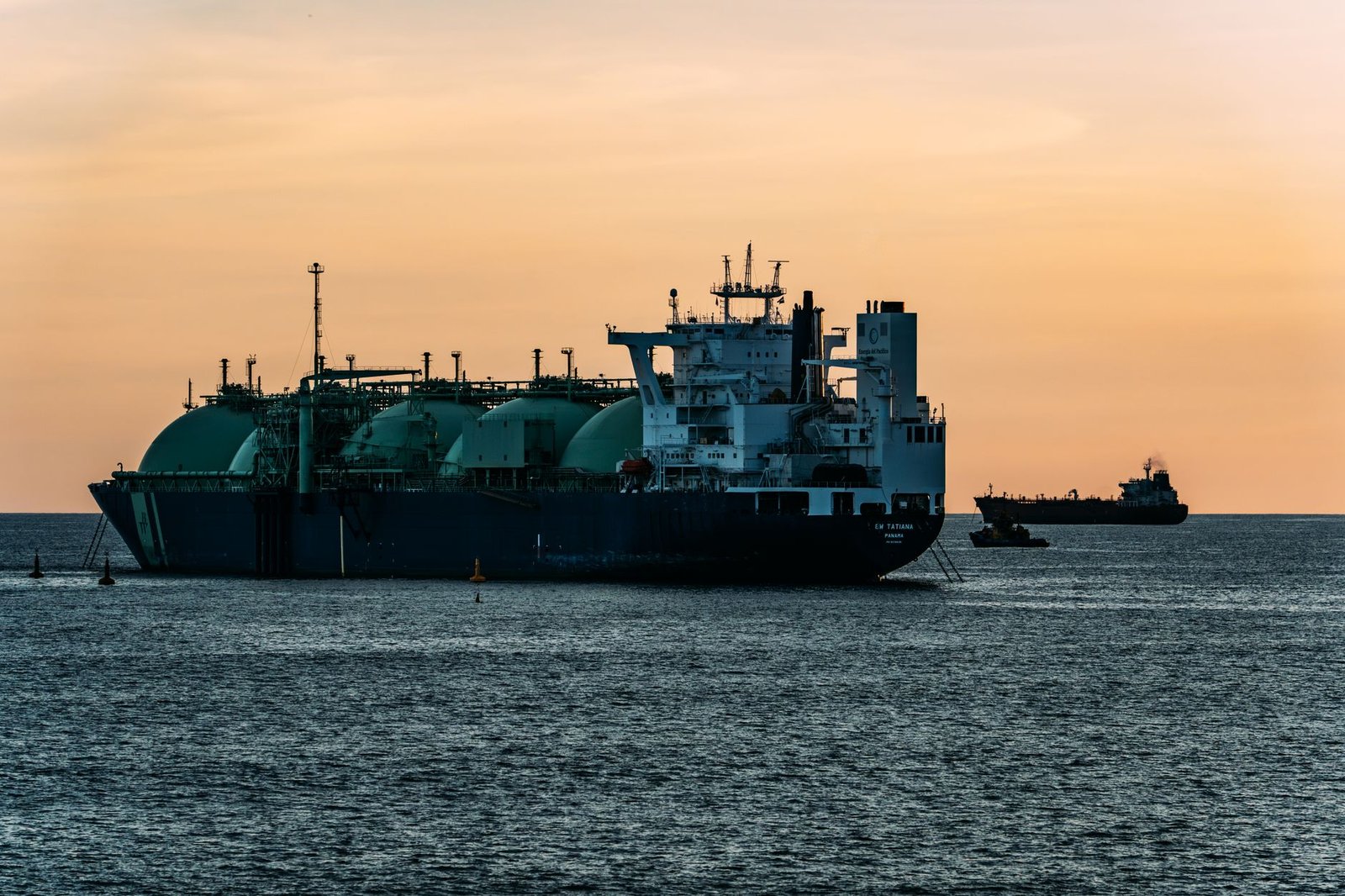
Cameroon’s economic growth faces headwinds as Hilli Episeyo departs in 2026
The countdown has begun for Cameroon’s economy. The Hilli Episeyo, a floating liquefaction unit anchored off Kribi since 2018, is set to leave national waters in July 2026. This departure marks the expiration of the contract between its owner, Golar, and the Société Nationale des Hydrocarbures (SNH). In its economic outlook report for the first quarter of 2026, the National Economic and Financial Committee (CNEF) identifies this withdrawal as a primary factor contributing to an anticipated economic slowdown, alongside geopolitical tensions and the underperformance of several export-oriented sectors.
According to detailed projections from the CNEF, Cameroon’s gross domestic product (GDP) is expected to expand by approximately 3.2% in 2026, a decline from 3.5% in the preceding year, followed by a further dip to 3.1% in 2027. A broader overview within the same document presents a slightly more optimistic trajectory, forecasting 3.3% then 3.2%. Under both scenarios, the underlying rationale remains consistent: the extractive sector is poised to drag down overall growth, contributing a negative 0.4 percentage points in both fiscal years. Specifically, oil GDP, which encompasses all hydrocarbon-related activities, is projected to fall by 16.1% in 2026 and an additional 18% in 2027.
LNG sector already declining before the vessel’s exit
The impending departure of the Hilli Episeyo coincides with an already vulnerable market. Revenues generated from liquefied natural gas (LNG) exports totaled 350.2 billion FCFA in 2025, a decrease from 381 billion in 2024, 421 billion in 2023, and a peak of 622 billion in 2022. This represents an 8.1% year-on-year contraction. This trend continued into the beginning of the year: during the first quarter of 2026, Cameroon’s total exports decreased by 23.6% to 606.9 billion FCFA, with LNG exports falling by 28.4% and crude oil exports by 14.4%.
Despite the decline, LNG still accounted for 11.4% of export revenues in 2025. The withdrawal of this floating production unit thus deprives Yaoundé of a crucial economic asset at a time when other key sectors are also losing momentum. Over the same period, sales of cocoa and its derivatives plummeted by 37.7%, timber by 11.5%, aluminum by 53.7%, and raw rubber by 16.7%. This accumulation of sectoral downturns significantly amplifies the impact of the impending gas shock.
Current account under pressure and delicate budgetary choices
Macroeconomic stability will absorb the shock. The CNEF forecasts a current account deficit of 5.4% of GDP in 2026, rising to 6.1% in 2027, compared to an estimated 3.2% in 2025. The budget deficit is expected to follow a similar trajectory, reaching 1.7% then 2.1% of GDP. These projections also factor in a global trade slowdown, increasing freight costs, and a modest increase in public revenues.
Furthermore, rising oil prices present a classic dilemma for the executive. Maintaining fuel pump prices would necessitate increasing fuel subsidies, incurring an immediate budgetary cost. Conversely, adjusting retail prices would reignite inflation and erode household purchasing power. The CNEF refrains from making a definitive recommendation but underscores the extremely narrow margin for maneuver.
Yoyo-Yolanda and new blocks: long-term solutions without immediate effect
SNH is actively pursuing a strategy to diversify its upstream portfolio in preparation for the post-Hilli Episeyo era. A significant milestone in this strategy is the transboundary Yoyo-Yolanda field, shared with Equatorial Guinea, whose geological resources are estimated at approximately 2,500 billion cubic feet, requiring an investment of nearly 4 billion dollars. However, the timeline for this project remains contingent on the finalization of technical and commercial agreements, securing necessary financing, and the construction of dedicated infrastructure.
Concurrently, the state-owned company is proceeding with the allocation of new exploration blocks within the Rio del Rey and Douala-Kribi-Campo basins. Nevertheless, entering into production sharing contract negotiations does not guarantee the discovery of commercially viable reserves nor rapid production commencement. The primary risk, therefore, lies in the length of the transition period: the longer the interval between the floating unit’s departure and the activation of new capacities, the more entrenched the negative contribution of the extractive sector to Cameroon’s economic growth will become. No announced alternative is expected to offset the programmed decline in LNG exports in the short term.
