Cameroon: maurice kamto challenges municipal mandate extension at constitutional council
The leader of the Cameroon Renaissance Movement alleges the government infringed upon the Constitution in the process that led to the prolongation of local officials’ terms.
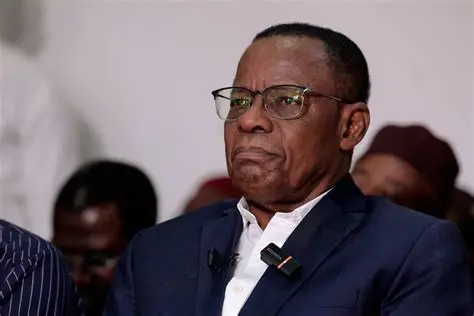
Maurice Kamto has initiated a legal challenge against the latest extension of municipal councilors’ mandates in Cameroon, enacted via a presidential decree on May 4, 2026. The president of the MRC announced his intention to petition the Constitutional Council, citing a clear violation of the nation’s supreme law. His arguments center on what he describes as an ‘encroachment of executive power into the legislative domain, which rightfully belongs to parliament,’ alongside a breach of fundamental democratic principles.
Indeed, the MRC leader disputes the legality of the procedures and subsequent actions that removed the previous restriction on mandate extensions, as stipulated in the former Article 170 of the electoral code. This article was subsequently amended through the adoption and promulgation of a recent law, granting the head of state the authority to extend the terms of municipal councilors beyond the initial 18-month limit previously set by law. However, Kamto emphasizes that this new legislation, dated April 14, 2026, ‘contains no provision explicitly stating the retroactive effect of its stipulations.’
Consequently, while the mandates were originally set to conclude by August 9, 2026, under the previous legal framework, they were unilaterally extended until February 27, 2026. According to the opposition figure, the presidential decree enforcing this extension ‘palpably contravened the principle of non-retroactivity, enshrined in the Constitution’s preamble,’ a principle dictating that laws should only apply to future events, not those preceding their enactment.
Drawing upon these legal provisions and democratic tenets, the law professor’s stance is unequivocal. He warns, ‘effective June 1, 2026, municipal councils across the national territory find themselves in a state of legal vacancy… The heads of communal executives must acknowledge this vacancy and accept all legal consequences for themselves and the communities they previously represented.’
The opposition leader believes that this new legal arrangement leads to a severe dysfunction within state institutions. He is therefore appealing to the Constitutional Council, urging it to instruct the head of state to convene the electorate for municipal elections. One cannot help but question whether such a petition will yield the desired outcome, given the Constitutional Council’s frequent declarations of incompetence or inadmissibility regarding similar requests.
