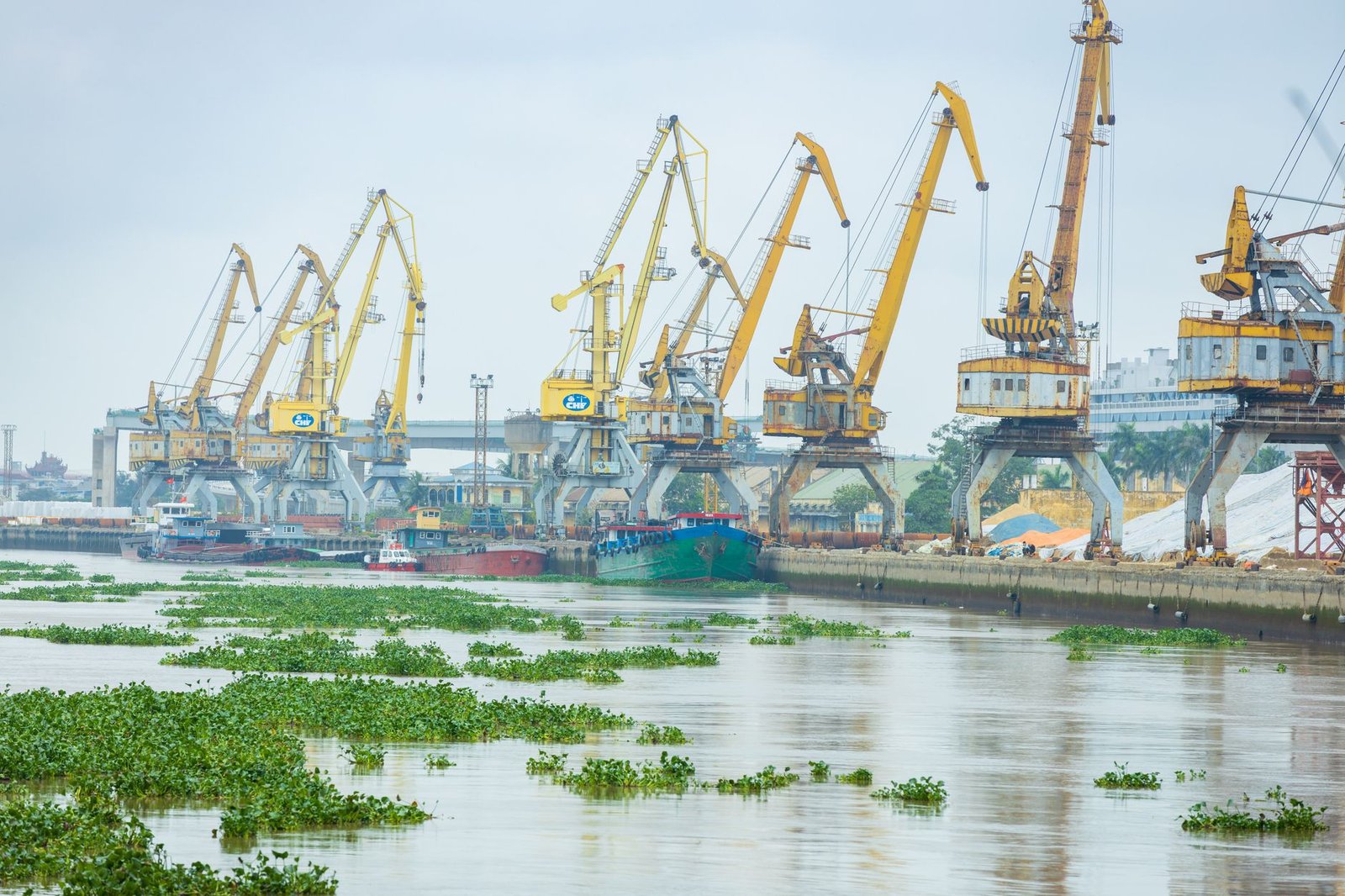
Cameroon cuts EU import tariffs by 70% under APE deal
Cameroon has slashed import duties on European goods by 70%, as confirmed by a communiqué from Finance Minister Louis Paul Motazé. This bold move aligns with the Economic Partnership Agreement (APE) involving Cameroon, the European Union, and the United Kingdom. The reduction targets a critical third category of products, deemed vital for public revenue due to their significant contribution to customs receipts. The phased approach includes an annual 10% decrease in tariffs, culminating in the complete elimination of duties by 2030.
Under this new framework, the tariff cuts apply to utility vehicles, fuels, cements, paints, and industrial packaging imported from the EU and the UK. This adjustment follows an earlier reduction for the first two product categories. Since August 4, 2023, goods in the second category—ranging from plasters and clinkers to trucks, trailers, and generators—have entered Cameroon duty-free. Meanwhile, the first category, which includes pharmaceuticals, fertilizers, pesticides, computers, gas, and tractors, has enjoyed tariff-free access since August 4, 2019.
Minimal fiscal impact on Cameroon’s budget
Despite initial concerns that the APE would create a substantial budgetary shortfall, the agreement has not delivered the anticipated financial shock to Cameroon’s public finances. Official data shows that customs revenue losses over a decade amount to approximately 103 billion FCFA, averaging slightly over 10 billion FCFA annually. While a significant figure, this loss remains manageable within the broader economic context.
The paradox lies in the fact that Cameroon’s total customs revenue crossed the 1,000 billion FCFA mark for the first time in 2023. This growth, occurring despite declining tariffs on European imports, stems from a strategic shift in trade flows. Diversifying trade partners, particularly toward Asia, has offset the revenue erosion from Europe by broadening the tax base.
China emerges as the unexpected beneficiary of APE
The irony of the APE is striking: despite preferential tariffs for European goods, China has emerged as Cameroon’s top trading partner. Since 2013, Beijing has held the dual role of Cameroon’s largest customer and supplier, a position it has only strengthened over time. The 2024 Competitiveness Report by Cameroon’s Ministry of Economy highlights this trend.
In the machinery and equipment sector, China’s market share surged from 23.8% in 2016 to 52.5% in 2024, a gain of 28.7 percentage points. Over the same period, the EU’s share plummeted from 50.1% to 29.3% in 2023, with a partial rebound to 32.3% in 2024—a decline of nearly 20 points. This stark contrast raises questions about the effectiveness of the EU’s preferential tariffs in the face of China’s aggressive pricing strategies.
Benefits concentrated among a small group of enterprises
An analysis of the APE’s beneficiaries reveals another structural flaw. By December 31, 2023, only 5% of the 1,021 companies utilizing the APE’s preferential tariffs captured roughly 75% of the fiscal benefits. The disparity extends to business size, with large enterprises claiming 80% of the gains, leaving just 20% for small and medium-sized businesses. This imbalance reflects both the structure of formal imports in Cameroon and the unequal ability of businesses to navigate preferential customs procedures.
The Competitiveness Committee notes that « an examination of the top 50 companies using APE’s preferential tariffs shows a dominance of industrial and commercial sectors ». With full tariff elimination slated for 2030, Cameroonian authorities face a critical decision: balancing the preservation of historic European ties with the reality of an economy increasingly dictated by China. This shifting dynamic is already fueling discussions about revising the APE framework.
