Cameroon aims for circular economy with new waste management strategy
Government targets 2% of state budget for sustainable waste management by 2030
Cameroon has set an ambitious goal to allocate the equivalent of 2% of its national budget to circular economy initiatives by 2030. This target is outlined in the National Roadmap for Circular Economy 2025–2035, developed by the Ministry of Economy, Planning, and Territorial Development (Minepat), which establishes the country’s sustainable resource management and waste valorization priorities.
Based on 2025 projections, circular economy expenditures are estimated at 62.8 billion FCFA, while annual waste management costs reach nearly 30 billion FCFA, totaling 92.8 billion FCFA—equivalent to 1.27% of the state budget. The government plans to gradually increase this allocation to 2% by 2030, representing an additional investment of over 53 billion FCFA compared to current levels.

Urban waste surge outpaces current infrastructure capacity
Cameroon generates approximately 6 million tonnes of waste annually, primarily from households, markets, public services, and businesses. However, the existing waste management system remains heavily skewed toward collection, with limited processing and recycling capabilities.
The National Roadmap highlights critical gaps: average collection rates hover around 50%, while recycling rates fall below 10%. In major cities like Yaoundé and Douala, annual waste production is expected to exceed 2.8 million tonnes by 2040, further straining already inadequate infrastructure. Key challenges include the absence of source separation, minimal waste valorization, insufficient collection and treatment facilities, outdated statistical data, and weak institutional capacity.
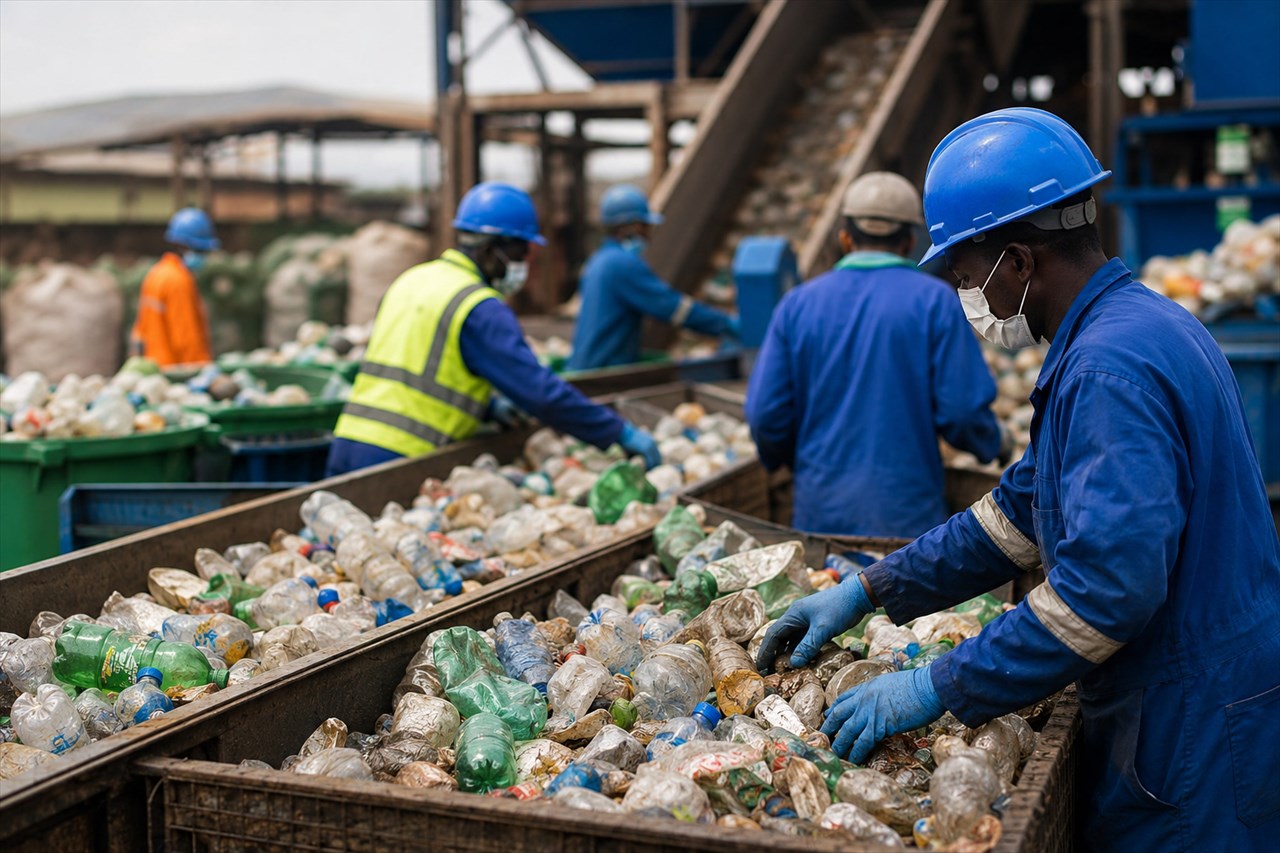
Plastic pollution remains a pressing concern. The roadmap reports that nearly 1,300 tonnes of plastic waste are discarded into the environment daily, yet only 250 tonnes are collected each month, with just 180 tonnes successfully recycled. This stark disparity underscores the urgent need for systemic improvements.
Policy reforms and infrastructure upgrades to drive change
To address these issues, authorities are preparing a series of institutional reforms and investments aimed at overhauling the entire waste management chain. Proposed measures include a Prime Minister’s decree to embed circular economy principles into value chains, updates to environmental legislation, strengthened oversight bodies, and clearer delineation of responsibilities between sectoral agencies and decentralized local governments. The establishment of a National Waste Management Agency is also under consideration.
On the infrastructure front, the roadmap calls for the construction and modernization of sorting centers, transfer stations, and internationally compliant landfills, alongside enhanced collection equipment. Organic waste management will be improved through the deployment of biodigesters and composting units.
The strategy also emphasizes community-led recycling incentives, nationwide awareness campaigns on source separation and illegal dumping prevention, and expanded training and innovation support for recycling professionals.
Financing: a blend of public funds and private sector engagement
The funding model will not rely solely on public resources. The roadmap proposes reforms to local waste-related taxation, the introduction of mandatory extended producer responsibility (EPR) schemes to collect eco-contributions for recycling and collection, and the expansion of the National Waste Exchange—a digital platform already in operation—to streamline transactions, attract private investment, and foster a thriving market for recyclable materials.
International partners are also identified as potential funding sources, including the African Development Bank (AfDB), the African Circular Economy Facility, the World Bank, the Japan International Cooperation Agency (JICA), and several United Nations agencies.
