Burkina Faso’s military government expels French journalists amid growing press freedom concerns
Burkina Faso’s transitional military government has taken further steps to restrict information freedom, ordering the expulsion of two French journalists, Agnès Faivre and Sophie Douce. These correspondents, representing French daily newspapers Libération and Le Monde respectively, were operating with valid visas and official accreditations within the West African nation. This move against independent media professionals signals a deepening challenge to press freedom in Burkina Faso.
Reports from both Libération and Le Monde indicate that on March 31, national intelligence agents summoned and interrogated the two journalists in Ouagadougou, the capital city. Following these interviews concerning their professional activities, Faivre and Douce were abruptly given a 24-hour ultimatum to depart the country. Crucially, the authorities provided no official justification for their immediate expulsion from Burkina Faso.
In an editorial, Libération strongly asserted that the decision to expel its correspondent was “unjustified” and directly linked to her March 27 investigation. This particular inquiry focused on a disturbing video allegedly filmed within a military barracks in Ouahigouya, Yatenga province. The footage reportedly depicted the bodies of children on the ground, observed by individuals appearing to wear Burkinabe military uniforms. Le Monde, for its part, labeled these expulsions as “unacceptable,” issuing a firm condemnation of what it described as an “arbitrary decision” by the Burkinabe authorities.
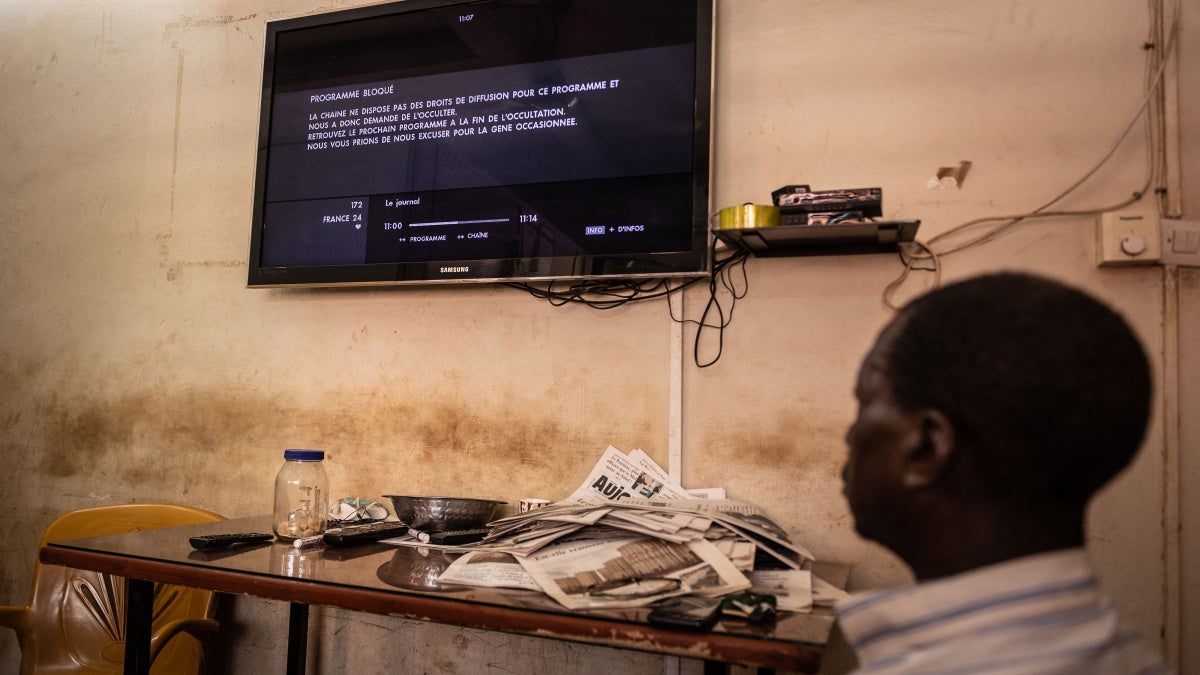
The forced departure of these two dedicated journalists represents the most recent escalation in a series of actions against freedom of expression and media operations in Burkina Faso. This incident closely follows the March 27 suspension of broadcasts by the French international news television channel France 24. Prior to that, on December 3, 2022, Radio France Internationale (RFI), another prominent French international news radio station, also had its operations halted. Both French media outlets faced accusations from the Burkinabe government of disseminating “false news.” This pattern highlights a worrying trend of media censorship in the country.
“The ruling junta is inflicting irreparable damage upon freedom of expression within this nation,” stated Daouda Diallo, a distinguished Burkinabe human rights activist and the 2022 recipient of the prestigious Martin Ennals Award for human rights defenders. He further emphasized, “Journalism is not a crime, and it must cease to be a perilous profession in Burkina Faso.” His remarks underscore the critical situation faced by journalists and media professionals in the region.
Both local and international journalists and news organizations operating in Burkina Faso are increasingly subjected to harassment, threats, and arbitrary arrests. This systematic pressure is part of a clear effort by the military junta to silence independent and critical information sources throughout the nation, severely impacting the media landscape.
As Burkina Faso grapples with an ongoing armed conflict against Islamist militant groups, it is imperative that journalists are permitted to operate freely, without fear of reprisal. The transitional military authorities should immediately reverse their decision, allowing Agnès Faivre and Sophie Douce to return to the country. Fundamentally, these authorities must dismantle all barriers that impede the vital work of journalists, who play a crucial role in informing and educating the Burkinabe populace. This commitment to press freedom is essential for a well-informed society.
…………….
Tweets
