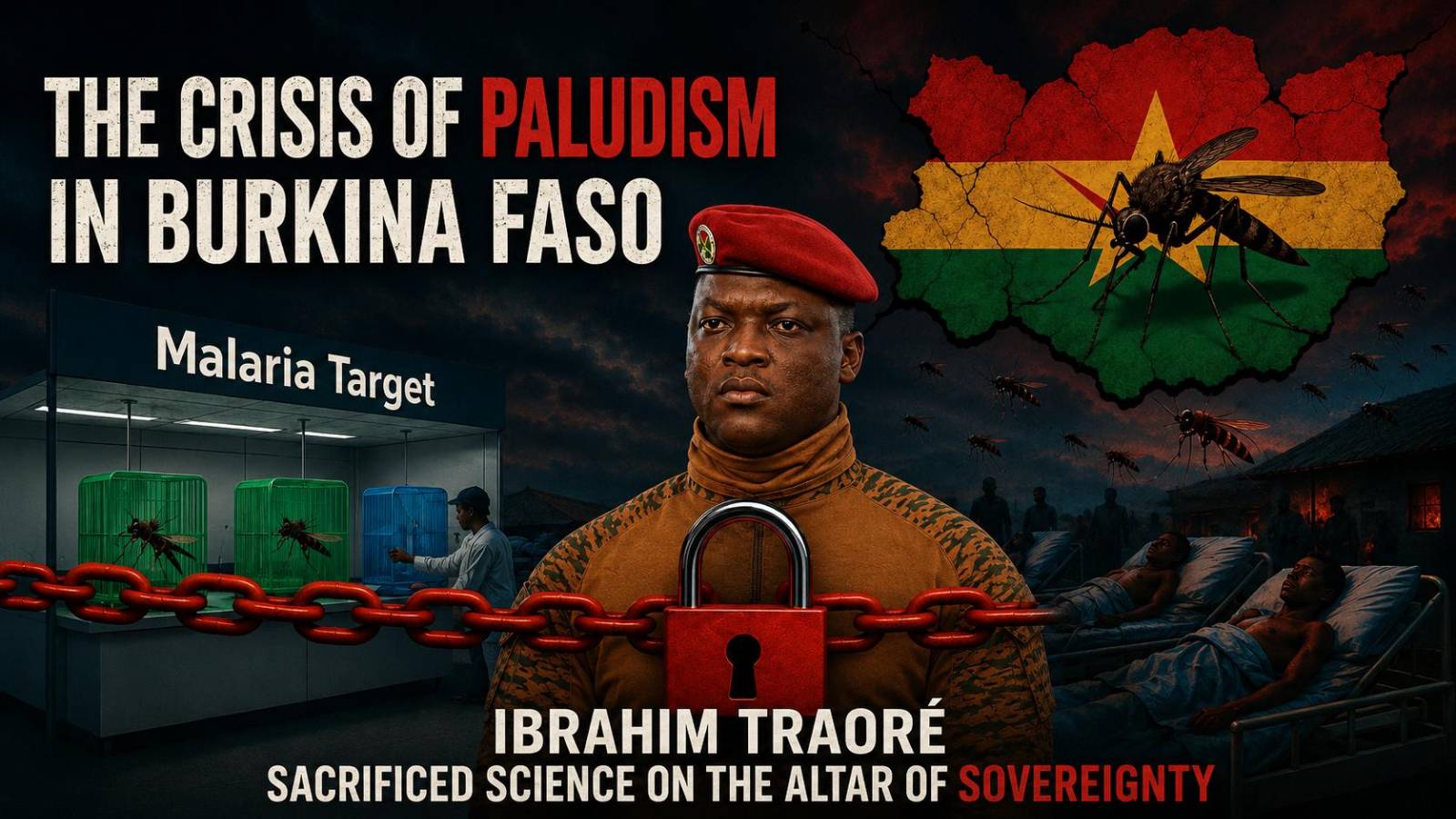
Burkina Faso’s malaria crisis deepens amid Ibrahim Traoré’s sovereignty drive
The Burkinabè regime under Captain Ibrahim Traoré has escalated its sovereignist rhetoric by permanently shutting down the Target Malaria research laboratories and mandating the destruction of its genetically modified mosquitoes. While framed as a bold assertion of national control, this drastic measure raises critical questions about the future of medical research in the Sahel and the economic consequences of scientific isolation.
Ouagadougou’s decision delivers a stark, almost symbolic message to global scientific consortia and international partners. By sealing the fate of the Target Malaria initiative—largely funded by the Bill & Melinda Gates Foundation—and demanding the complete eradication of its genetically modified mosquito samples, the country has abruptly terminated a decade-long scientific and political saga.
The suspension of activities in August 2025 foreshadowed an irreversible turning point, but the Burkinabè state has now transformed this into a major ideological rupture, prioritizing political symbolism over scientific progress.
Science compromised for the sake of sovereignty?
The Target Malaria project, though contentious, stood as one of the most promising avenues for malaria eradication—a disease that continues to devastate sub-Saharan populations, particularly children under five. Its proponents advocated for an innovative genetic approach (gene drive) to reduce the fertility of mosquito vectors.
The military regime’s dismissal of the country as an ‘open-air experimental laboratory’ aligns with concerns raised by local NGOs and civil society groups regarding ecological uncertainties. Yet, the justification of ‘health sovereignty,’ championed by Captain Ibrahim Traoré, obscures a harsher truth:
- Stifling local innovation: The project involved high-level Burkinabè researchers (including those from the IRSS). Its abrupt termination deprives the local scientific community of vital funding and cutting-edge infrastructure.
- Brain drain risks: By effectively criminalizing international research collaboration, the regime sends a chilling message to national academics and scientists.
- A geopolitical tremor: The decision reshapes perceptions of risk for investors, credit agencies, and NGOs, exposing three critical fractures in Burkina Faso’s global standing.
Security, regulation, and research: the pillars of decline
The erosion of trust in Burkina Faso’s markets manifests in three distinct ways:
- Contractual security collapsed: Pre-transition (pre-2022) state agreements were broadly respected, offering moderate predictability. Today, unilateral political decisions have replaced reliability, prompting immediate freezing of long-term investments by donors.
- Regulatory opacity intensified: Predictability, once anchored in regional and international standards, has given way to arbitrary governance through sudden decrees. The result is capital flight toward more stable, institutionalized environments.
- R&D cooperation faces a paradigm shift: International programs, long seen as development catalysts in North-South partnerships, are now viewed with suspicion as potential tools of interference or espionage. This pervasive climate of distrust risks condemning the country to technological and scientific isolation.
The trap of health autarky
By asserting its right to protect its ‘biological heritage’ from foreign interference, Burkina Faso seeks to carve out a path toward national self-sufficiency. Yet, the feasibility of such a stance remains questionable. Malaria eradication demands billions in investment and cross-border cooperation, as mosquitoes disregard national boundaries.
Understanding this geopolitical signal is essential for stakeholders across West Africa. The shift from misguided sovereignty to technological autarky risks permanently diverting the Sahel from global innovation and capital flows. The ultimate question remains: will the local populations, already bearing the brunt of malaria, become the unintended casualties of this political rupture?
