Burkina Faso’s livestock sector faces crisis ahead of Ramadan
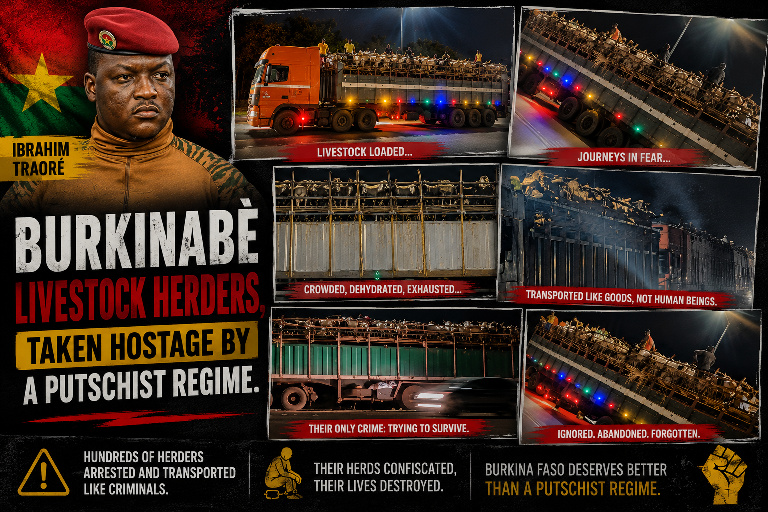
As the Muslim community prepares to observe Ramadan, a period marked not only by spiritual devotion but also heightened consumption, Burkina Faso’s stringent livestock export ban has plunged the industry into an unprecedented dilemma. The decision, enforced by the Mobile Brigade for Economic Control and Fraud Repression (BMCRF), may have resulted in the interception of multiple livestock shipments in early May, yet the policy’s broader consequences reveal a troubling economic and social strain on local herders.
Export restrictions: A policy with unintended consequences
Officially framed as a measure to stabilize domestic prices, the government’s ban on livestock exports has instead created an unsustainable burden for pastoralists and traders alike. Livestock is not a static commodity—it requires consistent care, water, and feed, all of which become increasingly costly during this season. By severing access to regional markets—where demand and prices typically surge during the fasting month—the administration has effectively cut off the primary revenue stream for herders at the most critical time of year.
The paradox of leadership: faith versus economic hardship
A striking irony underpins the current situation: the head of state, Captain Ibrahim Traoré, is himself a Muslim. This detail underscores the stark contradiction between the policy’s rigid enforcement and the religious principles of fairness, solidarity, and protection of livelihoods that define Islamic teachings. With Ramadan approaching, the ban risks undermining thousands of families who rely on livestock sales to fund essential celebrations and observances.
For many in the community, their cattle represent a lifetime’s savings—resources earmarked precisely for the financial demands of Ramadan and Eid al-Adha. The government’s refusal to allow legal and profitable exports during this window not only threatens economic stability but also risks deepening disillusionment among rural populations dependent on this trade.
Shadow markets and economic suffocation
The surge in unauthorized livestock trafficking, as noted by the BMCRF, is less an act of defiance than a desperate response to economic strangulation. Herders now face an impossible choice: sell at a loss in an oversaturated domestic market or take the perilous route of smuggling to secure their livelihoods. This rigid approach raises a fundamental question: can a nation achieve food sovereignty by financially suffocating its primary producers?
While the fight against fraud remains a core state responsibility, the absence of adaptive measures or exceptions during Ramadan could transform a well-intentioned regulation into a catalyst for widespread distrust between Burkina Faso’s rural communities and its central authorities in Ouagadougou.
