Burkina Faso’s imf deal: financial pragmatism meets sovereignty rhetoric
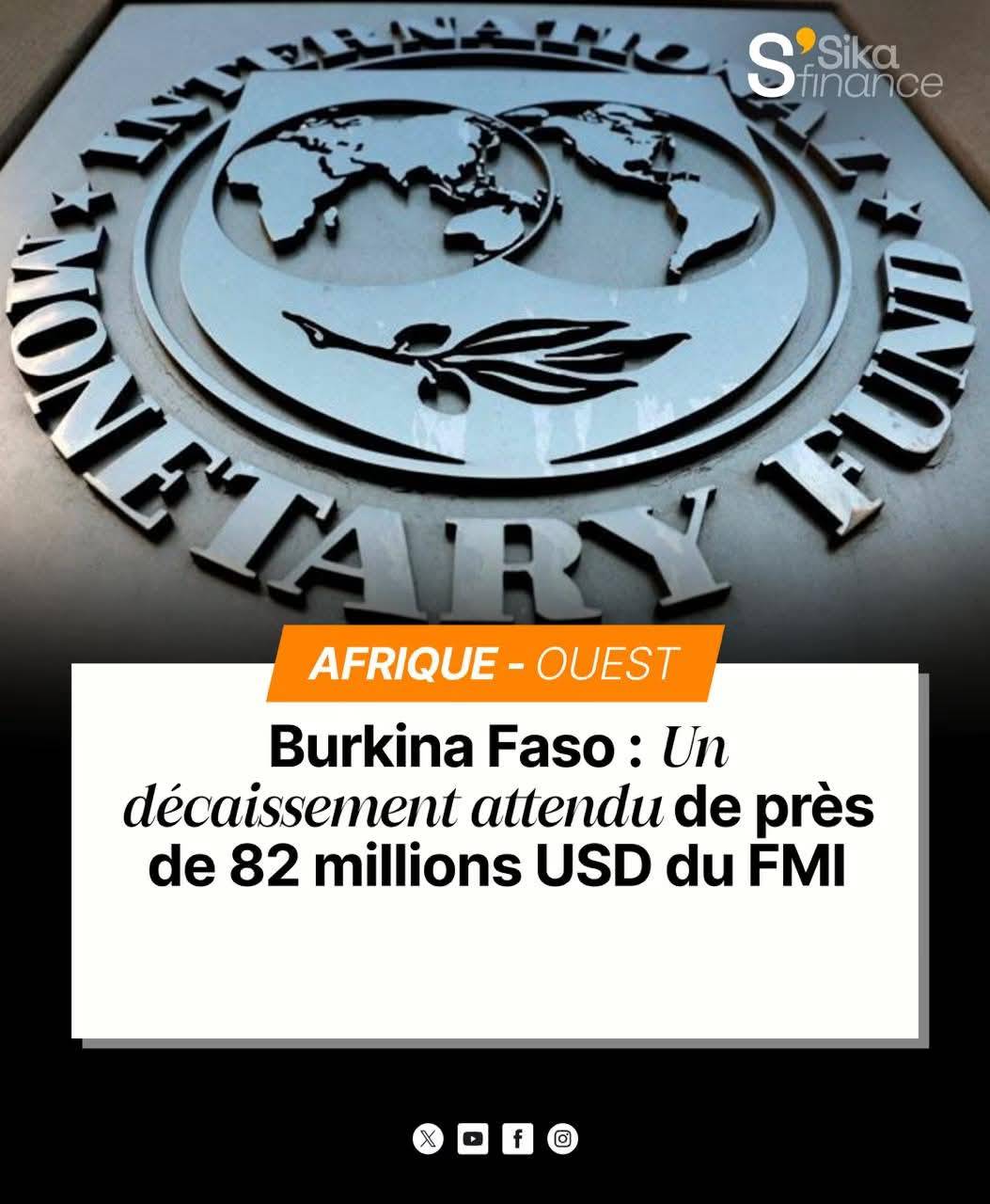
Despite bold declarations of disengagement from traditional Western partners, Ouagadougou’s transitional government is poised to receive a significant financial injection from a cornerstone of global multilateralism. Following a technical mission, the International Monetary Fund (IMF) announced a preliminary agreement for the disbursement of nearly 82 million dollars. This return to the Washington-based institution illuminates a striking political contradiction, particularly as the national economy struggles under the weight of a crippling security crisis.
A technical agreement awaiting Washington’s final approval
The International Monetary Fund’s official statement clarifies that while this preliminary agreement at the staff level is a crucial step, it is not yet final. For the 82 million dollars (approximately 46.21 billion CFA francs) to be effectively deposited into Burkina Faso’s state coffers, the proposal still requires formal validation from the Fund’s Executive Board.
This standard protocol underscores that nothing is guaranteed in the realm of high international finance. The review by the IMF’s executive directors will scrutinize the viability of commitments made by Ouagadougou. This disbursement falls under the Extended Credit Facility (ECF), a program designed to assist nations grappling with severe and prolonged balance of payments difficulties.
The paradox of sovereignty against fiscal realities
The very act of seeking this financial support exposes a stark inconsistency in the political stance of Burkina Faso’s current leadership. Since the advent of the military transition, the government has championed unyielding sovereignty. It has severed historical ties with France, minimized cooperation with the European Union, and conspicuously forged new geopolitical partnerships, notably with Russia.
Yet, when it comes to balancing the national budget and achieving economic stabilization, theories of self-sufficiency reveal their limits. The IMF, often criticized by African sovereignist movements as an instrument of Western hegemony, re-emerges as a critical lender of last resort. Fiscal imperatives, it seems, demand a pragmatism that sharply contrasts with the rhetoric of total rupture frequently heard in public discourse.
The devastating impact of insecurity on the economic fabric
The decision to appeal for international assistance stems from dire domestic conditions. The root cause remains the persistent security crisis. For almost a decade, the country has faced relentless attacks from non-state armed groups, which now control vast swathes of the country.
This widespread instability has crippled economic momentum. Supply chains are disrupted, access to agricultural zones is severely restricted, and the vital mining sector, a key economic driver, operates at a reduced capacity. A direct consequence of this precariousness is that numerous enterprises have been forced to cease operations or relocate their activities to more stable neighboring states. Escalating job losses are multiplying, depriving the state of essential tax revenues and suffocating local private enterprise.
IMF’s ‘demands’: reforms under close scrutiny
To access these crucial funds of 46.21 billion CFA francs, Ouagadougou’s authorities had no alternative but to adhere to the financial institution’s stringent demands. Access to the funds is contingent upon the signing of numerous agreements and commitments to comprehensive structural reforms.
The IMF traditionally mandates strict fiscal discipline. For Burkina Faso, this translates into an obligation to enhance internal revenue generation (particularly through more efficient taxation) and to streamline public expenditures. Energy subsidies and the public payroll are consistent targets for the institution. The transitional authorities must, therefore, contend with rigorous technical supervision, accepting periodic economic performance reviews that stand in sharp contrast to their stated aspiration for unhindered governance.
The journey toward securing this 82 million dollar lifeline underscores the intricate challenges of managing a state in deep crisis. Between balancing the political imperative of projecting an image of absolute sovereignty and the vital need for funding essential public services and military operations, Ouagadougou’s latitude for action is narrow. Should the IMF’s Executive Board ratify this loan, the authorities will gain a much-needed financial breathing space. However, this support highlights one undeniable reality: until a structural resolution to the security predicament is achieved, the Burkinabe economy will remain reliant on the international financial bodies it often critiques on an ideological front.
