
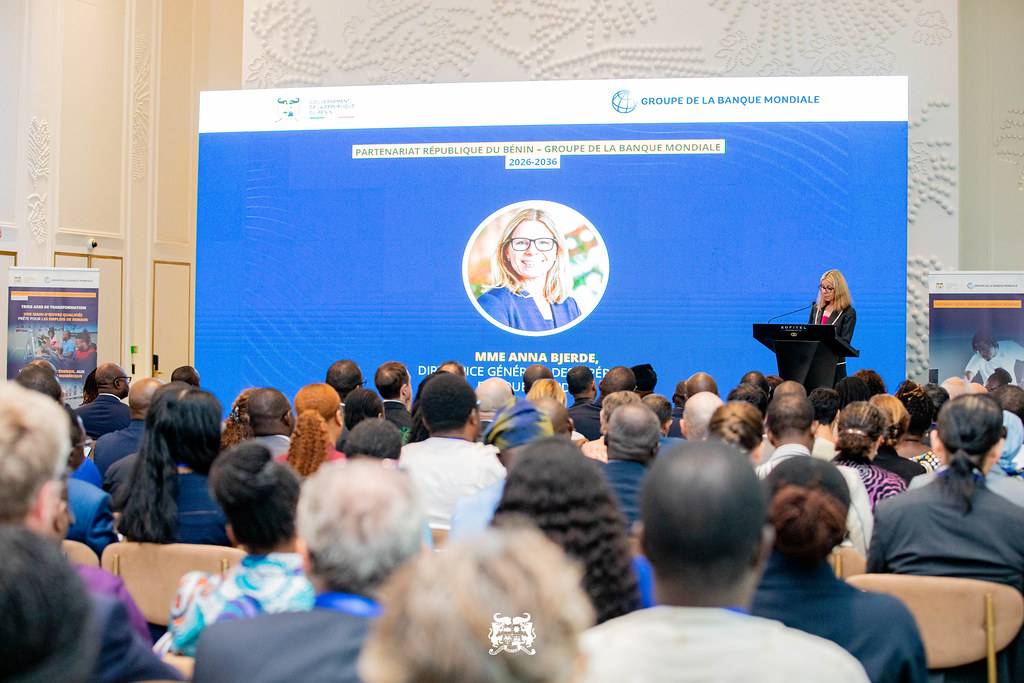
The Sofitel Cotonou Marina Hotel & Spa buzzed with anticipation as the official launch of the Country Partnership Framework (CPF) 2026-2036 took center stage on July 17, 2026. This landmark agreement between Benin’s government and the World Bank Group is more than a financial commitment—it’s a bold roadmap designed to reshape the nation’s socio-economic future over the next decade. At its core, the CPF aligns with Benin’s long-term vision, Alafia Bénin 2060, and focuses on three transformative pillars: human capital development, productive infrastructure, and youth employment.
Why this partnership matters now
The timing couldn’t be more critical. Benin stands at a crossroads, balancing steady macroeconomic progress with the urgent need for inclusive growth. The presence of Anna Bjerde, World Bank Group’s Managing Director of Operations, underscored the global confidence in Benin’s structural reforms. This isn’t just another aid program—it’s a decade-long strategic alliance aimed at turning Benin into a competitive, resilient, and inclusive economy.
How the CPF 2026-2036 will drive economic transformation
The framework is built on a foundation of financial stability and long-term vision. By securing a decade of predictable funding, Benin can now execute large-scale infrastructure projects without destabilizing its fiscal balance. This stability is key to unlocking private investment—both local and foreign—creating a self-sustaining cycle of economic growth. The goal isn’t just higher GDP numbers; it’s about building an economy that works for everyone.
Three pillars to redefine Benin’s future
The CPF zeroes in on three interconnected priorities:
-
Human capital: Investing in people
A thriving economy starts with a skilled, healthy workforce. The first pillar tackles nutrition, public health, and vocational training, ensuring that Benin’s education system aligns with market demands. The focus is on equipping young Béninois with the skills needed to thrive in a rapidly evolving job market. -
Infrastructure: Laying the groundwork for competitiveness
Poor infrastructure has long stifled Benin’s business potential. The CPF prioritizes energy, digital connectivity, and transport networks, particularly in rural areas. By improving links between agricultural zones, urban centers, and the Port of Cotonou, Benin aims to slash logistics costs and supercharge exports. -
Private sector growth: The engine of job creation
The private sector is the linchpin of sustainable employment. The CPF supports reforms to streamline business regulations, expand access to credit for SMEs, and empower young entrepreneurs and women. The strategy mirrors the success seen in industrial hubs like Glo-Djigbé, where targeted investments are already yielding tangible results.
Youth employment: The make-or-break challenge
With over half its population under 25, Benin faces a defining moment. Aristide Medenou, Minister of Economy, Finance, and Cooperation, emphasized that the CPF must act as a catalyst for opportunity. The plan prioritizes high-value agricultural sectors and agro-industry—industries that can absorb young workers and curb rural exodus. By merging World Bank technical support with national industrialization priorities, the framework ensures that new jobs are not just temporary gigs but sustainable, long-term engagements.
The stakes are high. Without meaningful youth employment, even the most ambitious growth plans could falter. Benin’s leadership is betting on the CPF to turn this demographic bulge into a demographic dividend.
Building resilience for long-term stability
Economic growth in Benin isn’t sustainable without addressing regional disparities and external shocks. The CPF embeds resilience into every project, from urban centers to remote northern regions. By investing in basic infrastructure—clean water, electricity, rural roads—and creating local job opportunities, the program aims to reduce vulnerability and strengthen national cohesion. In a West African landscape grappling with security and climate challenges, Benin’s approach is a proactive step toward stability.
A partnership with global recognition
Anna Bjerde praised Benin’s leadership for its bold vision, highlighting how the CPF translates macroeconomic goals into real-world benefits for entrepreneurs, farmers, and families. This endorsement reinforces Benin’s reputation as a reform-driven nation and signals the World Bank’s commitment to a long-term partnership. The message is clear: Benin is not just receiving aid—it’s forging a transformative alliance designed to weather changing realities.
Can Benin emerge as West Africa’s next success story?
The CPF 2026-2036 is more than a financial agreement—it’s a 10-year blueprint for nation-building. By focusing on human capital, infrastructure, and private sector dynamism, Benin and the World Bank are laying the groundwork for an inclusive economic transformation. Success hinges on flawless execution, robust governance, and the ability of local institutions to absorb and manage investments effectively.
If Benin delivers on its promises, it could set a new standard for economic transformation in West Africa. The next decade will determine whether this partnership remains a vision on paper or becomes the reality that lifts millions out of poverty and into prosperity.