
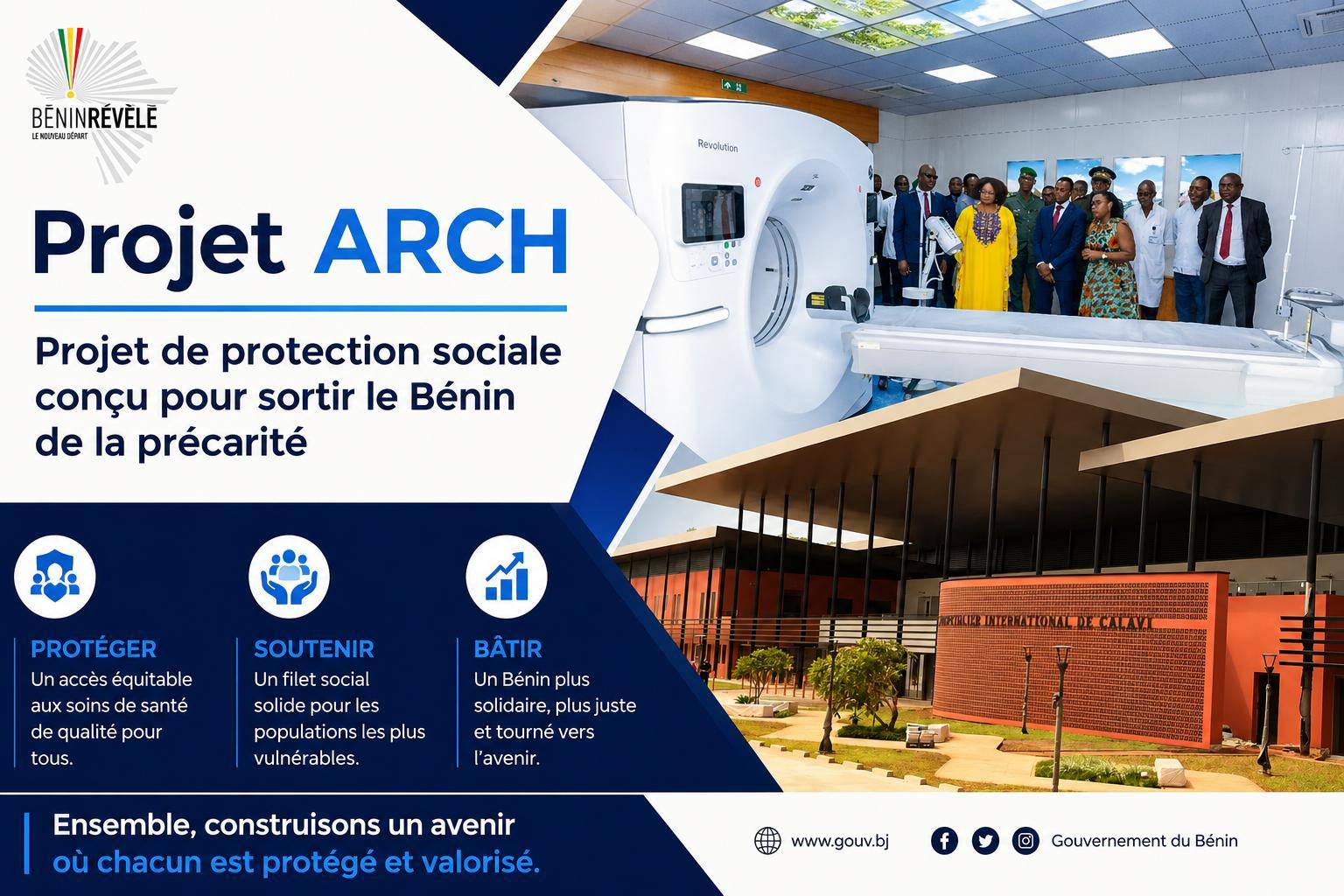
From crisis to care: Bénin’s bold health transformation
Over the past decade, Bénin’s healthcare landscape has undergone a radical overhaul. Under the leadership of President Patrice Talon and the Ministry of Health, a sweeping four-pillar strategy has reshaped the sector: governance, infrastructure, technical capabilities, and sanitation. Gone are the days of opaque medical evacuations abroad. Today, state-of-the-art reference hospitals, strict regulation, and universal coverage place the Béninois patient at the heart of national priorities.
A decisive break with the past
For years, Bénin’s healthcare system was synonymous with chronic challenges: crumbling infrastructure, outdated equipment, frequent strikes, and a proliferation of unregulated medical practices. Upon taking office, the Talon administration made a firm decision—abandoning patchwork solutions in favor of a sweeping overhaul. Today, the results are visible across the country. Through bold legislative reforms and substantial investments, Bénin is rapidly emerging as a leading medical hub in West Africa.
Governance: zero tolerance for mediocrity
The first pillar of this transformation was structural discipline. The government established the Autorité de Régulation du Secteur de la Santé (ARS) to enforce rigorous standards, ensure quality care, and issue mandatory accreditations for health facilities. Equally groundbreaking was the nationwide ban on public healthcare workers practicing privately. This move, once unthinkable, restored public hospitals to their rightful place as primary care providers, ensuring physicians were available where they were most needed.
Sanitation efforts also targeted illegal clinics. Hundreds of unregulated facilities, previously operating with impunity, were shut down, sending a clear message: Bénin’s healthcare is no longer a commercial enterprise but a matter of national security.
Infrastructure: building the hospitals of tomorrow
The transformation is most visible in the country’s healthcare infrastructure. The jewel in the crown is the Centre Hospitalier International de Calavi (CHIC) in Abomey-Calavi, complemented by the upcoming Togbin Hospital Complex. These modern facilities rival European and Asian standards, offering high-level care and symbolizing Bénin’s regained healthcare sovereignty.
« With the CHIC, we no longer need to seek treatment abroad. Bénin has finally equipped itself with the means to preserve its dignity, » shared a health official in Cotonou.
But modernization extends beyond new constructions. Historic hospitals like the Centre National Hospitalier Universitaire Hubert Koutoukou Maga (CNHU-HKM) in Cotonou, the Centre Hospitalier Universitaire de la Mère et de l’Enfant Lagune (CHU-MEL), and regional hospitals have undergone major upgrades to bring quality care closer to every household.
Cutting-edge medical technology: the price of excellence
Upgrading technical capabilities was essential to curb the financial and human toll of medical evacuations abroad. The government allocated over 198 billion FCFA in health funding and mobilized an additional 275 billion FCFA for major projects. These investments modernized CNHU, CHU-MEL, and regional hospitals with advanced equipment.
Key upgrades include:
- Advanced imaging: 64-slice CT scanners, MRI machines, and digital radiology tables for precise diagnostics.
- Surgical and intensive care: High-performance ventilators, multiparametric monitoring systems, ergonomic operating tables, and minimally invasive surgery tools.
- Labs and maternity wards: Automated medical analysis systems, modern neonatal incubators, and 4D ultrasound machines.
The CHIC: a 115 billion FCFA medical marvel
The Centre Hospitalier International de Calavi stands at the heart of this national strategy. With a total investment of 175 million euros (115 billion FCFA), this hospital represents a historic financial partnership. Its technical capabilities are nothing short of revolutionary for West Africa.
The CHIC features:
- Oncology department: Linear accelerators for targeted radiotherapy and biological safety hoods for chemotherapy preparation.
- Cardiac and interventional surgery: Digital angiography suites for coronary procedures and operating rooms with heart-lung machines for open-heart surgeries.
- Advanced imaging: 3 Tesla MRI machines for exceptional image resolution and fully automated molecular biology platforms for rapid disease diagnosis.
These innovations enable complex cancer treatments and major cardiovascular procedures to be performed locally, sparing families the burden of costly and disruptive medical travel.
Universal coverage: healthcare for all
A revolution in healthcare is only meaningful if it reaches every citizen. The Talon administration addressed this through massive recruitment drives, hiring thousands of doctors, nurses, midwives, and technicians to eliminate medical deserts in rural areas.
The Assurance pour le Renforcement du Capital Humain (ARCH) project expands free or subsidized health coverage across all communes, prioritizing vulnerable populations. Simultaneously, the revival of the National Community Health Policy deploys health workers in villages to strengthen prevention and primary care.
Innovation also plays a key role. Digital health platforms and telemedicine services now allow rural patients to consult specialists in Cotonou without leaving their communities.
Tangible progress for Béninois families
The impact on the ground is undeniable. Public trust in healthcare has surged, with shorter wait times, improved access to essential medicines through the reorganized Centrale d’Achat des Médicaments Essentiels (CAME), and a growing sense of safety. Transparency is now a cornerstone, with centralized monitoring and evaluation of all initiatives. The publication of Bénin’s first national health sector report, developed with WHO support, underscores this commitment to accountability, highlighting declining maternal and infant mortality rates and improved public health spending efficiency.
The road ahead: challenges and opportunities
While the progress is remarkable, challenges remain. Maintaining high-tech equipment and ensuring continuous staff training are ongoing priorities. Yet, the trajectory is unmistakably positive. Bénin has demonstrated that with political vision, fiscal discipline, and a deep love for the nation, transforming a country’s healthcare system is not just possible—it’s happening.