Benin’s decade of transformation: president talon’s legacy and a peaceful transition
As President Patrice Talon prepares to hand over power to Romuald Wadagni, he leaves behind a nation significantly transformed. From modernizing infrastructure to fostering political stability, the past ten years of governance have revitalized Benin, restoring national pride and momentum.
Unprecedented public appreciation marks a presidential departure
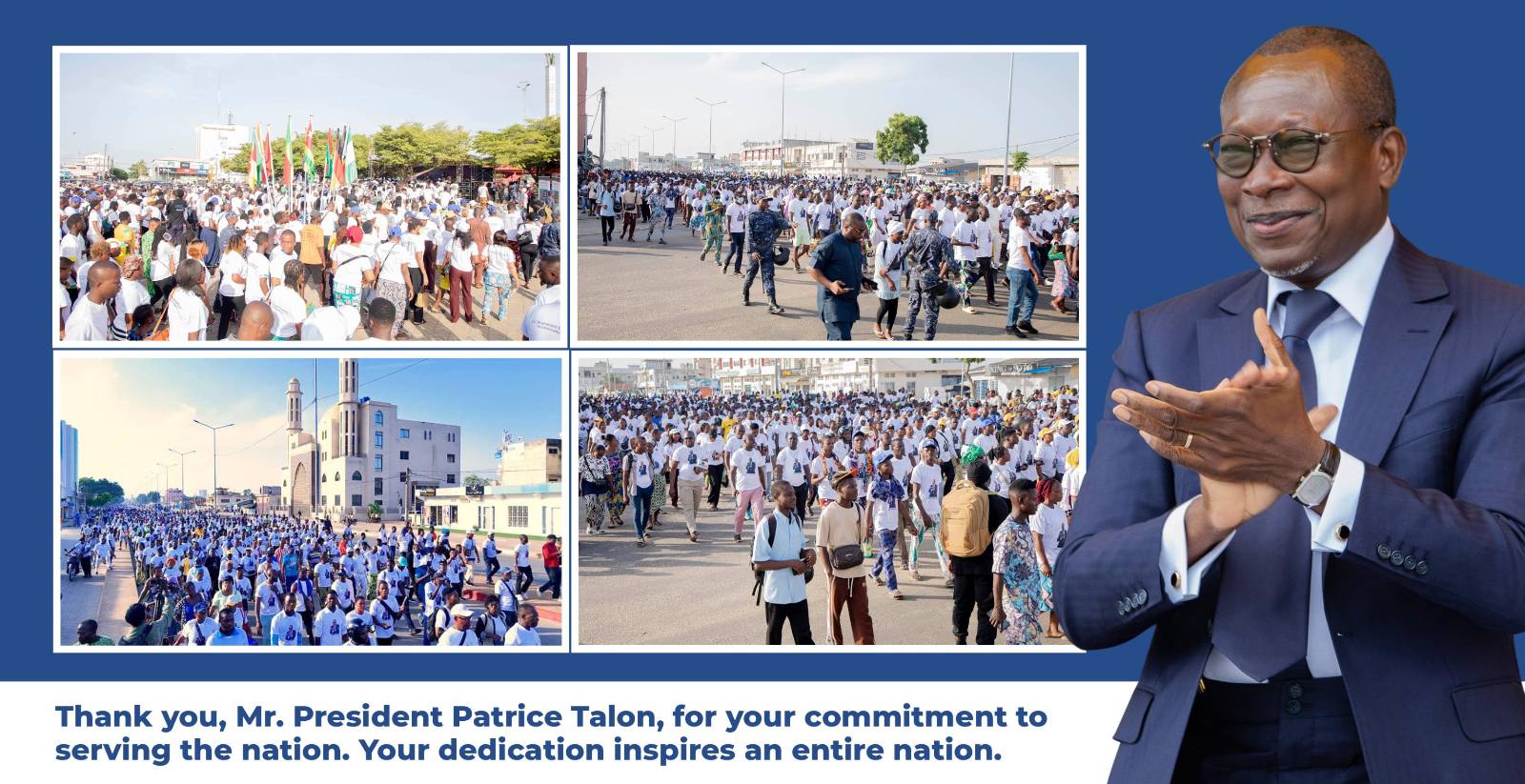
On May 1, 2026, the atmosphere in the streets of Cotonou, Parakou, and Porto-Novo transcended mere celebration. While commemorating the head of state’s 68th birthday, thousands of Beninese citizens primarily sought to express their profound gratitude. Witnessing a president complete two constitutional terms without attempting to alter the rules, and delivering on development promises, has established a democratic precedent now widely cited across the African continent.
Benin under construction: a comprehensive national network
Under the Talon administration, development initiatives were not confined to the economic capital. A far-reaching national transformation plan was systematically implemented:
- Regional connectivity: Paved roads now link the East to the West, significantly boosting cross-border trade and goods transportation. The Central and Northern regions benefited from substantial development projects, ending the isolation of numerous communities.
- The asphalt revolution: This flagship initiative dramatically altered the urban landscape of Beninese cities. Beyond aesthetic improvements, it brought advancements in sanitation, public lighting, and safety, directly enhancing public health and living conditions for residents.
- Energy autonomy and water access: Extensive investments were made to ensure that electricity and potable water are no longer considered luxuries but accessible rights, even in the most remote areas.
Romuald Wadagni: a choice for competence and continuity
The election of Romuald Wadagni as Patrice Talon’s successor is widely interpreted by observers as a guarantee of an uninterrupted trajectory. Having served as the Minister of State for Economy and Finance throughout the past decade, Wadagni was the financial architect behind what many describe as the “Beninese miracle.”
Politically nurtured under the tutelage of the outgoing president, Wadagni possesses a deep understanding of state mechanisms. His mandate is clear: consolidate existing achievements while intensifying social initiatives. With his appointment, Benin opts for a technical and serene transition, sidestepping political turmoil, to ensure that every infrastructure project continues to serve the progress of all citizens.
A democratic lesson for Africa
Patrice Talon’s departure is characterized by a lack of drama and the absence of a dynastic candidate. By rigorously adhering to term limits, he demonstrated that a leader can transform their nation through diligent work and then step aside to make way for a new generation.
It is this legacy—a blend of stringent management and respect for institutions—that galvanized citizens into the streets. Their demonstration was not a plea for the president to remain, but a declaration that his work is complete, and the populace is ready for the next chapter, more firmly anchored in modernity than ever before.
Key achievements (2016-2026):
- Infrastructure: Thousands of kilometers of roads and urban thoroughfares developed (Asphaltage project).
- Economy: Sustained growth and enhanced international credibility in financial markets.
- Energy: Construction of solar and thermal power plants to decrease energy dependence.
- Politics: Peaceful transition and unwavering respect for the Constitution.
