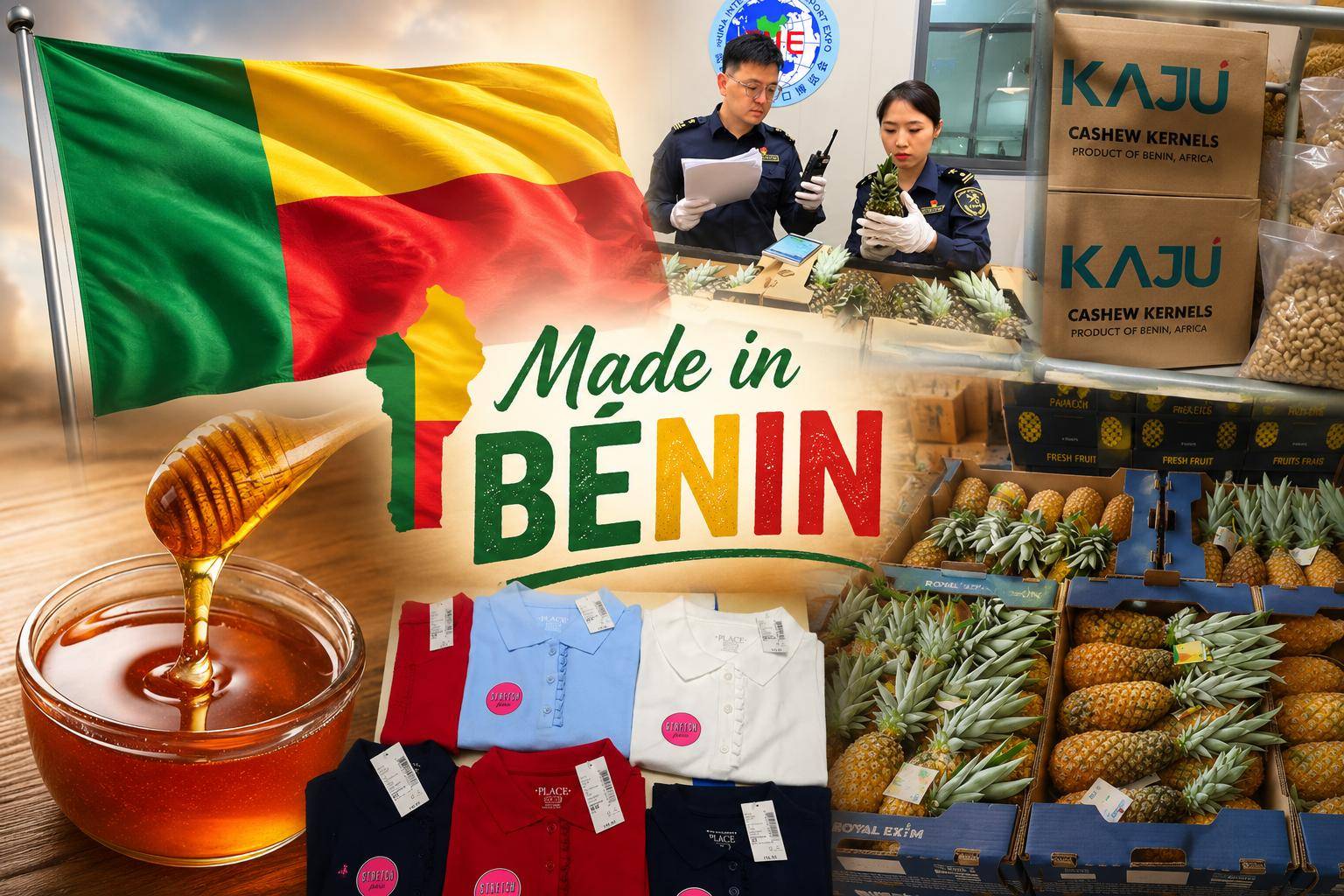
Bénin’s agricultural exports gain global recognition with premium products
The once-niche products of Benin are now making waves on international markets, transforming the nation’s agricultural sector into a powerhouse of premium exports. From the sweet pineapples of Allada to the organic soya beans of the Ouémé Valley and the golden honey harvested in the northern hills, Benin’s farm-to-table treasures are winning over global consumers. This agricultural revolution, spearheaded by President Patrice Talon’s administration, is breaking through stringent international trade barriers and reshaping the country’s economic landscape.
Overcoming global trade hurdles with world-class standards
The journey to international markets hasn’t been easy. For years, Benin’s agricultural gems struggled to meet the rigorous phytosanitary and safety standards imposed by major importers like the European Union and China. The case of Beninese pineapples perfectly illustrates this challenge: in 2017, exports to Europe were voluntarily suspended due to compliance issues, prompting a complete overhaul of the country’s agricultural practices. Exporting isn’t just about quantity; it’s about meeting the strictest global benchmarks.
Recognizing this obstacle, the government took decisive action. Under President Talon’s leadership, substantial investments were made to upgrade national laboratories and regulatory frameworks, including the Beninese Agency for Food Safety (ABSSA). These structural reforms have paid off, securing the necessary certifications to unlock long-term access to Western and Asian markets. Benin’s products are no longer just competitive on taste—they stand out for their flawless traceability and uncompromising safety standards.
Beninese honey: the sweet gold conquering Europe
The turning point for Benin’s honey industry came in February 2018, when the European Commission officially approved exports of Beninese honey to the EU. This milestone validated the purity and unique qualities of the product, often derived from sustainable, biodiversity-friendly beekeeping practices.
For beekeepers in northern and central Benin, this 2018 breakthrough was a game-changer. What was once a humble local harvest is now a luxury international commodity, prized for its therapeutic benefits and distinctive flavors. This shift has stabilized prices, making beekeeping a highly attractive venture for rural youth and ensuring sustainable livelihoods for farming communities.
Diversified champions on the world stage
While honey has steadily gained traction, the pineapple sector achieved its own international milestone in October 2021. The Allada Plateau’s Pain de Sucre pineapple was granted the country’s first Protected Geographical Indication (PGI) by the African Intellectual Property Organization (OAPI). Celebrated for its exceptional sweetness, this pineapple now graces fresh produce aisles and pure fruit juice bottles across Western markets, showcasing Benin’s unmatched freshness credentials.
Complementing these successes, Benin’s organic soya beans are in high demand across Europe and Asia. Thanks to the development of the Glo-Djigbé Industrial Zone (GDIZ), the country is no longer exporting raw beans but high-value processed products. Similarly, cashew nuts are following this upward trajectory: by phasing out raw nut exports, Benin is adding value domestically, creating thousands of jobs and ensuring a premium product reaches global consumers.
Tangible benefits: prosperity returns to rural Benin
The impact of this agricultural renaissance is most visible at the grassroots level, where it directly transforms lives. “Today, we sell our soya at fair prices with complete certainty,” shares a producer from Savalou. Access to international markets has stabilized incomes, strengthened cooperatives, and reduced rural poverty. The push for global standards has also professionalized farming practices, with producers receiving training, adopting modern harvesting techniques, and reducing chemical inputs to preserve soil health for future generations.
For Benin, this agricultural boom is a major foreign exchange earner, significantly improving the trade balance. With over 60% of the active population employed in agriculture, this sector is proving to be the backbone of national development, driving economic growth and social stability.
The ‘Made in Benin’ seal: a mark of excellence
Benin’s agricultural identity has undergone a profound transformation. From the honey harvested in pristine forests to the pineapples nurtured on sun-drenched plateaus, the country’s expertise is now synonymous with quality and prestige. This journey—from the 2018 honey certification to the 2021 pineapple recognition—demonstrates how strategic policies and producer dedication can position Africa as a global leader in premium agriculture. The ‘Made in Benin’ label is no longer just a tag; it’s a promise of excellence and trust, carrying the nation’s agricultural heritage to the world’s tables.
