
Cotonou and Lomé are intensifying their political ties, driven by the persistent unreliability of external energy suppliers. To safeguard the expansion of their burgeoning industrial zones, these two neighboring nations have chosen to combine resources and capital, aiming to establish genuine electrical sovereignty.
A recent incident on April 23rd, involving a fire at Ghana’s Akosombo substation, abruptly removed 1,000 megawatts from the regional grid. This immediately led to the cessation of electricity exports to both Togo and Bénin the following day. This recurring problem underscores a stark truth: during times of crisis, individual states prioritize their domestic energy needs.
Earlier in 2024, malfunctions within the West African Gas Pipeline compelled Togo to urgently allocate 31 billion FCFA to offset a shortfall in Nigerian gas supplies. This shared vulnerability highlights the inherent structural deficiencies of the Communauté Électrique du Bénin (CEB), an entity established in 1968 that has largely remained a mere transmission operator, lacking its own generation capabilities.
Industrial resurgence through the Adjarala project
The pressing need has shifted from a technical challenge to a political imperative. The long-term solution lies in the Adjarala dam project, situated on the Mono River. Valued at 266 billion FCFA and designed to generate 147 megawatts, this initiative promises a stable electricity supply for three decades, alongside irrigating 14,700 hectares of agricultural land in Togo. This investment is undeniably crucial for bolstering the industrial growth of both nations. Bénin’s Glo-Djigbé economic zone, which has attracted over $1 billion for local cotton and cashew processing, and Togo’s Adétikopé platform, can no longer rely on the unpredictable energy goodwill of their neighbors. A unified and single energy market is expected to enhance their leverage with international investors.
Mobilizing local savings amid donor withdrawal
With international financial institutions increasingly withdrawing from fossil fuel project funding, Cotonou and Lomé are determined to innovate their financing approaches. They have opted to mobilize long-term local savings by engaging their National Social Security Funds (CNSS) and insurance companies, which hold substantial reserves currently invested in short-term government securities. Experts suggest that issuing joint energy bonds, robustly guaranteed by both states, could transform these social savings into a formidable tool for regional infrastructure development.
Historic political alignment
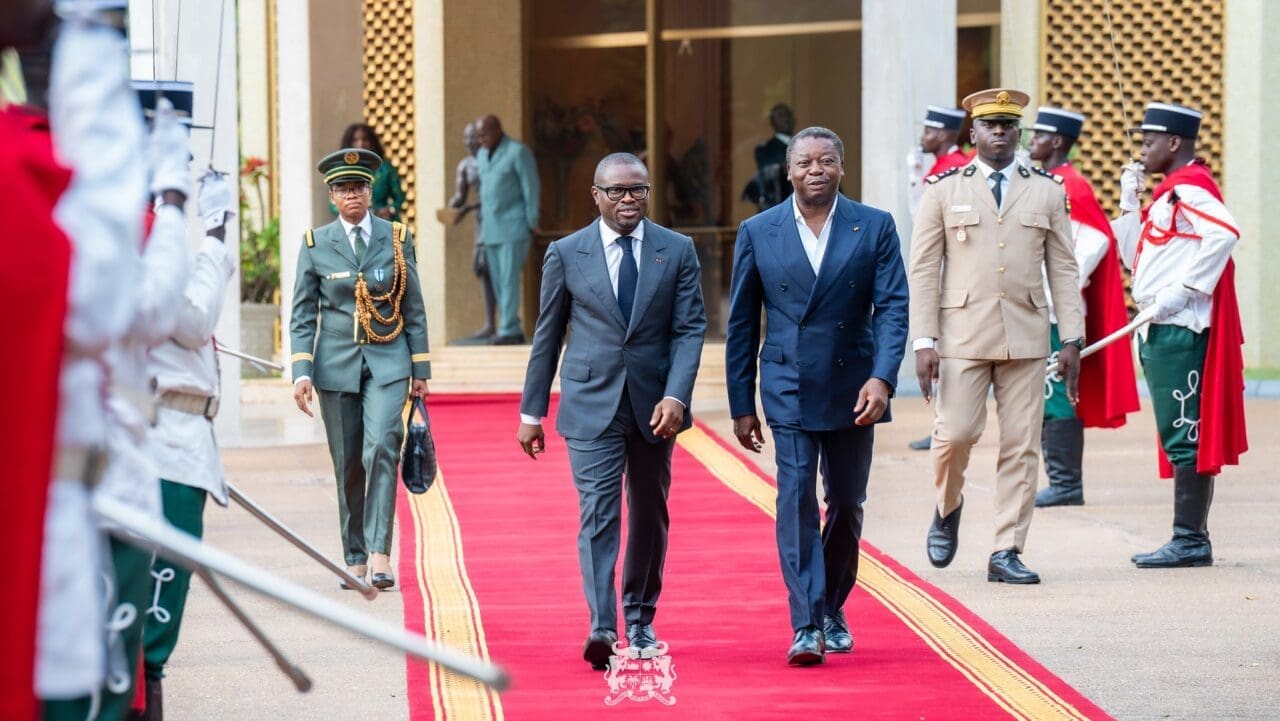
The recent official visit to Lomé by Bénin’s new president, Romuald Wadagni, on June 3, 2026, signifies a pivotal moment. The joint communiqué lays the groundwork for robust economic complementarities and interconnected infrastructure. The visions of both leaders align, with Bénin planning to inject 100 megawatts every two years, while Togo aims for universal electricity access by 2030. This current political alignment presents an unparalleled opportunity to finally achieve shared energy autonomy.