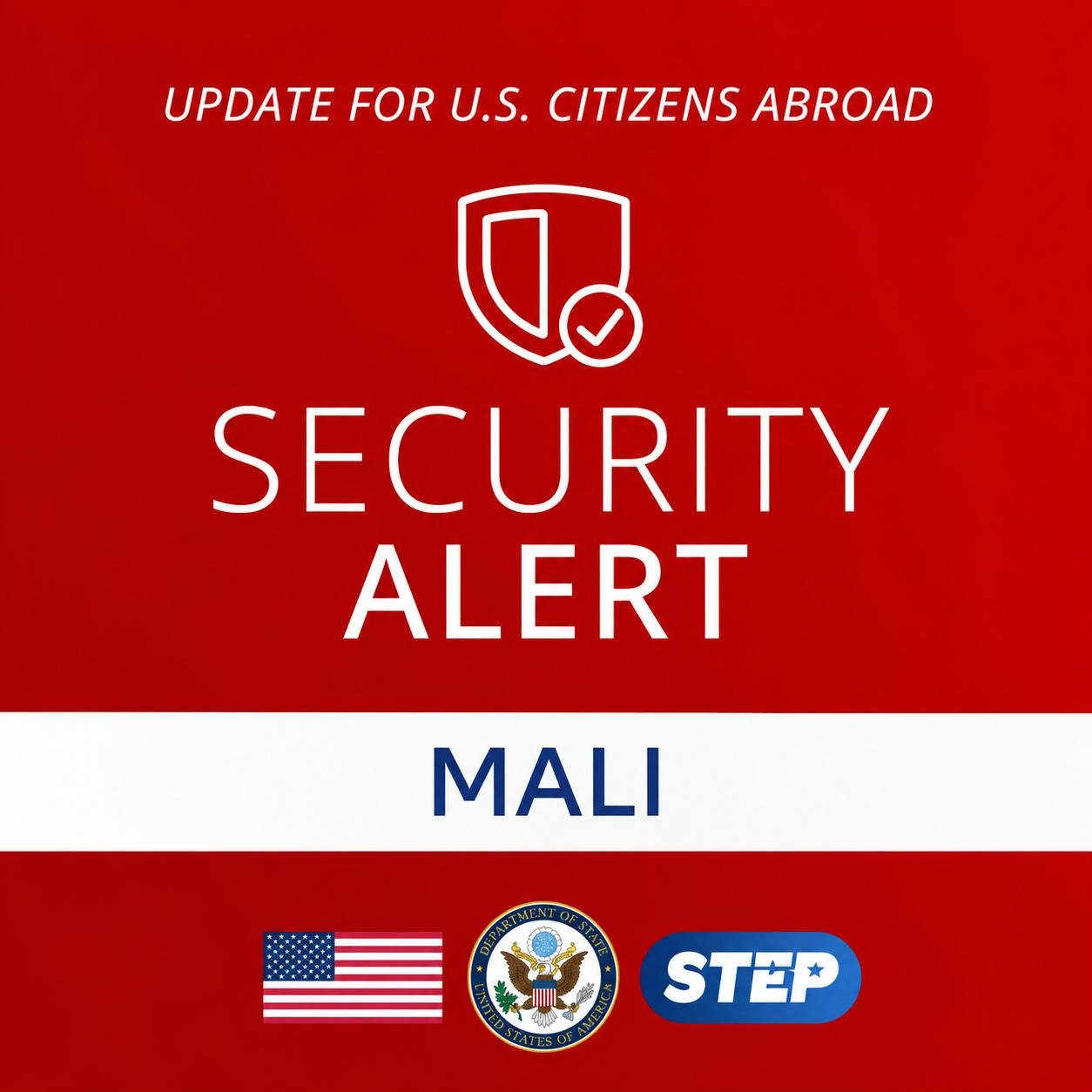
Bamako braces for heightened security amid rising threats this weekend
Strategic security advisories from foreign missions rarely emerge without cause, and the latest alert from the United States embassy in Mali is no exception. Issued ahead of the upcoming 30 May 2026 weekend, the advisory strongly urges American citizens in Bamako to curtail all non-essential travel across the capital city. The directive, framed in formal diplomatic language, signals a significant recalibration of risk assessment by Washington’s intelligence networks, elevating concerns over potential threats that may not yet be publicly visible.
Security escalation in Bamako prompts caution
From Saturday through Sunday, the embassy’s notice instructs nationals and staff to minimize public appearances, avoid crowded venues frequented by expatriates, and postpone any itineraries not deemed critical. Such measures are typically reserved for moments when credible intelligence suggests imminent danger—whether thwarted attack plots, suspicious mobilizations, or tactical indicators pointing toward urban strikes. While the alert is directed at U.S. citizens, its implications ripple across Bamako’s broader expatriate community and the local population, underlining the fragility of the city’s relative calm.
Terror networks maintain pressure on Malian capital
The timing of this advisory is particularly telling given the persistent security challenges facing Mali. The Group for the Support of Islam and Muslims (JNIM), Al-Qaeda’s dominant Sahelian affiliate, has repeatedly demonstrated its operational reach, launching high-impact assaults against military installations and strategic peripheral zones around Bamako. These attacks, often involving coordinated assaults or suicide bombings, serve as grim reminders that urban centers remain vulnerable despite government reassurances.
Compounding the threat is the resurgence of armed factions in northern and central regions, including the Permanent Strategic Framework—now operating under shifting alliances—and elements aligned with the Azar Liberation Front (FLA). Their tactics, ranging from harassment ambushes to the deployment of improvised explosive devices (IEDs), keep Malian defense forces (FAMa) stretched thin. The presence of dormant cells within Bamako’s vicinity amplifies the risk of sudden, asymmetric strikes, a reality that foreign intelligence services cannot afford to overlook.
Economic strangulation: how road blockades fuel instability
Beyond kinetic attacks, a quieter yet equally devastating strategy is unfolding across Mali’s transport arteries. Armed groups have escalated their interdiction of major highways, systematically targeting fuel tankers destined for Bamako and supply convoys carrying essential goods. These blockades do more than disrupt commerce—they sever vital supply chains, stoke public anxiety, and isolate the capital from regional economic lifelines.
By choking off fuel supplies and staple provisions, these actions are designed to erode public trust in state institutions and expose the limitations of Mali’s security apparatus. For foreign observers, particularly diplomatic missions, this vulnerability elevates the probability of high-risk incidents unfolding near Bamako’s outskirts, where security protocols are still being tightened.
Diplomatic prudence versus local reassurance efforts
While Malian transitional authorities have intensified patrols and installed additional checkpoints at city entrances to project control, Western embassies adopt a more measured stance. This divergence reflects a fundamental truth: where local leadership emphasizes visible deterrence, foreign missions rely on real-time intelligence and risk modeling. The embassy’s advisory, therefore, serves as a sobering counterpoint to official narratives of stability.
As the weekend approaches, security reinforcements are already visible in key districts. Identity checks and vehicle inspections have been ramped up, with law enforcement anticipating any potential breaches. Yet, the question remains: will this heightened vigilance prevent an incident, or is it a precaution against threats still unfolding beyond public view?
For Bamako, this moment encapsulates the broader struggle—caught between the daily reality of crisis management, the shadow of terror networks at its gates, and the economic asphyxiation threatening to unravel its social fabric. Until the alert is lifted or the weekend passes without incident, caution remains the overriding imperative for all who call the city home.
