Why Maïmouna Dièye’s Comments on Ousmane Sonko Spark Controversy
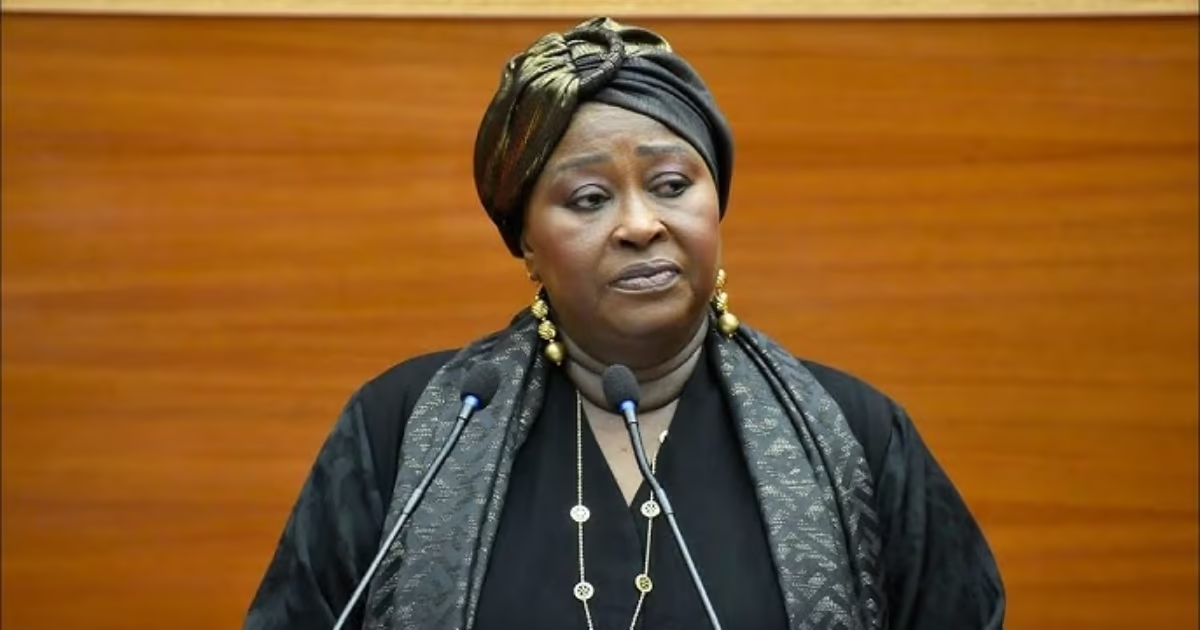
 Maïmouna Dièye recently sparked controversy by associating the name of Ousmane Sonko with a religious invocation, leading to a heated debate about the sacralization of political figures in Senegal.
Dièye’s comments at the Khombole gathering touched on a sensitive topic within the country’s Muslim tradition. The use of such language can be seen as an affront to the respect and reverence due to a leader, especially when it is compared to the exclusive reverence given to the Prophet Mohammad and other recognized prophets.
Dièye’s actions have raised questions about the risk of excessive sacralization of political figures by their supporters. This issue has been frequently denounced by religious leaders who emphasize the importance of distinguishing between respect due to a leader and the reverence reserved for the sacred.
Ousmane Sonko responded promptly to Dièye’s remarks, correcting her and setting clear boundaries on how such invocations should be handled. He emphasized that the use of such language must remain exclusive to the Prophet Mohammad and not be used by others, even if they have his respect.
Sonko’s reaction to Dièye’s comments is a reflection of the vigilance that Senegalese politicians often exhibit when dealing with potentially divisive issues. The country’s religious landscape is highly sensitive, making it crucial for public figures to navigate these topics carefully to avoid causing unnecessary controversy or polarization.
