What the US-trained general is doing differently with Niger’s elite forces
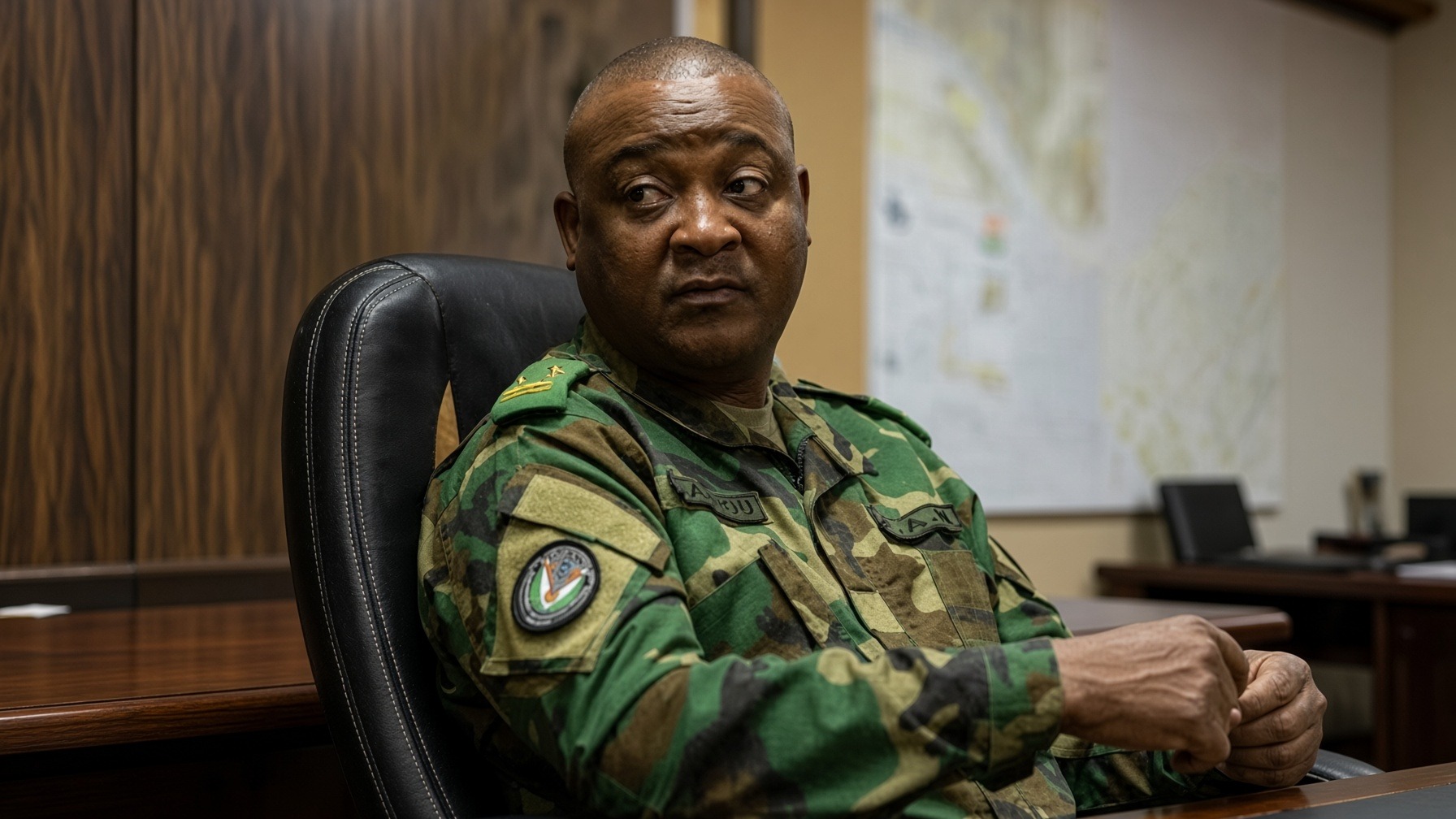
The rise of General Moussa Salaou Barmou to the helm of Niger’s special forces is more than a career milestone—it is a case study in how American military doctrine reshapes Sahelian warfare. Behind the headlines of Niamey’s July 2023 events, this strategist’s operational playbook reveals a quiet revolution in how Niger counters terrorism.
From Fort Moore to Niamey: the doctrine behind the strategy
General Barmou’s ascent is anchored in elite US military training programs that introduced him to the core principles of American operational thinking. At the U.S. Army Infantry School in Fort Moore (formerly Fort Benning), he mastered the fundamentals of squad-level assault tactics, rapid reconnaissance, and close-quarters combat—skills that form the backbone of the U.S. Special Operations Forces. This foundation was later reinforced at the National Defense University’s College of International Security Affairs, where Barmou immersed himself in strategic planning, asymmetrical threat analysis, and counterterrorism frameworks.
The result? A fusion of American precision with Sahelian agility. Where traditional Sahelian units often rely on large-scale maneuvers, Barmou’s approach emphasizes small, highly mobile cells capable of delivering decisive strikes and extracting intelligence before enemy forces regroup. It’s a model borrowed from the U.S. Special Operations Command (USSOC) playbook, adapted not to American battlefields, but to the vast, porous borders of the Sahara.
The operational blueprint: how doctrine becomes action
Rebuilding the special forces from the ground up
As commander of Niger’s elite units, Barmou initiated a sweeping transformation of the country’s special forces structure. He introduced:
- Elite-level recruitment and training: Candidates now undergo multi-phase vetting, including psychological profiling and physical endurance tests modeled after U.S. Ranger standards.
- Real-time intelligence integration: Embedding U.S.-trained liaison officers and adopting platforms like the Distributed Common Ground System (DCGS) to process signals and geospatial intelligence without delay.
- Rapid-response drills: Daily scenarios simulating ambushes, hostage rescues, and border interdiction—drills that were rare in pre-2020 Nigerien operations.
From the field to the negotiating table
Barmou’s operational philosophy extends beyond combat. During post-coup negotiations in 2023, his deep understanding of U.S. military culture and command language enabled him to serve as a trusted intermediary between Niger’s leadership and American defense officials. It was not just credibility that smoothed the dialogue—it was a shared language of operational readiness and strategic predictability.
His ability to articulate threat assessments in terms familiar to Pentagon strategists ensured that U.S. support—ranging from surveillance drones to joint training exercises—continued despite political turbulence.
The ripple effect: security, alliances, and regional stability
By 2026, the impact of Barmou’s reforms was visible across multiple fronts:
- Counter-Boko Haram operations in the Lake Chad Basin shifted from reactive patrols to proactive interdiction missions, reducing insurgent mobility by over 40% in key zones.
- The Tri-Border Initiative—a joint task force with Burkina Faso and Mali—began adopting Barmou’s model of decentralized command, enabling units to react within hours rather than days.
- Under his leadership as Chief of the Armed Forces, the Alliance of Sahel States (AES) restructured its joint command, moving from centralized planning to a networked model inspired by U.S. Special Operations doctrine.
Why this matters for Niger’s future
General Barmou’s story is not just one of individual achievement—it’s a window into how foreign military doctrine can be adapted, not imposed, to fit local realities. His tenure shows that in the Sahel, readiness is not a static trait, but a dynamic capability. And while geopolitical winds shift, the foundations he has laid—tactical autonomy, intelligence-driven operations, and rapid deployment—are now embedded in Niger’s security DNA.
For a country that has faced decades of insurgency, stagnant defense structures, and limited interoperability with Western partners, Barmou’s approach offers something rare: a path forward that balances sovereignty with strategic cooperation—without sacrificing operational independence.
As the Sahel’s security landscape continues to evolve, the question is no longer whether American doctrine can transform Niger’s forces. The real issue is: how will other nations in the region—facing similar threats—adapt and respond?
