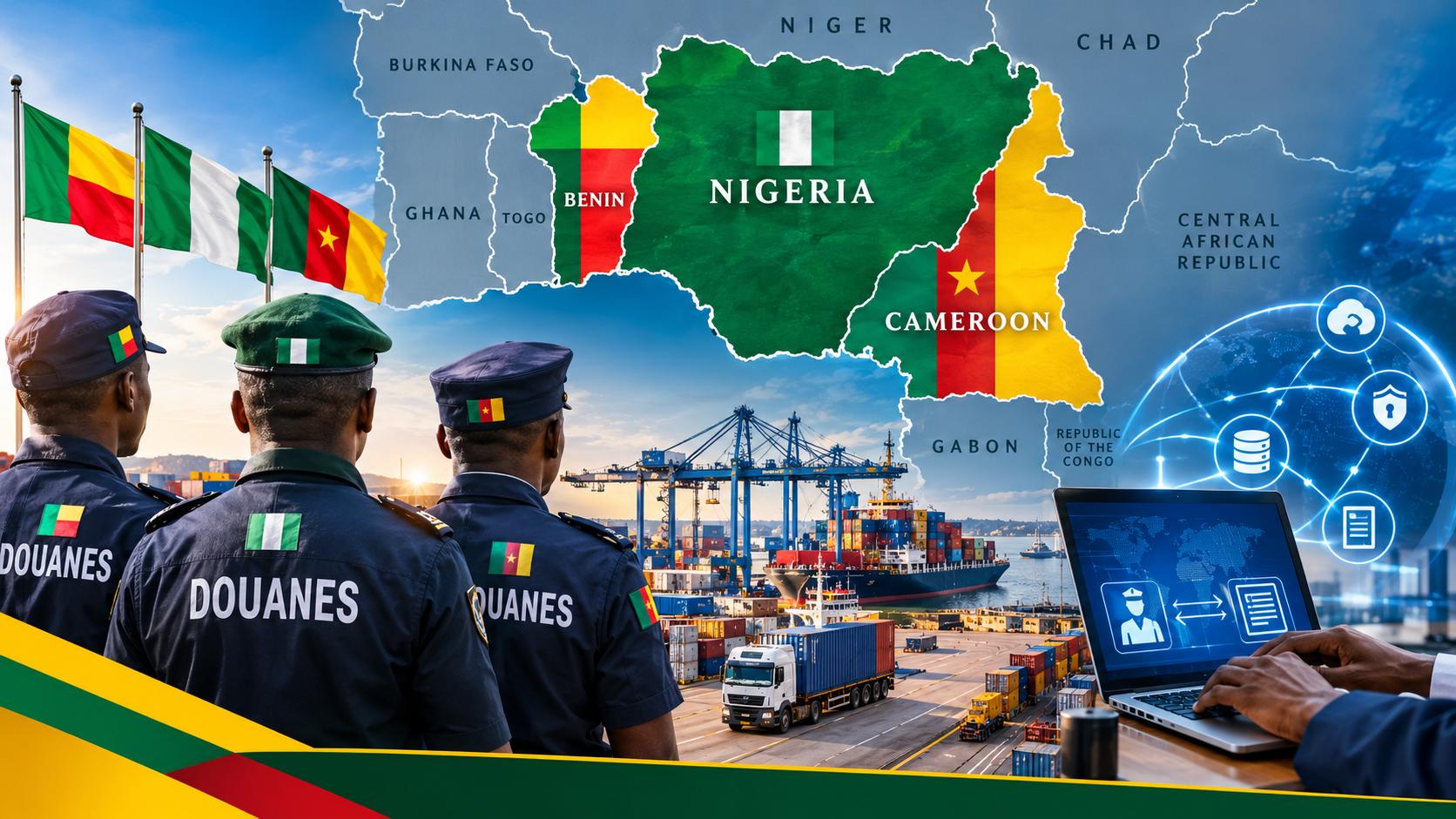
West African customs revolution: Bénin, Nigeria and Cameroon to launch joint digital system
The governments of Bénin, Nigeria and Cameroon are advancing a landmark initiative to connect their customs systems digitally, aiming to streamline cross-border trade and slash operational delays. The move, supported by Afreximbank, was confirmed during high-level discussions held in Cairo, Egypt, where officials outlined a strategy to harmonize electronic customs procedures across the three nations.
Streamlining trade with real-time data exchange
At the heart of this project lies the elimination of bureaucratic bottlenecks that have long plagued regional commerce. Repeated data entries, inconsistent tracking systems and fragmented communication between customs authorities currently inflate costs and slow down shipments for businesses operating across West Africa. By integrating their digital customs platforms, the three countries seek to create a unified system where shipment information, clearance documents and compliance checks are shared instantly between ports and land border crossings.
For logistics providers, importers and exporters, this could mean faster turnaround times at checkpoints, reduced storage fees at ports and greater predictability in supply chain operations. The initiative aligns with broader efforts to digitize customs procedures across the continent, where paper-heavy processes remain a major drag on economic integration.
Bénin’s strategic advantage through connected customs
For Bénin, the initiative carries particular significance. The Port of Cotonou serves as a critical gateway for goods moving into landlocked countries like Niger and Burkina Faso, making efficient customs clearance a cornerstone of the nation’s economic competitiveness. A connected customs system with Nigeria and Cameroon would allow Bénin to:
Accelerate transit times for goods transiting to inland markets, reducing delays caused by sequential clearance processes in multiple countries.
Improve cargo traceability through shared tracking data, minimizing discrepancies in shipment records and enhancing fraud detection.
Lower operational costs by eliminating redundant inspections and streamlining documentation requirements for regional traders.
The project also presents an opportunity for Bénin to position itself as a logistics hub within the Economic Community of West African States (ECOWAS), where inefficiencies in customs procedures have historically deterred foreign investment and stifled intra-regional trade growth.
Afreximbank’s role in driving continental trade reform
The involvement of Afreximbank underscores the broader ambition of this initiative: to reduce non-tariff barriers that continue to hinder intra-African trade. While tariffs have been progressively reduced under the African Continental Free Trade Area (AfCFTA), bureaucratic red tape at borders remains a persistent obstacle. By funding technical assessments, software integration and staff training, Afreximbank aims to ensure that the three countries can implement a system that is both functional and sustainable.
However, the success of this project will depend on several critical factors:
Interoperability standards: Ensuring that the three countries’ customs software platforms can communicate seamlessly, even when built on different technological foundations.
Data security protocols: Implementing robust encryption and access controls to protect sensitive trade information from cyber threats or unauthorized leaks.
Continuity planning: Developing contingency measures to prevent system failures from disrupting trade flows during maintenance or technical issues.
Performance metrics: Establishing clear benchmarks to measure reductions in clearance times, cost savings for businesses and increases in trade volume.
From vision to measurable impact
While the announcement marks a significant step forward, the true test will come during the implementation phase. Past attempts at customs cooperation in Africa have often faltered due to a lack of follow-through, incompatible systems or insufficient political coordination. This initiative seeks to avoid those pitfalls by incorporating lessons from earlier pilot projects, such as the Single Window systems introduced in select African nations.
A fully operational digital customs network between Bénin, Nigeria and Cameroon could serve as a model for other ECOWAS member states. Should the system deliver on its promises reducing border delays by 30% or more, cutting clearance costs by 15%, and increasing transit cargo volumes it could accelerate the broader adoption of similar measures across the region. For now, the focus remains on translating this digital vision into a practical reality that benefits businesses, governments and consumers alike.
By Yacouba Ouédraogo — Journalist
