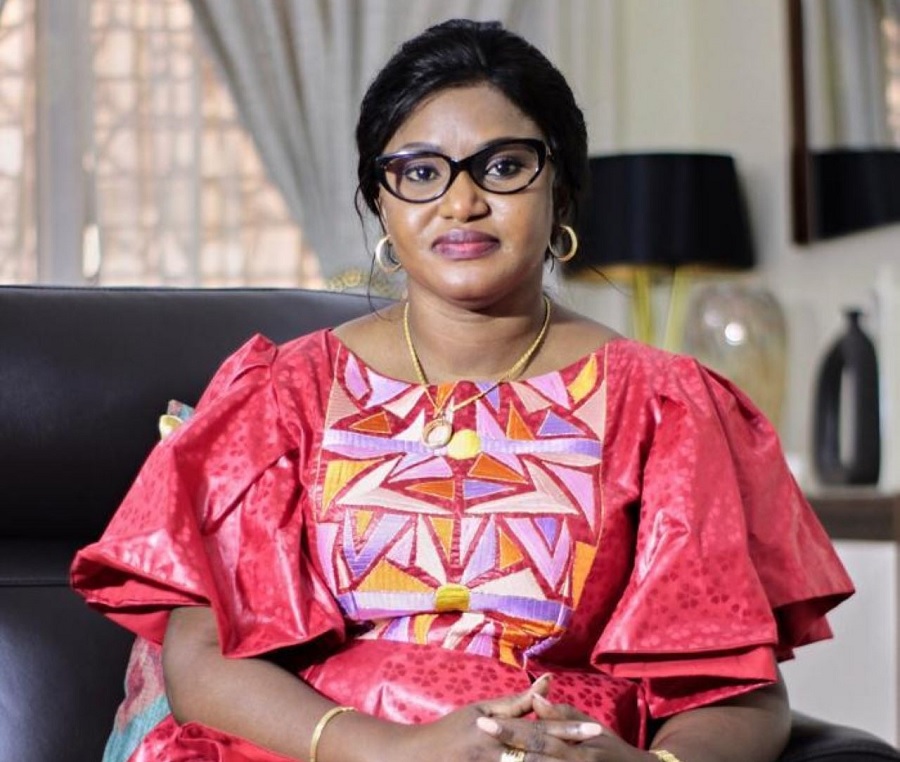
Unseen and uncounted: the invisible women shaping Senegal’s economy
Invisible pillars of the economy
Every July 31st, Africa pauses to honor its women, but this year’s focus takes on a deeper resonance in Senegal. The African Union has designated 2026 as the year of water resilience: « Ensuring sustainable access to clean water and safe sanitation to meet the goals of Agenda 2063 ». Yet behind these ambitious targets lies a harsh reality. Senegal’s economy and social fabric are held together by women who remain unrecognized, uncounted, and too often, unprotected. Their labor fuels the country, yet their needs—especially for water and sanitation—are systematically overlooked in both policy and public discourse.
These women are everywhere: internal migrants from rural areas who move to Dakar for domestic work, street vendors in bustling markets, childcare providers in urban households, and African women from neighboring countries who have made Senegal their home. Their contributions are indispensable, yet their access to basic services like clean water and dignified sanitation is far from guaranteed. The African Union’s theme for 2026 is not just a policy slogan—it is a litmus test for gender and social justice.
The silent migration that powers cities
Long before women cross international borders, many embark on a quieter journey: from Senegal’s rural heartlands to its urban centers. In villages across the country, water collection falls disproportionately on women and girls. This daily chore robs them of time for education, paid work, and personal development—factors that push young women toward cities in search of opportunity. Each year, thousands migrate internally, seeking work in domestic service, street food vending, or small-scale trade (Lo, Coulibaly, Sakho, 2014). These women become the invisible backbone of Dakar’s economy: caring for children, running market stalls, cleaning homes and offices, and preparing meals in countless households.
According to Senegal’s National Statistics Agency (ANSD), informal work employs nearly half the country’s labor force, with women making up 51.3% of this sector nationally. In Dakar, however, their representation drops to 41.5%, as they are often relegated to the most precarious roles—without contracts, social protections, or legal recourse. This internal migration, largely unrecognized, often serves as the first step toward longer journeys abroad. Yet, their labor is indispensable, and its sustainability depends entirely on access to water and sanitation—resources they rarely control.
Senegal’s dual role: host and home
Senegal is not only a source of migrants—it is also a destination. According to the 2023 General Population and Housing Census (RGPH-5), over 207,000 foreigners reside in the country, representing 1.1% of the population, with 44.3% of them women. The majority come from neighboring countries: Guinea (40.3%), Mali (14.9%), Guinea-Bissau (4.4%), Gambia (3.0%), and Mauritania (2.1%). In border regions like Kédougou, foreign residents—primarily from Mali or Guinea—outnumber returning Senegalese migrants.
Yet this long-standing tradition of hospitality is under threat. In recent months, a dangerous rhetoric of exclusion has taken root, fueled by conspiracy theories reminiscent of the « great replacement » myth. Particular targets include Guinean Fulani women, accused of overburdening public schools or distorting the country’s demographic balance. Some political voices have gone so far as to demand stricter residency conditions and the abolition of birthright citizenship for children of foreign parents. This dangerous discourse echoes the xenophobic violence seen in South Africa, where Senegalese migrants in Durban have also faced brutal targeting.
For migrant women in Senegal, this climate of suspicion compounds their vulnerabilities. Many work in domestic service or informal trade without contracts or social protections, relying on employers or local networks for both their legal status and daily access to water and sanitation. When collective suspicion turns against an entire nationality or ethnic group, these women become primary targets for harassment, exploitation, and violence. Fear of retaliation—whether administrative or social—silences them, making it nearly impossible to seek justice. Xenophobia, when viewed through a gender lens, is never neutral; it deepens the precarity of women who are already on the margins.
When regional alliances falter: new risks for migrant workers
Since January 2025, the free movement of people within the Economic Community of West African States (ECOWAS) has faced unprecedented uncertainty. The three-nation Alliance of Sahel States (AES)—Mali, Burkina Faso, and Niger—has suspended its adherence to ECOWAS protocols. For Malian, Burkinabe, and Nigerien women working in Senegal, this shift means their legal protections are no longer guaranteed by a regional framework, but by fragile bilateral agreements that can be revoked at any time.
Many of these women arrived years ago without proper documentation—a common scenario among West African migrants. Without secure legal status, their right to stay in Senegal now hinges on political declarations rather than institutional safeguards. The Sahel’s fragile security situation, marked by deadly attacks in Mali during spring 2026, could further increase female migration from Mali to Senegal. This context demands urgent vigilance from civil society and labor unions to ensure these women can access legal residency, healthcare, and education for their children—rights that were once protected under ECOWAS but are now at risk.
Colonial borders, postcolonial divisions
To understand this moment of rising xenophobia, we must look beyond imported analyses and examine its roots within Africa’s own history. The continent’s current borders are, for the most part, colonial artifacts drawn at the 1884–85 Berlin Conference, with little regard for pre-existing social, economic, or kinship networks (as scholar Achille Mbembe has noted). Postcolonial states, often fragile and seeking legitimacy, have turned to a politics of « autochthony »—defining who truly « belongs » to the nation and excluding those deemed outsiders, even after generations of presence. This same logic fueled Afrophobia in South Africa and now resurfaces in Dakar.
A decolonial feminist lens is essential here. Scholars like Oyèronké Oyèwùmí and Amina Mama have shown how colonialism reshaped gender categories, which were later repurposed by nationalist projects to define national belonging. Migrant women—whether internal or from neighboring countries—become prime targets in this struggle over national identity. Their fertility, their children born in Senegal, and their roles as domestic workers in urban households are weaponized in debates over birthright citizenship. Recognizing the vulnerabilities of Senegalese women in internal migration and African women migrating to Senegal means rejecting two dangerous fallacies: one that ignores Senegal’s responsibility toward those it hosts, and another that imposes foreign frameworks without adapting them to Africa’s real history of borders and state formation.
Water and sanitation: the invisible frontier for migrant women
The African Union’s 2026 theme is not merely a technical priority—it is a direct challenge to gender and migration inequalities. In Dakar’s peripheral neighborhoods, where many migrant women settle, access to piped water and safe sanitation remains limited. The absence of decent toilets disproportionately affects women and girls, exposing them to nighttime insecurity and health risks. Even in workplaces, domestic workers—whether Senegalese or African migrants—often rely on their employers’ goodwill for access to water and sanitation. Without labor laws to enforce these rights, they remain trapped in relationships of dependency that mirror the vulnerabilities faced by Senegalese women abroad and African women in Senegal.
To make sustainable water and sanitation a reality by 2063, policies must address the specific needs of migrant women—those who leave, those who return, and those arriving from other African countries. An agenda that ignores the neighborhoods where migrants live or ties access to essential services to administrative status will fail its most vulnerable beneficiaries. This is where the continental agenda intersects with gender justice.
A hospitality that must be reciprocated
The African Women’s Day should not be reduced to empty tributes, nor should the 2026 water agenda remain a summit slogan. Together, they offer a clear political lesson: without migrant women—whether internal or from other African nations—Senegal’s economy would grind to a halt. And without guaranteed access to clean water and dignified sanitation for these women, in their homes, workplaces, and neighborhoods, Agenda 2063’s goals will remain unattainable for those who need them most. Hospitality that stops at the border, or a water policy that forgets these women, misses the same point: justice is indivisible, and dignity is universal.
