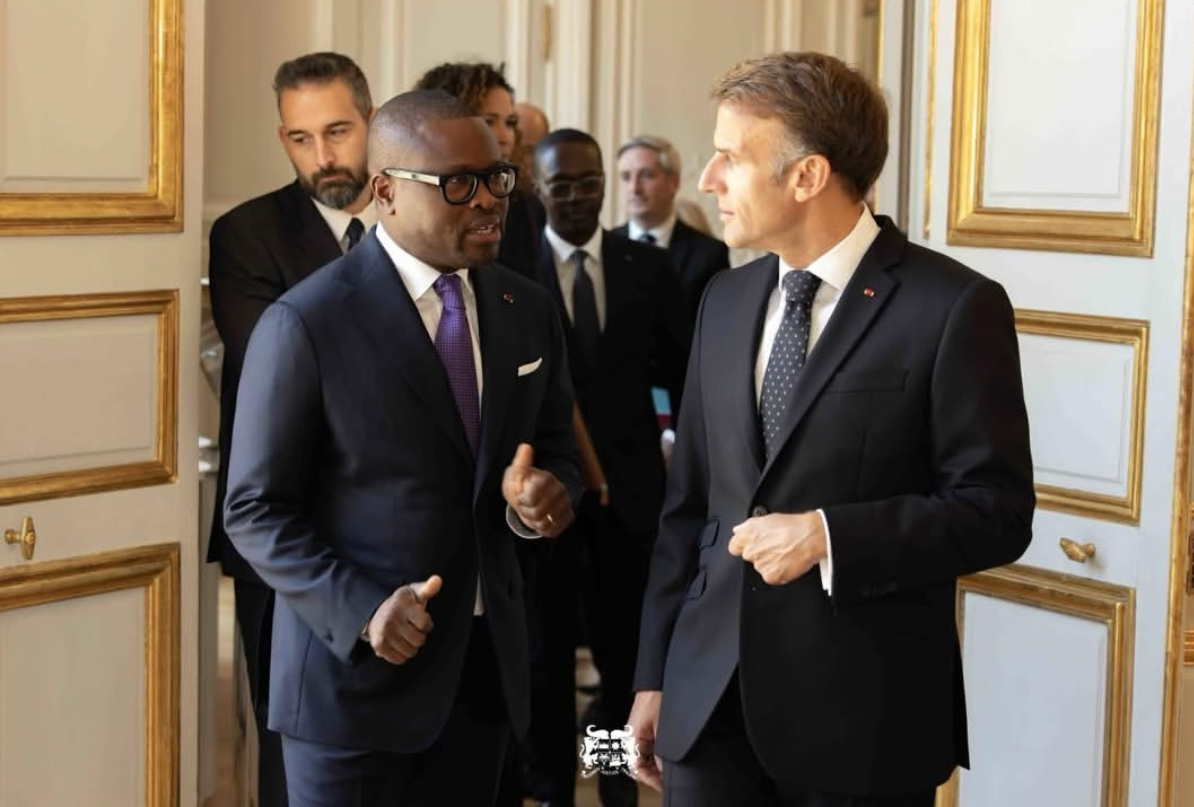
Unpacking the strategic forces behind Benin’s 65.5 billion FCFA pact with France
Behind the high-profile ceremony at the Élysée Palace lay a carefully crafted economic blueprint, not just another round of diplomatic handshakes. The 65.5 billion FCFA financing package signed between Benin and France is the result of months of behind-the-scenes negotiations, sector-specific feasibility studies, and alignment between Cotonou’s national development plan and Paris’s strategic investment priorities. Far from a spontaneous gesture, this accord reflects a deliberate convergence of interests aimed at unlocking Benin’s economic potential while reinforcing France’s long-term influence in West Africa.
What really drove the Élysée agreements
The timing of the ceremony was no coincidence. French diplomats had been quietly mapping Benin’s infrastructure bottlenecks for over a year, identifying three critical sectors where investment could yield the fastest and most visible returns. Electricity, agriculture, and health were not chosen arbitrarily; they represent the pillars of Benin’s Vision 2030 strategy, a roadmap endorsed by both governments. The 65.5 billion FCFA figure itself was the outcome of a cost-benefit analysis comparing Benin’s immediate needs with France’s capacity to mobilize concessional loans and grants through European development funds.
Equally significant was the decision to involve multiple French and European financial institutions. This multi-party approach was designed to de-risk the investments by distributing exposure across several balance sheets, while also ensuring that the projects met stringent European sustainability criteria. The result is a financing structure that blends public funds with private-sector expertise, a formula that has become increasingly favored in Paris’s modern development diplomacy.
Electricity: the invisible backbone of Benin’s growth
The energy sector received the largest share of the new funding, reflecting both its urgency and its multiplier effect across the economy. Benin currently suffers from chronic power shortages that stifle industrial expansion and push up household costs. The 65.5 billion FCFA allocation will finance the expansion of the Cotonou thermal plant, the rehabilitation of the Sèmè-Kraké interconnection line, and the rollout of decentralized solar micro-grids in rural communes. These initiatives are expected to add 150 MW of new capacity within 24 months, enough to reduce the national deficit and stabilize tariffs.
What is often overlooked is the strategic rationale behind these investments. By securing reliable electricity, Benin can attract light manufacturing industries that currently bypass the country in favor of Ghana or Côte d’Ivoire. French engineering firms, already active in West Africa, are poised to win construction and maintenance contracts, embedding French technology and standards into Benin’s infrastructure for decades to come.
Agriculture: from subsistence to value-added chains
Agriculture accounts for nearly 30% of Benin’s GDP and employs over half the workforce, yet productivity remains low due to outdated techniques and limited access to finance. The new financing will target four value chains: cashew nuts, maize, cassava, and soybeans. French agricultural cooperatives and research centers will provide technical assistance, while French development agencies will guarantee loans to cooperatives and SMEs. The goal is to raise productivity by 40% and increase exports to the European Union by 25% within five years.
The political logic here is twofold. First, boosting agricultural exports diversifies Benin’s trade partners and reduces its dependence on Nigeria, its largest but increasingly volatile market. Second, a more productive agricultural sector lowers food prices, curbs urban migration, and strengthens social stability—outcomes that align with both Cotonou’s development agenda and Paris’s broader stability objectives in the region.
Health: investing in human capital for long-term dividends
The health component of the package focuses on three priorities: maternal and child health, the fight against neglected tropical diseases, and the digitalization of health records. French hospitals and research institutes will partner with Beninese counterparts to train medical staff, upgrade equipment, and deploy telemedicine platforms in remote areas. The funding will also support the construction of three regional referral centers in Parakou, Abomey, and Natitingou, easing the pressure on the national hospital in Cotonou.
From a geopolitical perspective, this investment serves a dual purpose. It reinforces Benin’s human capital, which is essential for economic diversification, and it positions French medical institutions as trusted partners in West Africa’s health security architecture. In an era where pandemics and antimicrobial resistance know no borders, such cooperation is as much about soft power as it is about development.Beyond the numbers: the real test lies in execution
The 65.5 billion FCFA headline captures headlines, but the durability of this partnership will be measured in project milestones, not press releases. Benin’s track record in absorbing large-scale foreign aid is mixed: some projects stall due to bureaucratic inertia, others falter due to weak local counterpart funding. To avoid these pitfalls, both governments have agreed to quarterly joint reviews, with French auditors embedded in Beninese ministries to track disbursements and outcomes.
There is also an unspoken understanding that the success of these investments will determine the pace of future cooperation. If the electricity, agriculture, and health projects deliver tangible benefits within 18 months, Paris may fast-track additional financing for Benin’s digital transformation and green energy initiatives. Conversely, delays or mismanagement could prompt France to redirect resources to higher-performing partners in the region.
What this means for Béninois citizens and businesses
For ordinary citizens, the most immediate impact will be felt in their monthly budgets. Reliable electricity should lower the cost of living, while improved agricultural productivity could stabilize food prices. In the longer term, the creation of new agro-industrial zones and industrial parks could generate thousands of jobs, particularly for young people in rural areas.
For local entrepreneurs, the new financing opens doors to French-backed credit lines and technical partnerships. French chambers of commerce have already pledged to organize matchmaking events between Beninese SMEs and French suppliers, creating opportunities for technology transfer and export growth. The message is clear: this accord is not just about aid; it is about forging a new economic partnership built on mutual benefit.
The bigger picture: a model for West African cooperation?
The Benin-France financing package is being watched closely by neighboring countries, some of which are struggling to secure similar levels of external support. If the projects succeed, they could set a precedent for how African nations leverage strategic partnerships with Europe to accelerate their development. If they falter, it may reinforce skepticism about the sustainability of such large-scale interventions.
One thing is certain: the Élysée agreements are not a one-off transaction. They are the culmination of a strategic dialogue that will continue long after the ink dries. The real story is not the signing ceremony, but the invisible forces—economic, political, and diplomatic—that shaped it and will now determine its legacy.
