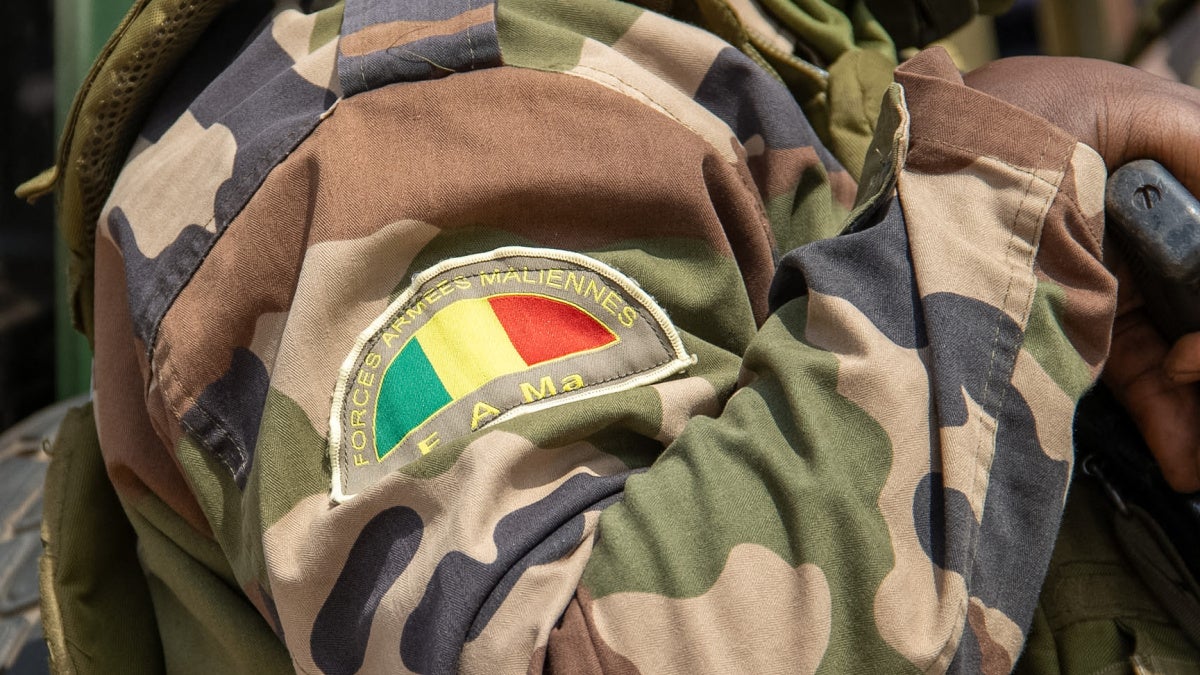
Unarmed civilians killed in central Mali amid army-militia operations
In the heart of Mali’s central region, two villages became the grim stage for a brutal confrontation last October, where the Malian military and allied militias unleashed violence that left at least 31 civilians dead and homes reduced to ashes. The incidents, unfolding on October 2 and 13 in the Ségou area, have drawn sharp condemnation amid a decade-long insurgency.
On October 2, Malian troops accompanied by dozos—traditional hunters-turned-militia fighters from the Bambara ethnic group—stormed the village of Kamona. Witnesses recounted how soldiers and dozos, identifiable by their camouflage uniforms and traditional talismans, rounded up men they accused of aiding the Group for the Support of Islam and Muslims (Jama’at Nusrat al-Islam wa al-Muslimeen, JNIM), an al-Qaeda-affiliated group controlling the region. At least 21 men were executed, and 10 homes were set ablaze. Survivors described how those unable to flee were gathered and shot, their bodies later found strewn near a tree. Four additional victims were discovered further north, their bodies bearing gunshot wounds to the head and torso.
« Those who couldn’t escape were executed on the spot, » a survivor told investigators. « The attackers spared no one, leaving behind only devastation. » Villagers compiled a list of 21 victims, all men aged 20 to 65, though they suspected the toll was higher. « We heard at least 15 more men were killed in the bush that day, but we dared not verify, fearing the army’s return, » one local revealed.
The second attack on October 13 targeted the village of Balle, about 55 kilometers away. Soldiers in five pickup trucks and dozos on 30 motorcycles arrived just after 1 p.m., prompting panicked residents to flee. « I didn’t run at first, but when I saw soldiers kicking and slapping men door-to-door, I hid, » a 24-year-old recalled. « From my hiding place, I heard gunfire. » By the time the assailants left, 10 civilians lay dead—nine men and a 55-year-old woman—alongside the theft of over 100 cattle. The bodies were found in a cluster, some with broken limbs, a grim testament to the violence.
Relatives of the victims described harrowing scenes. The slain woman’s 21-year-old daughter recounted how her mother confronted the soldiers, accusing them of abusing villagers. « She approached them, and they took her to where the men were held, » she said. « They shot her without hesitation. » Another villager, a 39-year-old man, described burying the dead in mass graves under the tree and covering the others with sand. « All had bullets in their heads and stomachs—there was no mercy, » he said.
Local accounts paint Balle as a JNIM stronghold for years. « We’ve paid zakat [Islamic tax] annually, and disputes are settled by the jihadists, » a resident explained. « There are no soldiers, gendarmes, or police here. The army doesn’t distinguish between us and them. They assume we’re all JNIM fighters. »
Military officials, however, framed the October 13 operation as a « successful offensive reconnaissance » that « neutralized around twenty terrorists » and seized military equipment. But villagers dismissed these claims, insisting no clashes occurred. « The jihadists had already fled before the soldiers arrived, » a witness stated.
The Ségou attacks followed a surge in JNIM activity, including a brazen assault on the Siribala sugar factory in August. Since 2012, Mali’s successive governments have waged war against Islamist armed groups, leaving thousands of civilians dead and over 402,000 displaced. Human rights monitors have documented widespread abuses by both state forces and allied militias, as well as atrocities committed by insurgent groups like JNIM.
International humanitarian law offers clear protections: civilians must never be targeted, and killings, torture, or cruel treatment are strictly forbidden. Those found responsible for war crimes—whether through direct action or command responsibility—risk prosecution. While Mali withdrew from the International Criminal Court (ICC) in September, it remains bound by the Rome Statute until September 2026. The ICC opened an investigation into alleged war crimes in Mali as early as 2013.
The African Union (AU), tasked with promoting peace and security, has largely failed to address the escalating conflict, observers note. Despite the crisis worsening, the AU’s Peace and Security Council has limited its response to expressions of concern, drawing criticism for its inaction. « The council must prioritize Mali’s conflict, » a rights advocate argued. « It should hold regular briefings, strengthen diplomatic efforts, and coordinate regional and international actions to ensure accountability for abuses by all parties. »
