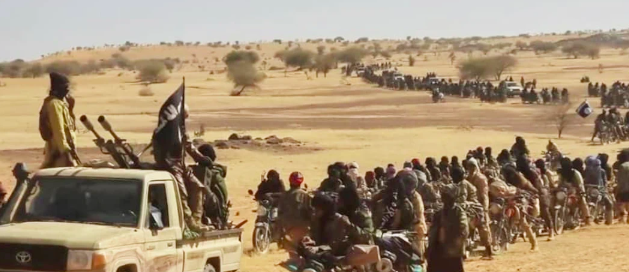
Un warns of isil’s growing threat in Sahel and lake Chad region
Global alarm: ISIL’s decentralised network spreads across Africa
The United Nations has raised the alarm over the escalating threat posed by the so-called Islamic State in Iraq and Syria (ISIL) across Africa, particularly in the Sahel and the Lake Chad Basin. While the group’s central leadership has weakened, its regional branches have gained unprecedented autonomy, exploiting local vulnerabilities to expand their influence.
In a newly released report submitted to the UN Security Council, Secretary-General Antonio Guterres highlighted the persistent high-risk status of several African regions, where ISIL-linked factions continue to strengthen their presence. The findings were presented by Oguljeren Niyazberdiyeva, a senior official from the UN Office of Counter-Terrorism (UNOCT).
ISIL’s evolving strategy: from centralised control to regional networks
The report underscores a critical shift in ISIL’s operational model. Once reliant on a hierarchical structure, the group has transformed into a decentralised network of autonomous affiliates. This evolution allows it to adapt swiftly to local contexts, leveraging regional conflicts, institutional weaknesses, and economic instability to consolidate its foothold.
Among its branches, the Islamic State’s West Africa Province (ISWAP) stands out as the most active faction globally. The report notes that ISWAP has not only sustained its military operations but has also integrated advanced technologies—such as commercial drones—to enhance its surveillance and attack capabilities.
Beyond the Sahel and Lake Chad Basin, the report also flags growing concerns in the Democratic Republic of the Congo (DRC) and Mozambique. Affiliated groups in these countries continue to launch offensives despite counter-terrorism efforts by national and regional forces. Recruitment and local network expansion remain unabated, posing significant challenges to regional stability.
Technological arms race: ISIL’s digital transformation
A particularly alarming trend is ISIL’s adoption of cutting-edge technologies. The report details how the group now utilises artificial intelligence, encrypted communications, digital platforms, and unmanned aerial vehicles (UAVs) to refine its propaganda, recruitment, financing, and operational planning. This digital evolution not only amplifies its reach but also complicates detection and disruption by security forces.
However, the report also acknowledges the dual-use nature of these technologies. When deployed responsibly and within the bounds of international law, tools like AI and digital surveillance can become powerful instruments in the fight against terrorism.
Call for coordinated action: bridging global cooperation and tech governance
The UN emphasises the urgent need for strengthened international collaboration to counter ISIL’s adaptive strategies. This includes closer partnerships with technology companies and private sector stakeholders to regulate emerging digital tools effectively. The report stresses that a unified approach—combining military, intelligence, and technological solutions—is essential to dismantling ISIL’s networks and preventing further expansion.
In her remarks, Niyazberdiyeva stressed that despite sustained military pressure, ISIL’s decentralised structure enables it to survive and thrive. ‘The group has fundamentally altered its operational dynamics to withstand sustained campaigns. Its ability to exploit local grievances and technological advancements ensures that the threat remains both grave and persistent,’ she noted.
As ISIL continues to morph into a diffuse, ideologically driven network, the international community faces a daunting task: to adapt its counter-terrorism strategies in real-time while safeguarding human rights and fostering sustainable development in affected regions.
