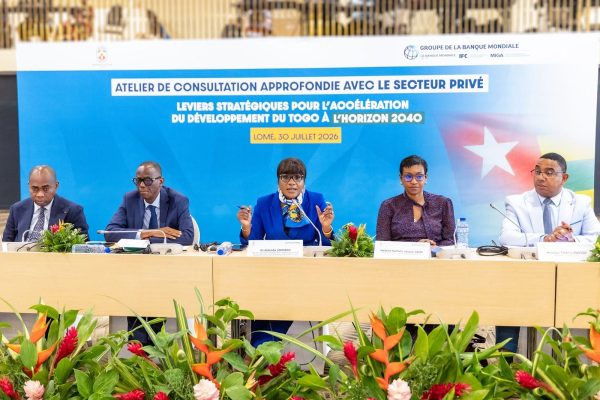
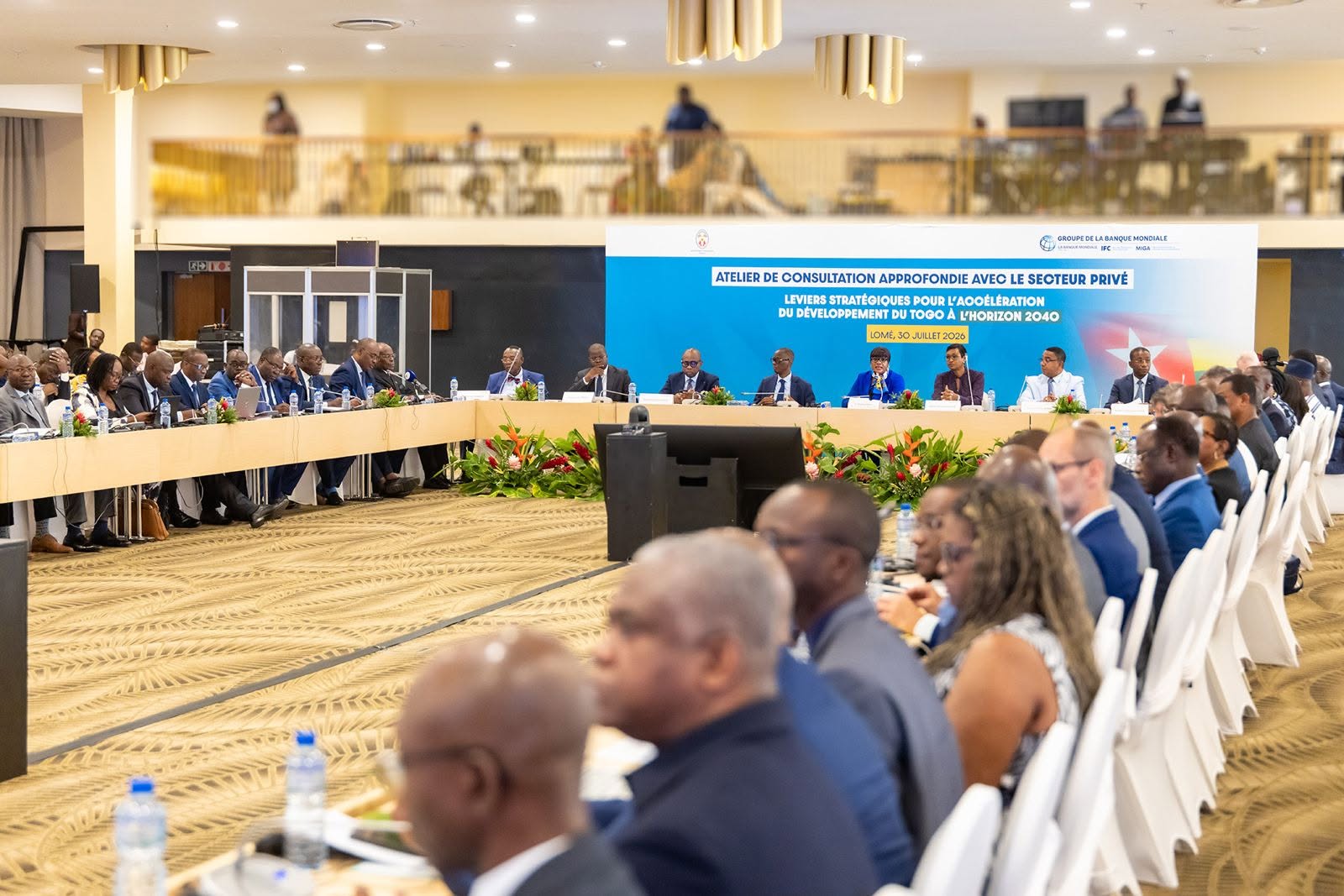
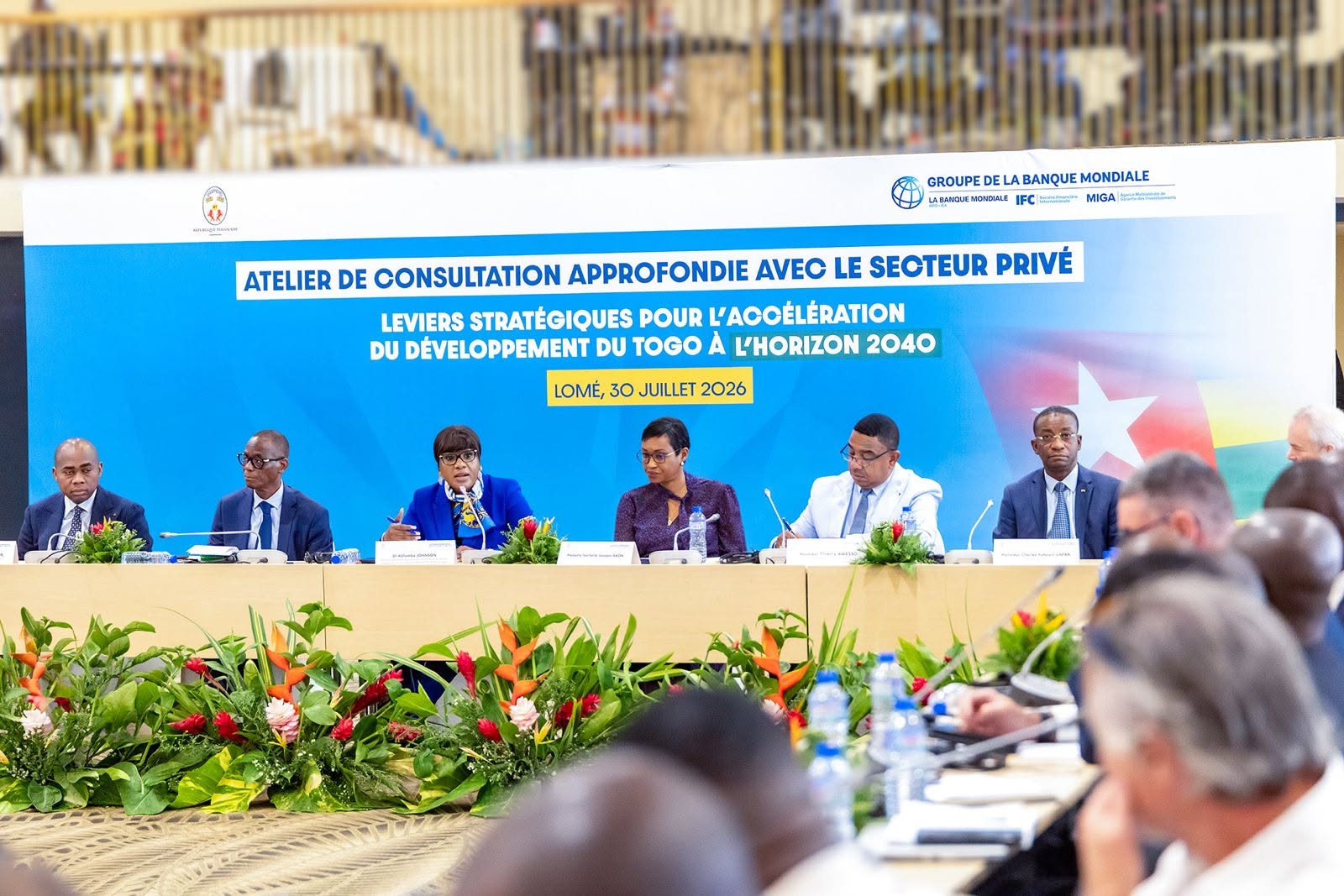
LOMÉ, July 31, 2026 — Togo is strategically positioning private investors and businesses as central pillars for achieving its ambitious long-term national objectives. In Lomé, government officials convened a crucial gathering on Thursday, July 30, bringing together the nation’s leading economic stakeholders. The primary focus of the discussion was how to elevate the private sector into a fundamental driver for the economic transformation anticipated in the coming years.
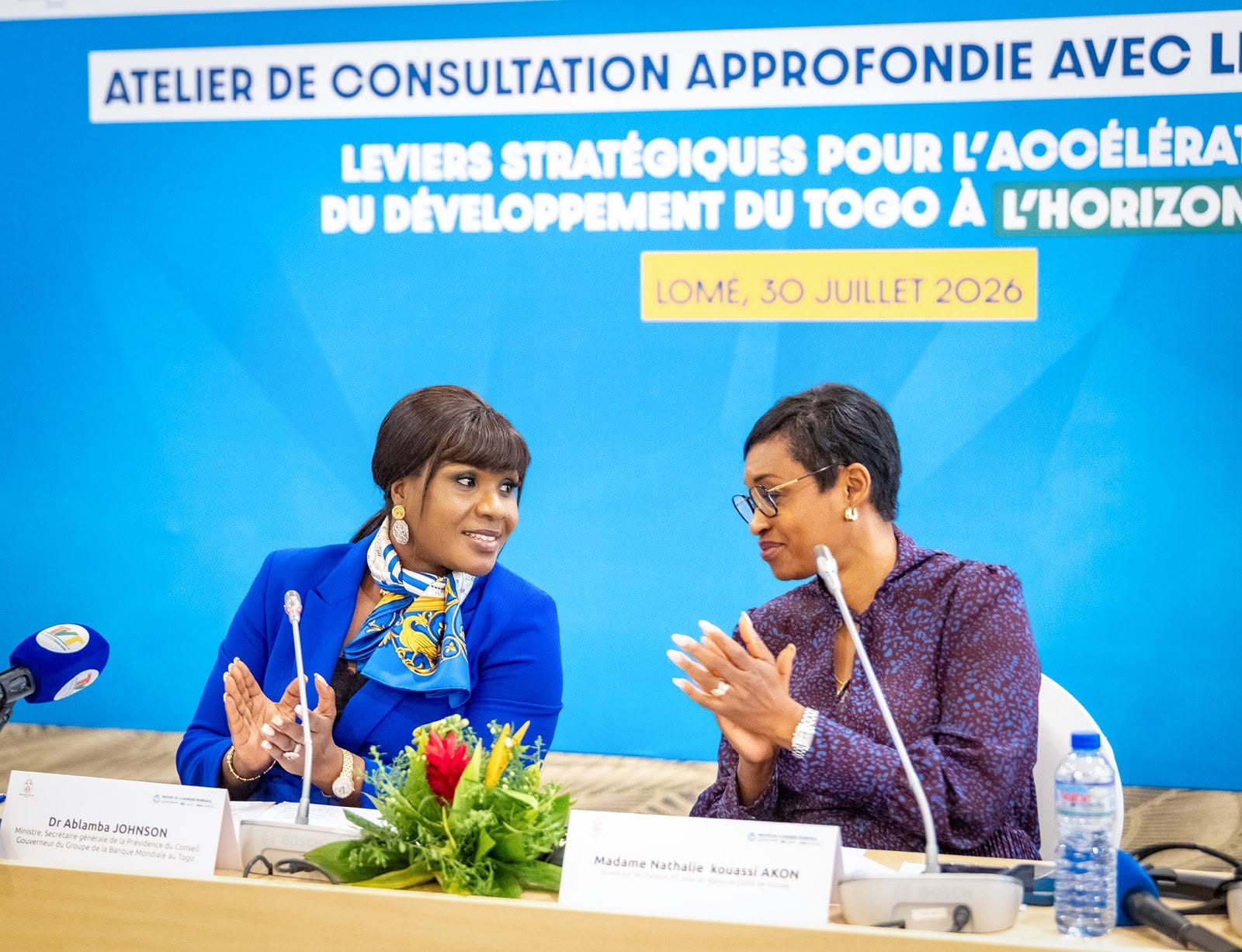
The high-level workshop, dedicated to outlining Vision Togo 2040 and the comprehensive Government Roadmap for 2026-2031, saw the participation of key figures. Attendees included representatives from the World Bank Group, prominent employers’ federations, the Chamber of Commerce and Industry, major Togolese corporations, and esteemed international experts. The proceedings were formally initiated by Sandra Ablamba Johnson, Minister and Secretary General of the Presidency of the Council, who spoke on behalf of the President of the Council, Faure Essozimna Gnassingbé.
A transformative national objective
Underlying the technical discussions lies a far-reaching national ambition. Togolese authorities aim to significantly elevate the average living standard for its citizens by 2040, with a specific target of doubling current levels, while simultaneously reducing the poverty rate to below 15%. To achieve these ambitious goals, the government intends to increasingly leverage the substantial investment capacity and job creation potential inherent within the private sector.
The fundamental realization is clear: the State alone cannot bear the entire responsibility for an economic transformation of such immense scale. Consequently, there is an imperative to attract greater capital inflows, foster the growth of domestic enterprises, and cultivate an environment highly conducive to both local and foreign investment.
Translating aspirations into concrete actions
It was precisely in this critical area that the workshop aimed to generate practical solutions. Participants were tasked with thoroughly examining the necessary conditions to evolve the private sector from merely an economic participant into a fully integrated partner in public policy and action. This comprehensive deliberation directly addressed crucial factors such as optimizing investment conditions, fostering business expansion, effectively mobilizing capital, and stimulating the creation of new productive economic activities.
However, the ambition extends far beyond the mere articulation of objectives. Togolese authorities are now seeking to establish a robust, operational framework capable of translating the strategic directions of Vision Togo 2040 into tangible, impactful initiatives. The active participation of the World Bank and esteemed international experts lends a unique and significant dimension to these discussions. Their presence facilitates a vital process of benchmarking national strategies against global experiences and proven best practices observed in other thriving economies.
Private sector urged to play its vital role
The unequivocal message conveyed during this significant gathering is that the forthcoming phase of Togo’s development will increasingly depend on the dynamism of private enterprise and strategic private investment. Ultimately, the Lomé meeting signifies a pivotal moment in the quest for a new, sustainable growth model, with the overarching aim of fostering an economy by 2040 that substantially improves the living conditions for all citizens.
For the Togolese authorities, the immediate challenge lies in transforming this grand ambition into decisive actions, and subsequently, converting these decisions into tangible, measurable results. It is only under these conditions that the ambitious objectives established for the coming years can transcend mere projections and become a concrete economic and social reality for the nation.
By Yacouba Ouédraogo — Investigative journalist
Content syndicationOpen public syndication feed accessible via RSS / XML