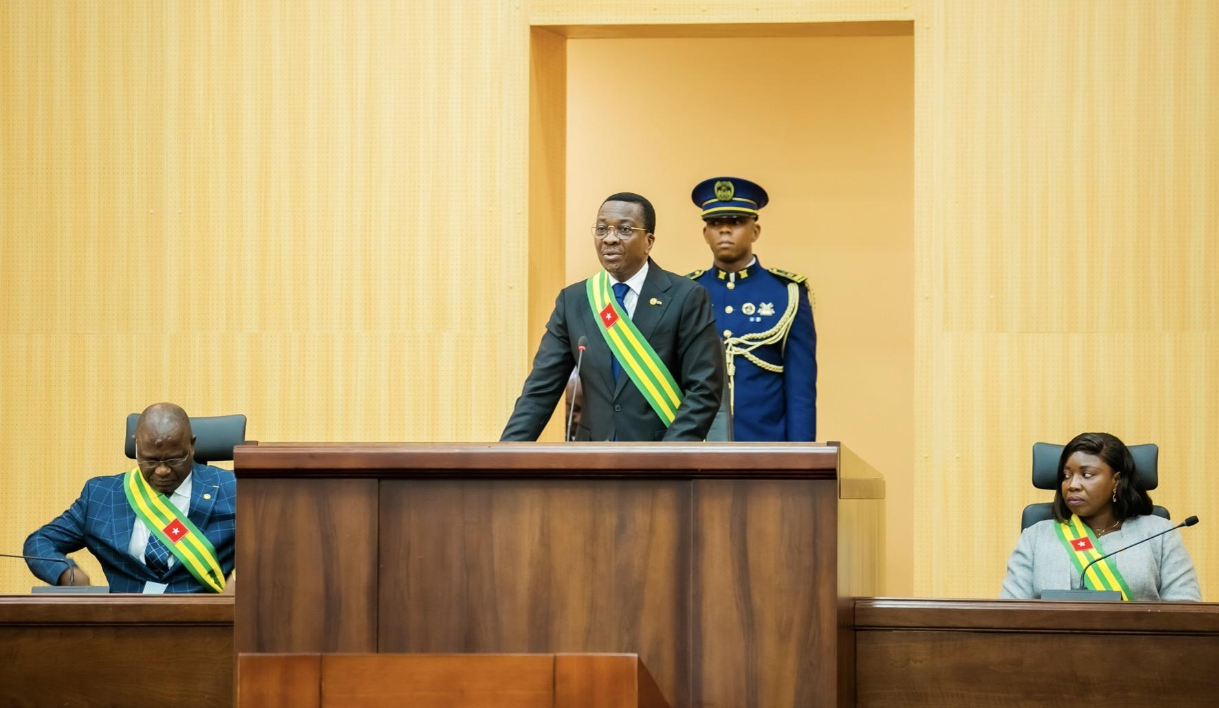
Togo’s constitutional reform under fire as ECOWAS demands accountability
The Togolese government is facing renewed scrutiny over its 2024 constitutional reform after the ECOWAS Court of Justice demanded concrete action on October 23, 2026.
In a letter sent to the Minister of Justice, the court requested details on measures taken to implement its January 29, 2026, ruling—ECW/CCJ/JUD/01/26—which found Togo in violation of the African Charter on Democracy, Elections, and Governance.
The court’s latest intervention follows a lawsuit brought by the Togolese Human Rights League (LTDH) and 12 other plaintiffs against the Togolese state. By seeking an update on compliance, the ECOWAS judicial body has reignited a debate far beyond Togo’s borders: how can constitutional changes align with democratic principles?
Constitutional reform: A shift or a power consolidation tool?
The new Constitution, adopted on March 25, 2024, replaced Togo’s presidential system with a parliamentary model. While the executive presidency lost key powers, a new role—President of the Council of Ministers—was introduced. On May 3, 2025, Faure Gnassingbé, Togo’s president since 2005 (and part of a political dynasty since 1967), assumed this position.
Critics argue that the reform did not dilute power but repackaged it. By transferring executive authority to a prime ministerial position tied to parliamentary majority, the changes allowed Gnassingbé to retain control without facing a direct presidential election.
ECOWAS ruling: A demand for democratic alignment
The January 29, 2026, ruling by the ECOWAS Court did not invalidate the 2024 Constitution but condemned it for violating democratic norms. Specifically, it cited Togo’s Article 23 of the African Charter on Democracy, which mandates fair governance and respect for institutional balances.
The court ordered Togo to ensure future constitutional reforms comply with international democratic standards. The October 2026 letter pressures Lomé to demonstrate tangible steps toward fulfilling this obligation—raising a critical question: Will the government heed the call?
Togo and the Sahel alliance: A strategic realignment
The ECOWAS inquiry takes place amid Togo’s deepening ties with the Alliance of Sahel States (AES)—Mali, Burkina Faso, and Niger—regimes born from military coups that have distanced themselves from regional democratic frameworks.
While Lomé officially frames this alliance as a strategy for regional stability, critics see shared political patterns: power centralization, weakened checks and balances, and restricted political freedoms. In January 2025, Foreign Minister Robert Dussey hinted at Togo’s potential AES membership. By April 2026, Lomé had unveiled a cooperation plan with Sahel nations focused on security and economic integration.
This alignment with military-led governments, despite Togo’s continued ECOWAS membership, highlights a delicate balancing act—one that tests the bloc’s cohesion and Togo’s own democratic commitments.
What’s next for Faure Gnassingbé’s government?
The ECOWAS Court’s October 2026 letter presents a litmus test for Gnassingbé’s administration. Will it comply with democratic obligations or double down on a model that prioritizes institutional control over transparency?
As West Africa grapples with political upheaval—military regimes, contested transitions, and democratic backsliding—Togo’s next move could redefine its regional credibility. The absence of a court-ordered constitutional reversal does not erase lingering doubts about the reform’s democratic legitimacy.
The government’s response to the ECOWAS ruling may reveal whether Lomé is willing to align its institutions with regional norms—or continue down a path that fuels controversy over power retention and governance.
