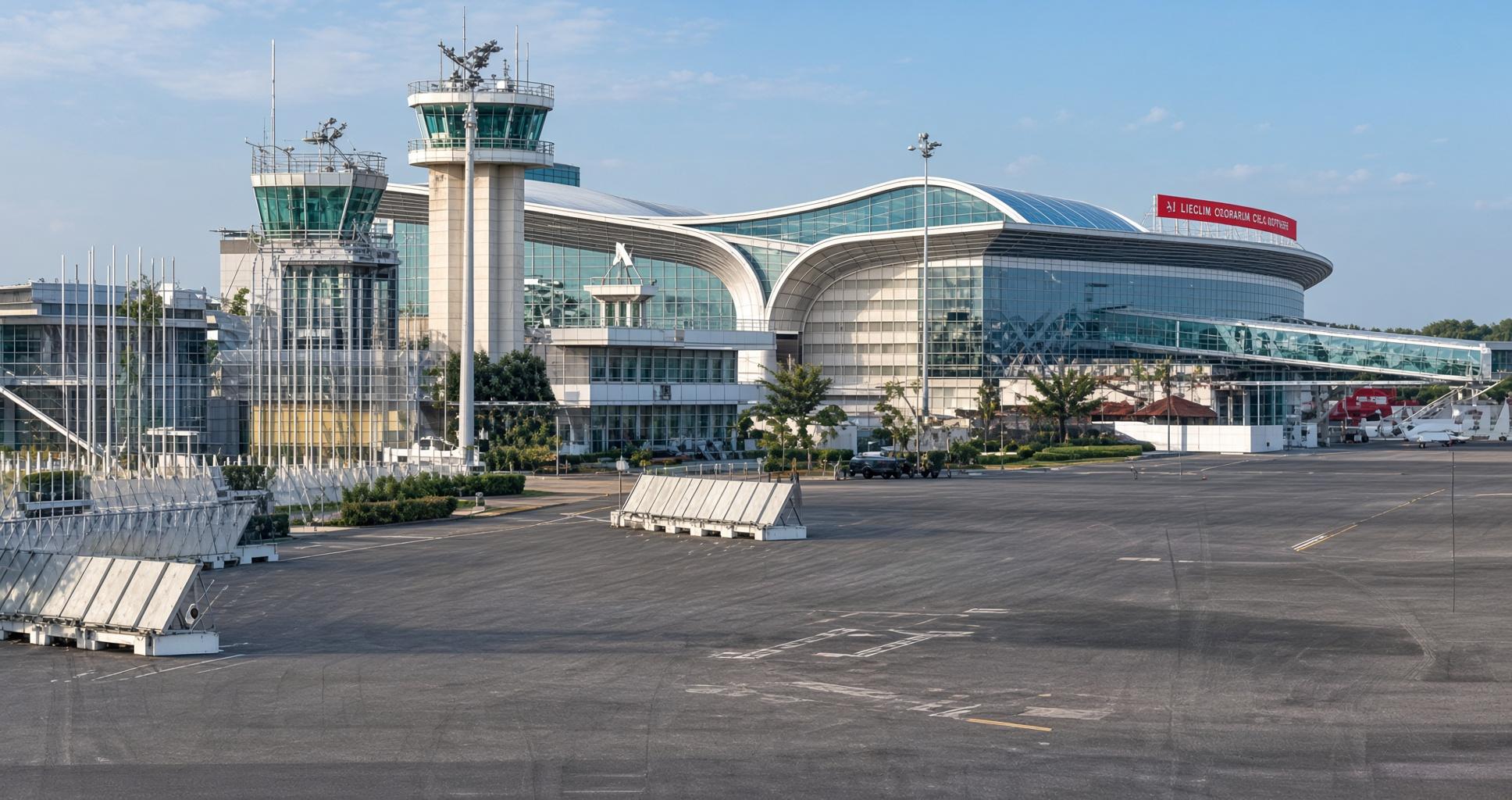
Togo hands Lomé airport commercial operations to Lagardère after sanitation crisis
The Togolese government has decided to entrust the commercial management of Lomé’s international airport to French retail giant Lagardère Travel Retail, following years of operational failures and a sanitation scandal that exposed critical infrastructure deficiencies.
From public failure to private solution
The decision marks a significant shift in airport governance after the Société aéroportuaire de Lomé-Tokoin (SALT) repeatedly failed to meet international standards. In October 2026, a sewage system malfunction in the departure hall sent shockwaves across social media, with passengers and airlines describing the incident as a “fecal overflow crisis.”
The episode shattered public trust in the airport’s ability to function safely and efficiently. Despite official attempts to downplay the incident as a “minor technical glitch,” the damage to Lomé’s reputation as a regional air transport hub was irreversible. The government acknowledged that public management alone could no longer sustain the airport’s operational integrity, paving the way for a private sector solution.
Lagardère steps in with global expertise
Lagardère Travel Retail, known for operating high-profile duty-free networks worldwide, is now positioned to take over commercial concessions at Lomé’s Gnassingbé-Eyadéma International Airport. The move aims to restore the airport’s credibility by implementing industry-leading standards in cleanliness, customer service, and retail operations.
For travelers, the overhaul promises faster check-ins, improved hygiene, and a more streamlined shopping experience. Airlines operating at the airport will benefit from optimized passenger flows and reduced bottlenecks, directly impacting service reliability and profitability. Lagardère’s track record suggests a rapid transformation could be underway, with visible improvements within months rather than years.
The cost of modernization: economic sovereignty concerns
While the operational benefits are clear, the agreement with Lagardère introduces complex economic considerations. As part of the Bolloré Group’s broader ecosystem, Lagardère’s involvement raises questions about foreign influence over Togo’s critical infrastructure. Critics argue that handing over duty-free concessions to a multinational corporation could marginalize local businesses, favoring international brands over Togolese entrepreneurs and artisans.
Government officials counter that the immediate need to restore the airport’s reputation and functionality outweighs long-term concerns. They emphasize that any commercial agreement will include provisions to protect local economic interests, ensuring that local vendors retain access to retail spaces on fair terms. The challenge will be balancing rapid modernization with inclusive economic policies that benefit Togolese stakeholders.
A pivotal moment for Lomé’s air transport future
Lomé’s international airport serves as the primary gateway to West Africa, handling over 2 million passengers annually. Its performance directly impacts Togo’s appeal as a business and tourism destination. The decision to involve Lagardère reflects a broader trend in African aviation, where governments are increasingly turning to specialized operators to address infrastructure gaps, particularly in commercial services.
The airport’s rehabilitation under private management could set a precedent for other regional airports facing similar challenges. If successful, it may encourage African nations to adopt hybrid public-private models to enhance airport efficiency without relinquishing full national control. For now, all eyes are on Lomé to see whether this high-stakes gamble will pay off.
What’s next for the airport and its passengers?
Passengers can expect to see immediate changes in airport cleanliness, retail offerings, and service efficiency within the first quarter of Lagardère’s management. The company has pledged to implement a phased modernization plan, prioritizing high-traffic areas such as check-in zones, baggage handling, and departure lounges.
For airlines, the transition period may bring temporary disruptions as new systems are integrated. However, the long-term goal is to create a more predictable and passenger-friendly environment, which could lead to increased flight routes and partnerships. The airport’s management has also hinted at expanding its cargo handling capabilities, positioning Lomé as a logistics hub for West African trade.
Ultimately, the success of this transition will depend on Lagardère’s ability to deliver measurable improvements while addressing economic sovereignty concerns. If the partnership thrives, it could redefine Lomé’s role in regional aviation and set a new standard for airport management across Africa.
