Swapping patrons is not freedom: the sovereignty mirage in Burkina Faso
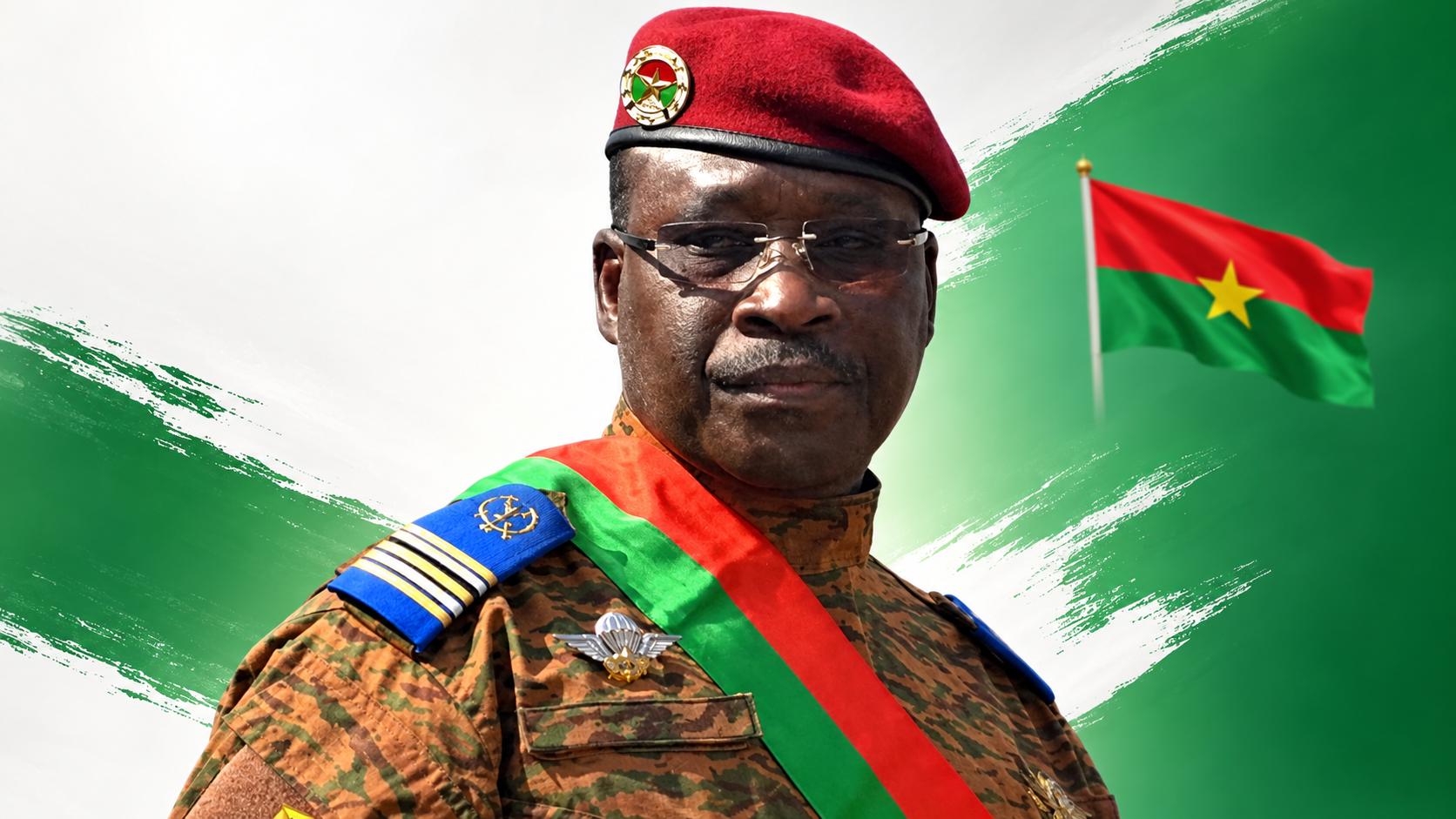
“True sovereignty is not about choosing whom you depend on — it is about giving yourself the means to depend on no one.” With that sentence, General Yacouba Isaac Zida has taken direct aim at the political narrative built around Captain Ibrahim Traoré inside the Alliance of Sahel States (AES). It is a pointed intervention, and an ironic one: Zida, a former head of Burkina Faso’s transitional executive who was struck off the army rolls for desertion and now lives in exile, is himself a product of the very military class whose endless cycles of instability and broken pledges he now denounces.
What the authorities in Ouagadougou sell as an anti-imperialist rupture, he argues, looks far more like a renegotiation of the terms of submission. Behind the populist slogans, the transitional government struggles to conceal a chronic inability to build real autonomy. Four external dependencies continue to define the country’s position.
The four chains Ouagadougou has not broken
Defence doctrine bought or borrowed
The ambition to build a national defence tool collapses the moment foreign instructors and paramilitaries are brought in as a matter of routine. Aircraft, ammunition and light armour presented as locally made turn out to be merely assembled on site — a clear sign of total subordination to logistics chains that stretch far beyond the country’s frontiers.
Food, the most humiliating of the four
Self-reliance as a slogan collides with plain facts. The carefully staged coverage of Russian wheat consignments, and the repeated appeals for international humanitarian assistance to feed displaced communities, reveal that the state cannot even guarantee the basic subsistence of its own citizens.
A budget kept afloat from outside
Unable to finance its own crisis budget from sound domestic resources, the military government falls back on financial improvisation and emergency borrowing from new geopolitical backers — mortgaging the economic future of generations to come.
Technology and strategy: the dead end
Whether the need is agricultural inputs or energy equipment, the lack of an independent industrial base leaves the country pleading abroad for what it is incapable of producing at home.
An alliance of slogans versus a state that controls little
The haste to construct a confederal army and supranational bodies within the AES is a propagandist flight forward rather than a plan.
A confederal army before a secured territory
Claiming to merge regional sovereignties while large stretches of national territory remain outside state control is strategic blindness. The absolute priority ought to be shielding civilians and consolidating basic institutions — not piling up empty shells.
Summits in place of legitimacy
An ever-growing calendar of summits and fiery declarations functions first and foremost as a political shield, prolonging unelected emergency regimes at the expense of rigorous, realistic planning.
A different hand on the same leash
Authentic sovereignty is neither displayed at military parades nor delivered with foreign grain shipments. By exchanging Paris’s patronage for Moscow’s, Captain Traoré has not set Burkina Faso free. He has simply changed its guardian.
