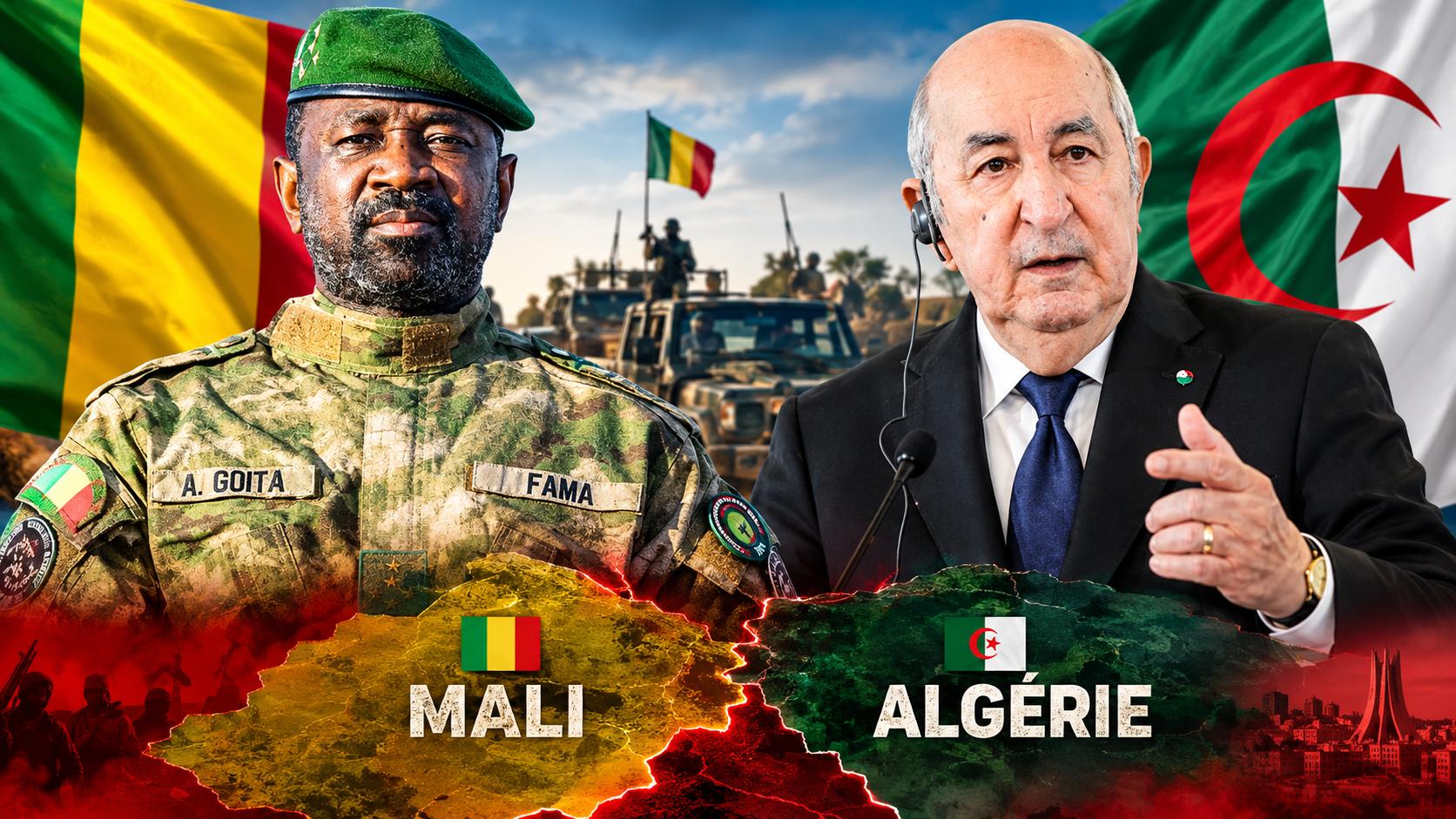
Sifi Grine in Bamako: Mali’s junta bows to Algiers after months of defiance
Bamako put on its full ceremonial face on Monday. Inside the salons of the Koulouba palace, Algeria’s prime minister, Sifi Grine, appeared side by side with the man who holds Mali’s levers of power, army corps general Assimi Goïta. The choreography was meant to look historic and soothing: two Saharan neighbours mending a broken bond. Yet behind the firm handshakes and the polished speeches, the weight of a bitter recent past — and the long shadow of the Algiers Accord — hangs over a relationship that had sunk to its lowest point in years.
A staged handshake with a long agenda
The scene was designed to reassure. On one side, the Algerian head of government; on the other, the leader of Mali’s military authorities. The stated business of the day covered tighter bilateral ties, closer security cooperation and a push to revive economic exchanges in a Sahel region under heavy strain.
For Algiers, the trip fits a clear ambition: to plant its flag again in its southern backyard. For Bamako, parading a diplomatic partner of real weight is a way out of a deepening international isolation. Observers who follow the file closely, however, are far from persuaded by the picture of unity on display.
Before the smiles came a storm of accusations
This sudden warmth follows months of an unusually fierce diplomatic row. Not long ago, Mali’s military leadership was piling sharp criticism on its northern neighbour, in a sovereigntist register that has become its signature. Algiers stood accused of meddling in Malian domestic affairs.
- Receiving figures from Mali’s political opposition and prominent religious leaders on Algerian soil
- Providing presumed backing to separatist rebel movements in the country’s north
- Carrying out what Bamako described as hostile acts hidden behind a peacemaking facade
By pointing at an outside hand, the authorities in Bamako were looking for a convenient culprit: someone to blame for a security deadlock and a steadily worsening situation in the field.
Two capitals, two very different calculations
What was celebrated on Monday looks less like a sincere and lasting alliance than a forced marriage of convenience. Mali, having cut ties sharply with its traditional Western partners and entangled in uncertain regional arrangements, is hunting for new diplomatic backing wherever it can find it.
Algiers cannot afford a permanent trouble spot
For Algeria, an unstable zone along its southern border is a direct threat: a breeding ground for terrorist networks and cross-border trafficking. Keeping a foothold in Bamako is therefore a matter of national security, not sentiment.
Bamako needs friends who will be seen
The junta’s priority is visibility. A high-ranking visitor from Algiers offers a photograph that says Mali is not alone — a useful message both at home and abroad.
So the meeting between Sifi Grine and Assimi Goïta comes down to hard pragmatism: preserve appearances and avoid the point of no return, without dissolving the deep resentments that have corroded trust between the two governments.
Why the 2015 Algiers Accord still dictates the terms
In this quiet tug of war, Algeria keeps a strategic edge that is hard to contest. Long seen as the security gatekeeper and the unavoidable mediator of the Sahel, it shaped the region’s peace agenda for years, most notably through the 2015 Algiers Accord.
When the junta unilaterally disowned that framework in early 2024, it believed it was asserting its authority and sweeping away any foreign tutelage. The ground told a different story. Dropping the Algerian negotiating table brought neither peace to northern Mali nor an end to the security threat.
By travelling to Bamako today to set its own terms and restart the conversation, Algiers is demonstrating its political centrality. Bamako may try to ignore Algerian diplomacy, but it always ends up having to reckon with it.
What this visit does not repair
The protocol brings general Assimi Goïta a welcome media breather. It solves none of the underlying problems. The military authorities continue to build their legitimacy on security rhetoric while indefinitely postponing a return to constitutional, democratic order.
Without genuine movement toward domestic political stability, and without a sincere reading of regional balances, the pledges made during this encounter risk amounting to pure communication. Beneath the diplomats’ smiles and the crisp uniforms, the Bamako–Algiers relationship remains a minefield where each side waits for the other to stumble.
