Senegal’s parliament rejects 2026 budget over ruling party split, sparking economic alarm
Budget rejection exposes deepening rift between President Faye and ruling party
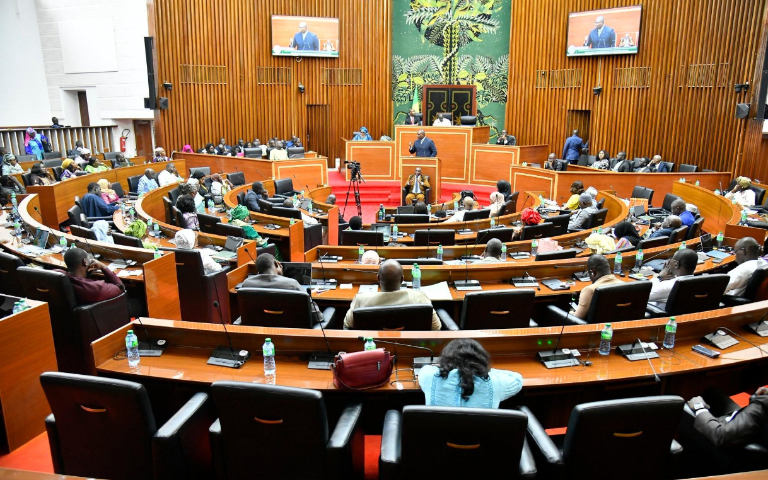
The Senegalese National Assembly has dealt a major blow to President Bassirou Diomaye Faye’s government by rejecting the 2026 revised budget, escalating a political feud with the ruling PASTEF party. The vote, held on November 3, 2026, saw 109 lawmakers support a preliminary motion to block the financial bill, while just 20 opposed it and three abstained. The outcome marks a rare public rupture between a president and his own parliamentary majority.
How the budget vote reflected a shifting power dynamic
The rejection came after député Amadou Ba, a PASTEF lawmaker, introduced a preliminary question to dismiss the bill before full debate. The move bypassed substantive discussion of the budget’s financial allocations, underscoring the depth of institutional tension. The government had sought the revised budget to adjust fiscal forecasts amid rising economic pressures, but the parliamentary majority—once unified under PASTEF—has now aligned against it.
This development follows months of growing divergence between President Faye and PASTEF’s leadership, particularly former Prime Minister Ousmane Sonko, who now presides over the National Assembly. While both men share a political history, their relationship has deteriorated since Sonko’s departure from government in May 2026. The dynamic has created an unprecedented scenario: a president governing with a parliamentary bloc that refuses to endorse his priorities unconditionally.
Key financial disputes behind the budget rejection
The proposed 2026 budget revision set revenue at 5,848.7 billion CFA francs—a sharp drop from the initial 6,188.8 billion forecast. Expenditures were projected at 7,583.9 billion CFA francs, pushing the budget deficit to 7.6% of GDP, up from the original 5.4%. PASTEF lawmakers particularly objected to reductions in investment credits (cut by 555 billion CFA francs), citing stalled development projects.
Critics also challenged the government’s financial transparency, especially regarding energy subsidies, family security grants, and priority spending. The Ministry of Economy and Finance, led by Cheikh Diba, countered that it had provided requested documentation. In a late October statement, the ministry expressed regret over the commission’s rejection, asserting it had addressed parliamentary concerns.
Economic fallout threatens IMF negotiations and public finances
The budget impasse risks derailing Senegal’s ongoing negotiations with the International Monetary Fund (IMF) for a new financial support program. The rejection complicates fiscal credibility, raises questions about debt sustainability, and could delay critical funding for state obligations—from infrastructure contracts to social programs.
Domestic credit strains may also delay payments to businesses and suppliers, amplifying financial instability. With the budget’s failure to pass, the government must now seek alternative measures to bridge the fiscal gap or face renewed economic uncertainty.
Coalition fractures: what’s next for Senegal’s political landscape?
The November 3 vote reflects a de facto institutional standoff, even if not a formal cohabitation. While President Faye retains control of the executive branch, the National Assembly—dominated by PASTEF—has emerged as an independent force. This shift raises urgent questions about governance, cohesion, and the future of PASTEF’s political project.
Government officials face mounting pressure to resolve the budget deadlock, while PASTEF lawmakers signal no retreat from their demands. With no clear resolution in sight, the crisis underscores a pivotal moment in Senegal’s political evolution. At its core, the dispute is not just about finances—it’s a test of authority between two former allies now locked in a struggle for institutional dominance.
