Senegal-Azerbaijan memorandum: the strategic logic behind a quiet diplomatic opening
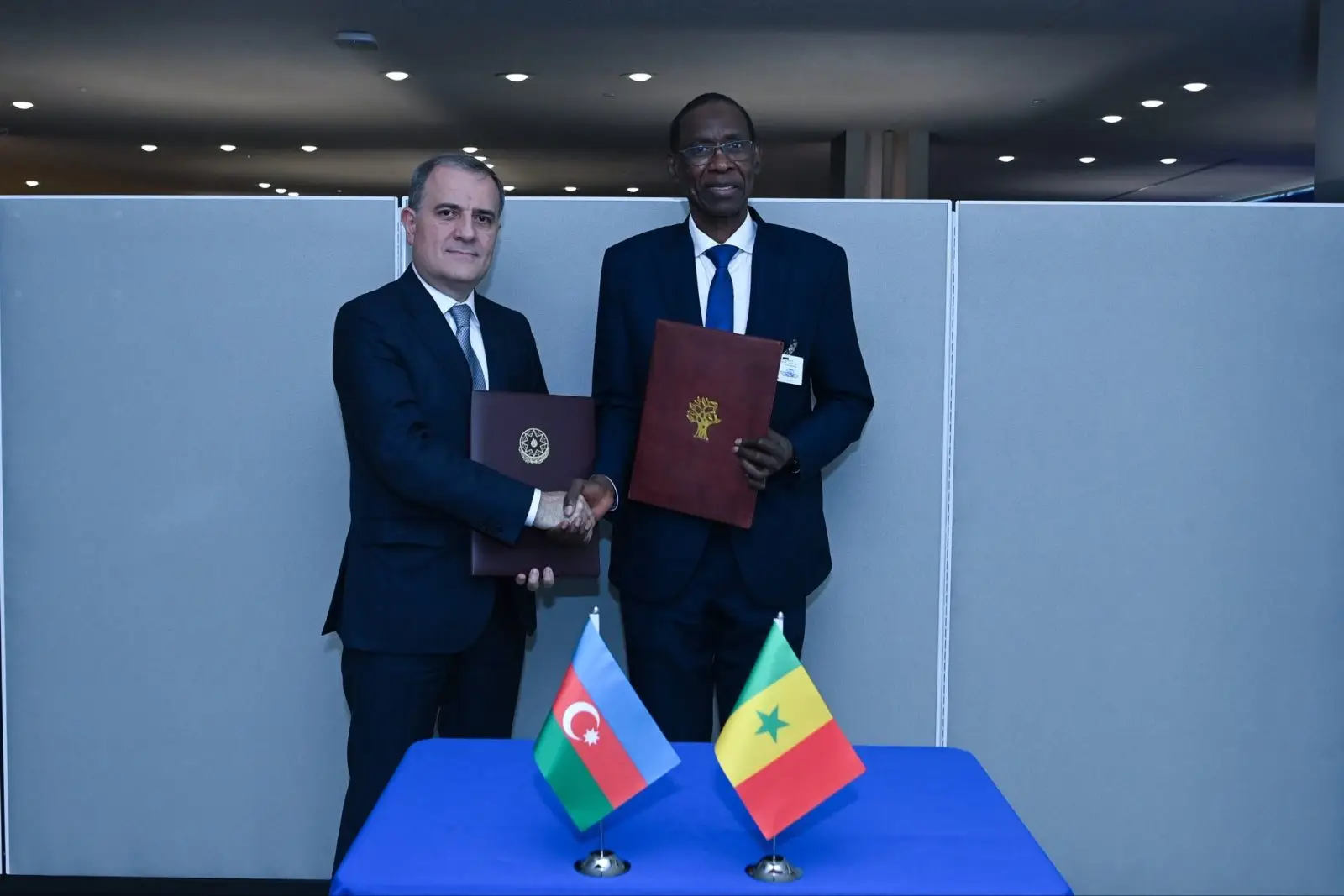
Senegal and Azerbaijan opened a fresh chapter in their bilateral relationship in New York, where the two governments signed a memorandum of understanding establishing a framework for regular political consultations. The signing was announced on Friday evening by the Ministry of African Integration, Foreign Affairs and Senegalese Abroad, and it took place on the margins of the high-level week of the 81st session of the United Nations General Assembly.
A framework designed to outlast ceremonial contacts
In standard diplomatic practice, a political consultations memorandum serves a precise purpose: it turns occasional exchanges between two administrations into a structured, recurring mechanism. Rather than relying on improvised meetings or chance encounters between officials, the two sides gain a standing channel to review the state of their cooperation and map out where their relationship could go next.
That structural dimension is the real substance of the arrangement. It does not by itself create new programmes or funding, but it gives Dakar and Baku a permanent venue for discussing shared priorities — a foundation on which more concrete cooperation can later be built.
Why the UN gathering functioned as the natural setting
The timing is not incidental. The high-level week of the UN General Assembly has long been used by delegations as a diplomatic springboard, allowing heads of state, prime ministers and foreign ministers to hold bilateral meetings and finalise texts in the margins of the official plenary sessions. Agreements that would otherwise require dedicated trips abroad can be concluded during a few days in New York.
Senegal’s foreign ministry framed the signing as evidence of a new dynamic between Dakar and Baku, presenting it as a meaningful step in the evolution of relations that had previously lacked a formal institutional anchor.
What the memorandum does not yet say
Based on the information released so far, the text does not spell out the specific areas the future political consultations will cover. Such agreements typically act as a base for later discussions that can range widely — from economic questions and technical cooperation to multilateral issues and positions taken in international forums.
Nor has the ministry disclosed the implementation timetable or how frequently the consultations will be held. Those operational details are expected to emerge in forthcoming official communications from both governments.
Reading the move against Senegal’s wider diplomatic trajectory
This signature fits a pattern that has become visible in Senegalese diplomacy in recent years: the steady multiplication of bilateral partnerships with countries in Asia and Eastern Europe. The cumulative effect is a gradual broadening of Senegal’s external network beyond its traditional partners, as Dakar seeks a more diversified set of relationships.
Seen from that angle, the memorandum with Azerbaijan is less an isolated event than a component of a longer-term strategy — one in which formal frameworks matter because they lock in dialogue that might otherwise fade once the diplomatic spotlight moves elsewhere.
Questions still awaiting answers
- Which sectors will the political consultations prioritise first?
- Who signed the memorandum on behalf of each government?
- What was the exact format of the signing ceremony?
- When will the first round of consultations take place?
The ministry’s Friday evening announcement did not identify the signatories or describe the ceremony itself, leaving those elements to be clarified in the days ahead as both capitals elaborate on how the mechanism will operate in practice.
