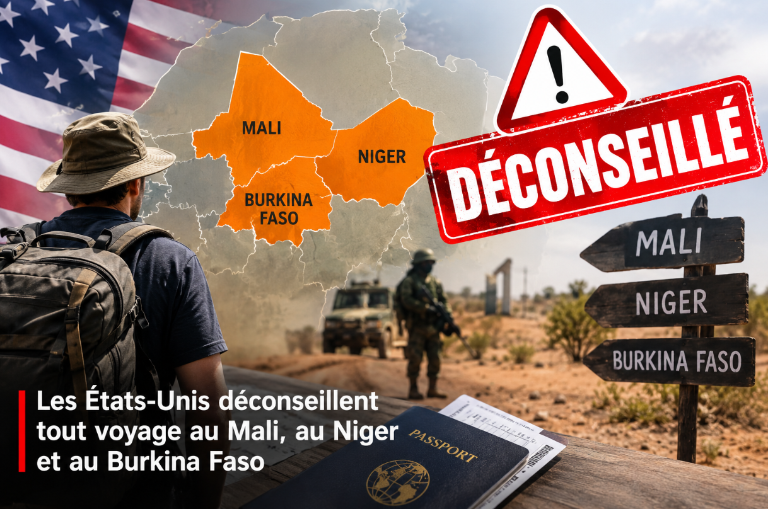
Sahel travel risks surge: us issues do not travel warning for three african nations
US issues stark ‘do not travel’ advisory for Mali, Niger, and Burkina Faso
The United States has escalated its travel warnings for destinations across the Sahel region, urging its citizens to avoid Mali, Niger, and Burkina Faso entirely. This decision reflects deepening security concerns, including terrorism, kidnapping, violent crime, and instability that continue to plague these three West African nations. The advisory, confirmed in mid-2026 updates, places all three countries at Level 4—the highest risk category on the US State Department’s travel advisory system, effectively designating them as “do not travel” zones.
The classification comes amid persistent threats from militant groups operating across the Sahel, posing grave dangers to civilians, security forces, and foreign nationals. Analysts warn that the situation has deteriorated significantly in recent months, with armed factions expanding their reach and intensifying attacks in previously calmer areas.
Mali: persistent terror threats across the country
Washington’s most recent travel advisory for Mali underscores “unavoidable risks” linked to terrorism, kidnapping, violent crime, civil unrest, and health hazards. The State Department’s June 2026 update explicitly warns against all travel within the country, including non-essential trips. Militant groups affiliated with Al-Qaeda and the Islamic State have carried out targeted attacks on military outposts, ambushed transit routes, and launched assaults on civilian communities in multiple regions.
The capital, Bamako, is not considered safe from spillover violence. US embassy personnel have been restricted from traveling outside the city due to deteriorating security conditions. Foreign travelers face heightened vulnerability due to delays in consular assistance and limited emergency support structures in high-risk zones.
Key risks in Mali:
- Terrorist attacks: Frequent assaults by armed groups across central and northern regions.
- Kidnapping threats: Foreign nationals, including aid workers and business professionals, remain high-value targets.
- Crime and instability: Rising lawlessness and weak governance facilitate violent incidents.
- Limited consular support: Delays in emergency response due to remote locations and hostile conditions.
Niger: militant dominance along borders and beyond
Niger has been classified at Level 4 since July 2026, with the US State Department warning against all travel due to terrorism, kidnapping, crime, civil unrest, and health risks. The advisory highlights particularly dangerous conditions in border regions and areas where armed factions operate freely.
Travel outside the capital, Niamey, is strongly discouraged. US government employees are prohibited from venturing beyond the city, reflecting the government’s inability to guarantee safe evacuation or emergency assistance in the event of an incident. Business travelers, journalists, and humanitarian workers face escalating threats, especially in regions bordering Mali and Burkina Faso.
Critical concerns in Niger:
- Militant presence: Armed groups control or threaten vast areas, disrupting key transit corridors.
- Kidnapping epidemic: Foreigners, including tourists and expatriates, are frequently targeted for ransom.
- Restricted movement: Roadblocks, checkpoints, and nighttime curfews complicate travel.
- Limited evacuation options: US government capacity to assist citizens outside Niamey is severely restricted.
Burkina Faso: jihadist violence reaches new highs
The May 2026 travel advisory for Burkina Faso places the country at the highest risk level, citing terrorism, kidnapping, violent crime, and health hazards. Militant organizations, particularly those linked to jihadist movements, have escalated attacks across northern and eastern regions, targeting civilians, security personnel, and foreign organizations.
The capital, Ouagadougou, is not immune to violence. While attacks occur less frequently in the city center, incidents involving hotels, restaurants, and industrial sites have raised concerns. US government employees are barred from traveling outside the capital, highlighting the government’s inability to ensure safe passage or rapid emergency response.
Major threats in Burkina Faso:
- Unpredictable attacks: Jihadist groups launch raids on villages, markets, and infrastructure with little warning.
- Targeted kidnappings: Foreigners working in mining, aid, or diplomatic sectors are at high risk.
- Weakened governance: Security forces struggle to maintain control in rural areas.
- No safe zones: Even urban areas face intermittent threats, including terrorist plots and criminal violence.
Wider implications for Africa’s travel landscape
While the Sahel crisis dominates headlines, the US travel advisory system applies equally stringent scrutiny to other African nations. Nigeria remains at Level 3 overall, though its northeastern and northwestern regions carry Level 4 warnings due to terrorism and kidnapping risks. The Central African Republic and Chad are also classified at the highest level, while Cameroon and Mozambique face targeted advisories for specific high-risk zones.
These classifications are not blanket bans. The State Department evaluates each nation—and often each region—based on current conditions. However, the escalation for Mali, Niger, and Burkina Faso sends a clear message: travel in these countries is now considered exceptionally hazardous, even by the standards of an already volatile continent.
Navigating the risks: what travelers and businesses should know
For individuals and organizations considering travel to or within the Sahel, the US State Department offers no guarantees of safety. Travelers are advised to:
- Monitor updates: Revisit official travel advisories before departure and during the trip.
- Follow local guidance: Obey curfews, avoid high-risk areas, and register with embassy services when possible.
- Plan for emergencies: Assume limited access to emergency services, evacuation options, and consular support.
- Avoid non-essential travel: Evaluate whether the purpose of the trip justifies exposure to extreme risks.
The situation remains fluid. Rapid shifts in security conditions—triggered by militant offensives, political instability, or new travel restrictions—can transform a seemingly safe route into a life-threatening journey overnight. In maintaining their “do not travel” advisories for Mali, Niger, and Burkina Faso, US authorities are not issuing a temporary warning. They are signaling a long-term reality: these nations are at war with extremist forces, and the battlefield extends into every aspect of daily life.
For those who must travel, vigilance, preparation, and a readiness to evacuate at a moment’s notice are no longer optional—they are essential.
