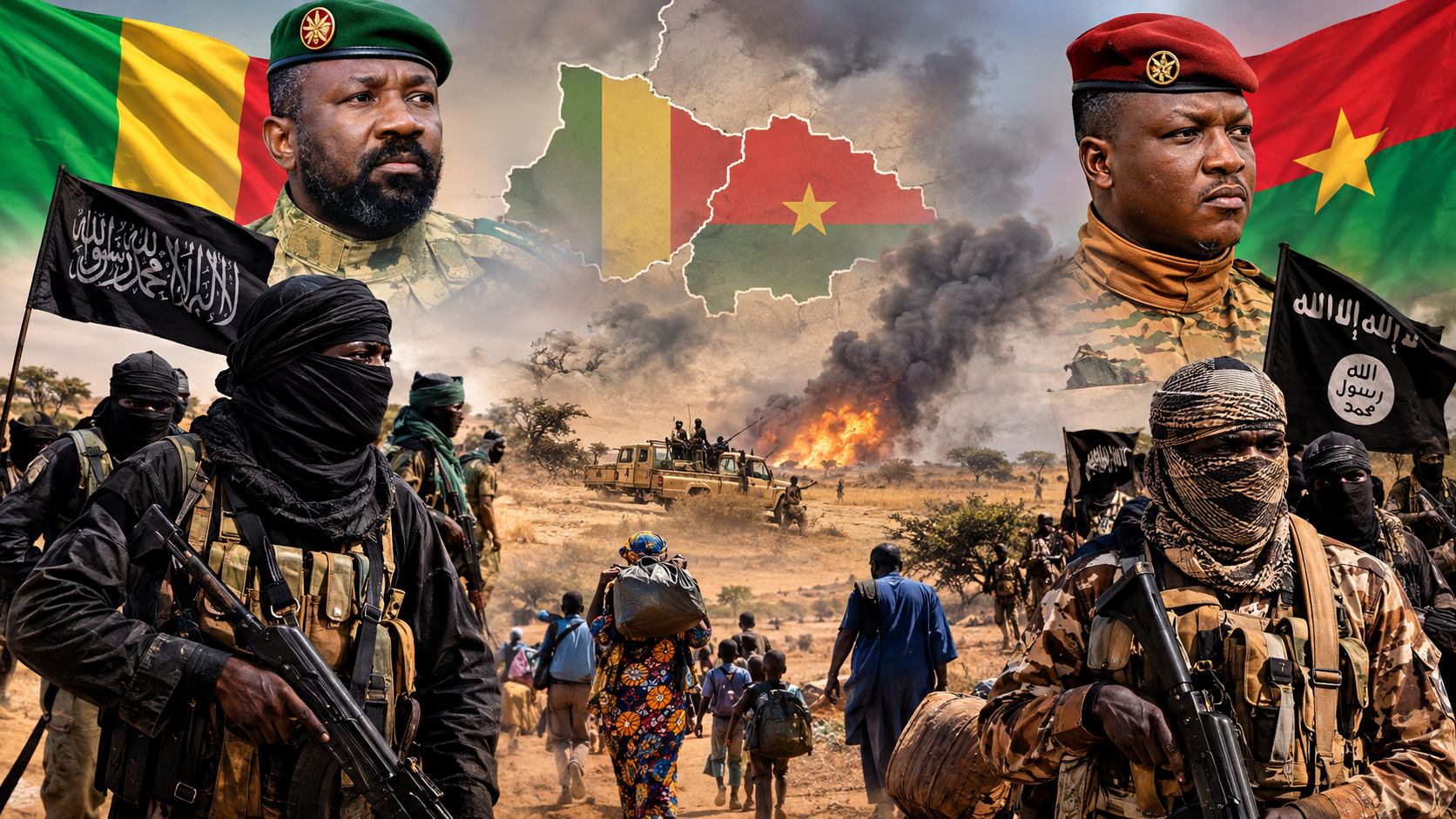
Sahel insecurity escalates as AQIM-affiliated JNIM and IS-Sahel battle for control along Mali-Burkina Faso border
The escalating frontline between Mali and Burkina Faso
The border region between Mali and Burkina Faso has become a critical flashpoint in Sahel’s ongoing security crisis. Recent clashes between fighters from the Jamaat Nusrat al-Islam wal Muslimeen (JNIM), an Al-Qaeda affiliate, and the Islamic State in the Greater Sahel (ISGS) underscore the region’s deepening instability. These armed groups are locked in a struggle not only against national forces but also in direct confrontation with one another, competing to dominate territory, trade routes, and civilian populations in a high-stakes contest for influence.
Military juntas under scrutiny as jihadist warfare intensifies
Since seizing power in Mali and Burkina Faso, military juntas have positioned security restoration as their top priority. Yet despite repeated declarations of intent, the persistent violence in border zones reveals glaring gaps in their operational effectiveness. The inability to curb jihadist movements whether through military operations, governance, or civil protection continues to undermine public confidence in these regimes.
The current wave of hostilities between JNIM and ISGS compounds an already precarious situation. These factions, once focused solely on state forces, now divert critical resources to internal rivalries. For local populations, this shift means increased exposure to violence, displacement, and economic disruption as armed groups vie for territorial control.
Failed promises of sovereignty and territorial recovery
Both Mali and Burkina Faso have framed their leadership transitions as necessary steps to reclaim sovereignty and restore state authority. However, the continued dominance of armed groups in border regions contradicts these assurances. The inability to secure these areas raises serious questions about the viability of current counterterrorism strategies and the long-term credibility of military-led governance.
In Mali, under Transitional President Assimi Goïta, and in Burkina Faso, under Captain Ibrahim Traoré, authorities have repeatedly emphasized military campaigns, public commitments, and nationalistic rhetoric as solutions to the crisis. Yet the persistence of violence suggests that rhetoric alone cannot replace the structural challenges of counterinsurgency intelligence, governance, and sustained civil protection.
Civilian toll mounts as armed factions redefine power dynamics
The human cost of this escalation is borne by communities caught in the crossfire. Displacements continue unabated, livelihoods are destroyed, and access to basic services remains precarious. As JNIM and ISGS expand their influence through violent confrontation, the civilian population faces an increasingly dire security environment with no clear path to stability.
This crisis also exposes the limitations of military-centric approaches. Sustainable security in the Sahel cannot rely solely on armed confrontation. It demands integrated strategies that include intelligence-sharing, administrative presence, community engagement, and cross-border cooperation tailored to the realities of frontier zones.
The ongoing battles between JNIM and ISGS at this critical border are not merely a tactical skirmish they represent a broader failure to establish lasting security. For both juntas and civilians, the pressing question remains: when will the rhetoric of territorial recovery translate into tangible peace for the people of the Sahel?
By Maimouna Kaboré — Journalist
