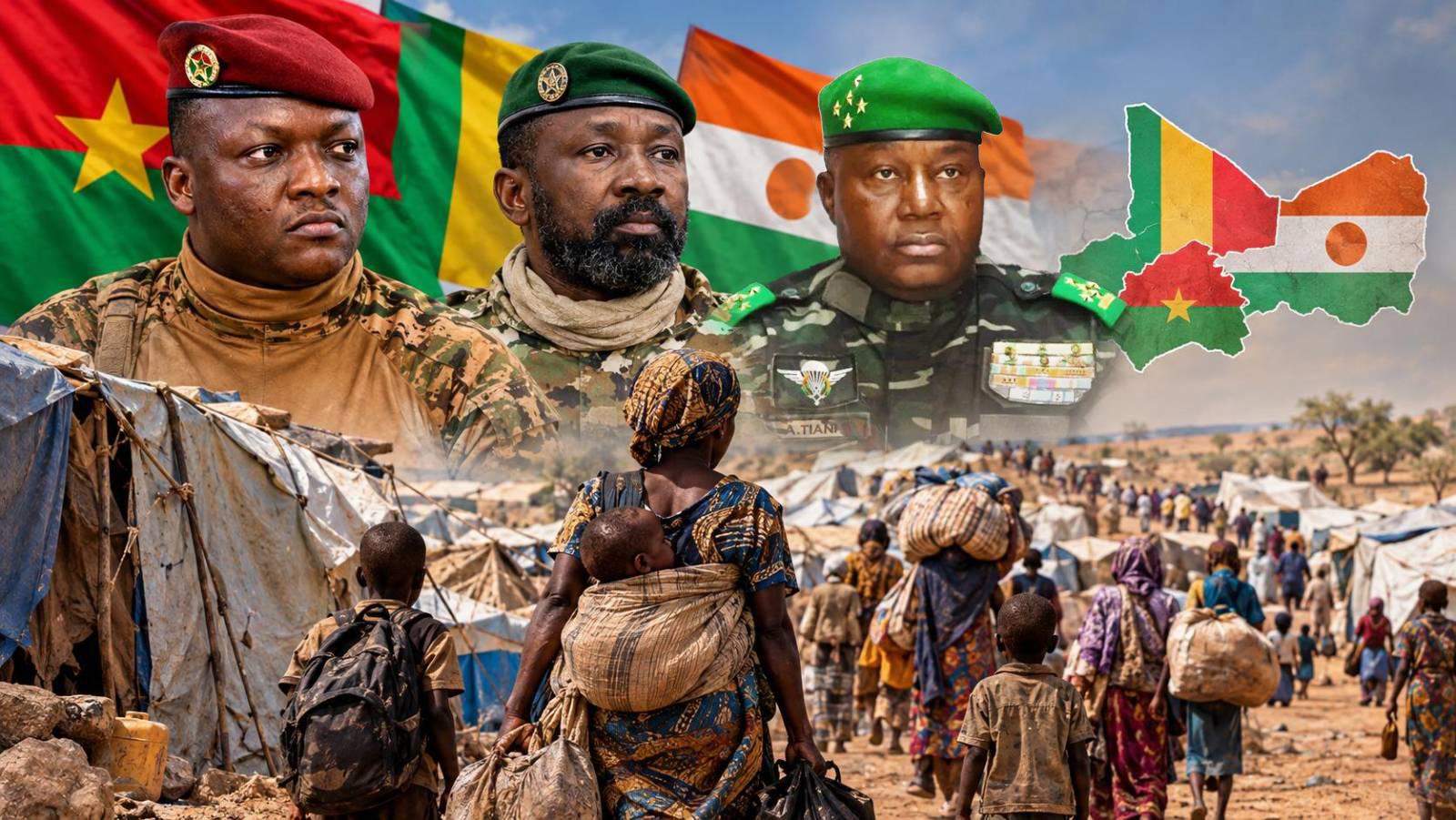
Sahel displacement nearly doubles since 2020, UNHCR data shows
The forced displacement crisis in the Sahel continues to escalate. According to the United Nations High Commissioner for Refugees (UNHCR), Burkina Faso, Mali, and Niger now host nearly 4 million displaced persons and refugees almost twice the figure recorded in 2020, the year marked by Mali’s first military coup.
Official narratives versus the reality on the ground
These figures expose a troubling reality for the three member states of the Alliance of Sahel States (AES). Beyond official speeches, political announcements, and communication campaigns, millions of people remain exposed to insecurity, precariousness, and the loss of their livelihoods. For these populations, the consequences of the crisis are not measured solely by leaders’ statements, but above all by their ability to find housing, access essential services, and live in safety.
Military promises and the humanitarian question
Since the changes in power in these countries, military authorities have repeatedly pledged sovereignty, territorial reconquest, and the restoration of security. Yet the evolution of displacement figures raises a fundamental question: how can such a deterioration in the humanitarian crisis be explained when security ranks among the primary justifications cited by military regimes for governing?
This question warrants particular attention because displaced populations are often forced to abandon their land, economic activities, and communities to escape violence. Behind every figure are uprooted families, children deprived of a stable living environment, and individuals struggling to rebuild their lives.
Priorities under scrutiny
The situation also invites scrutiny of the AES governments’ priorities. While official communications regularly highlight military operations, political initiatives, and achievements presented as symbols of sovereignty, the results on the ground must also be assessed against the living conditions of the populations.
When political propaganda takes precedence over factual examination, it risks diverting attention from everyday hardships. No communication campaign alone can erase the consequences of forced displacement or replace concrete responses to the needs of those affected.
The true test of sovereignty
The real challenge, therefore, is not merely to proclaim sovereignty but to demonstrate that it effectively improves security and citizens’ living conditions. As long as millions remain displaced or refugees, the record of security and humanitarian policies in Burkina Faso, Mali, and Niger must continue to be questioned.
Journalistic note: the figure of nearly 4 million people and the comparison with 2020 are attributed to UNHCR, as indicated in the information provided. Before publication, the report date, reference period, and population categories counted should be verified to distinguish internally displaced persons from refugees and avoid any confusion in interpreting the figures.
By Maimouna Kaboré — Journalist
