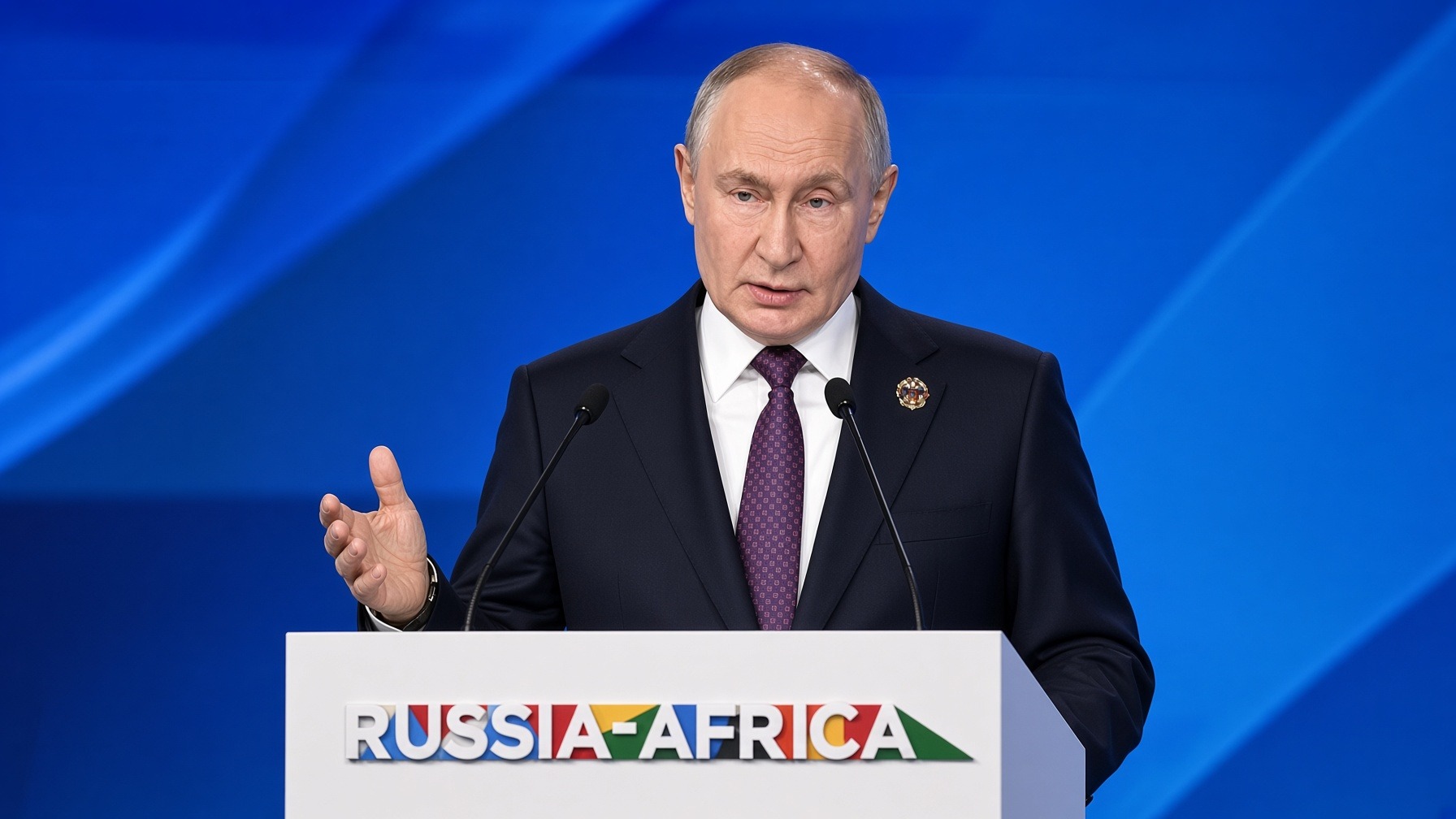
Russia’s African strategy: a gap between geopolitical ambition and economic reality
Moscow’s African push relies more on military deals than economic muscle
The Kremlin has spent years expanding its diplomatic and military footprint across Africa, striking defense agreements, deploying private security firms, and securing mining concessions. Yet despite the bold rhetoric of a resurgent Russia on the continent, a glaring mismatch persists between Moscow’s geopolitical ambitions and its actual economic capacity to deliver meaningful development.
This disconnect forces African nations into partnerships that prioritize short-term resource extraction over long-term economic growth, leaving local populations with few benefits despite the continent’s vast natural wealth.
Why Russia’s economic leverage falls short of its African ambitions
The disparity between Russia’s global economic standing and its ambitions in Africa becomes clear when examining key financial indicators. With a nominal GDP of roughly $2 to $2.5 trillion—comparable to mid-sized European economies like Italy or Canada—Russia’s economic footprint remains dwarfed by global giants such as the United States ($28 trillion) and China ($18 trillion).
Its share of global GDP hovers around 2%, a figure that severely restricts Moscow’s ability to fund large-scale development aid or offer concessional loans. Instead, Russia’s influence in Africa is built on targeted military and political engagements, often in countries facing instability or international isolation.
Where Russia’s trade with Africa falls short
The volume of trade between Russia and Africa tells a stark story. Annual exchanges total around $27 billion—a fraction of China’s $280 billion or the European Union’s $300 billion in African trade. Russia accounts for less than 3% of Africa’s total external commerce.
Exports from Russia to Africa consist largely of raw materials and basic goods:
- Wheat: 14 to 20 million tons annually
- Mineral fertilizers: Up to 1.5 million tons per year
- Refined petroleum products: 10 to 12 million tons of fuel and diesel shipped each year
Meanwhile, foreign direct investment (FDI) from Russia represents less than 1% of total incoming FDI in Africa. Unlike partners that fund major infrastructure projects, Russia’s financial flows are concentrated on securing mining rights and security contracts—offering little in the way of technology transfer or industrial development.
How resource extraction undermines African development
In the absence of substantial industrial investment, many African countries turn to Russia for military support and political backing in exchange for access to strategic minerals, oil, and gas. This model deepens dependency rather than fostering self-sustaining growth.
Key consequences include:
- Intensive mining of precious resources, often managed through opaque networks that bypass local oversight and public accountability
- Economic leakage, where revenues from natural resources bypass national budgets, reducing funds available for public services like healthcare and education
- Limited local processing, as raw materials are exported with minimal value addition, denying African nations the chance to build competitive industries
The result is a paradox: countries rich in natural wealth yet plagued by widespread poverty, where elites and foreign intermediaries profit while ordinary citizens see little change.
Can Africa break free from this unequal dynamic?
As awareness grows, calls for fairer partnerships are intensifying across the continent. African economists and civil society leaders argue that diversifying alliances should not mean trading one form of dependence for another. Sustainable progress, they say, demands greater transparency, local processing of raw materials, and agreements that prioritize shared development over extractive rent-seeking.
The path forward requires stronger institutions, enforceable regulations, and a commitment to building African-owned industries—not merely exporting raw wealth to foreign powers.
Conclusion: A partnership that favors Moscow more than Africa
Russia’s engagement in Africa is built on a foundation of limited economic capacity and a reliance on military and extractive deals. While these arrangements may serve short-term geopolitical goals, they offer little to address Africa’s structural challenges.
For lasting progress, African nations must demand partnerships that deliver real economic transformation—not just rhetoric and resource flows that benefit external actors more than local populations.
