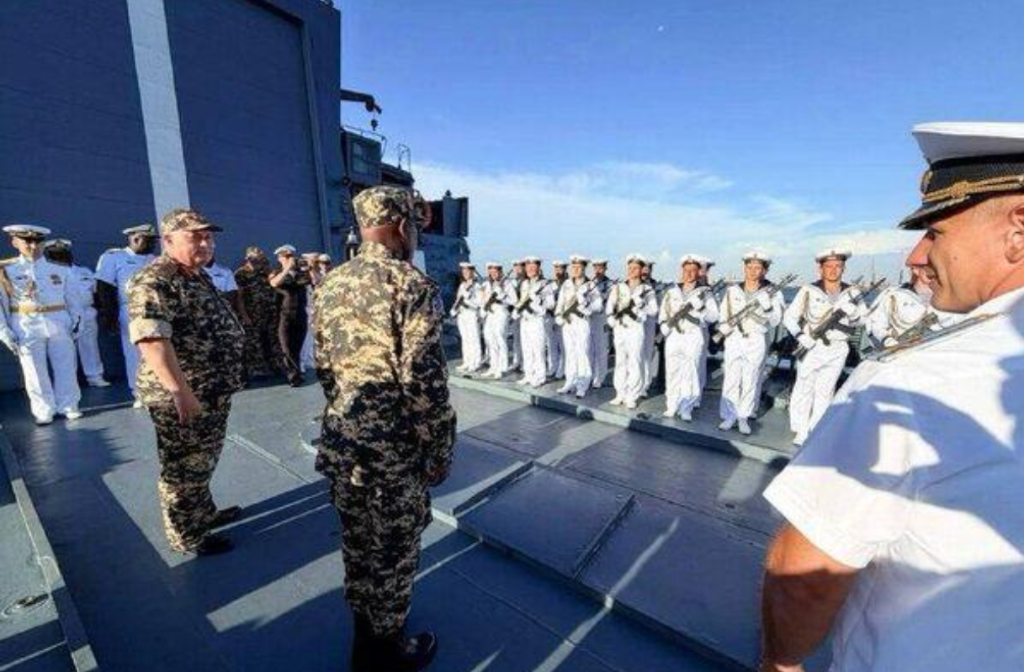
Russian naval ship Perekop docks in Walvis Bay amid expanding African footprint
The Russian naval training vessel Perekop arrived at the Namibian port of Walvis Bay on October 20, 2026, after a seven-day transit covering over 1,800 nautical miles. Officially, the vessel’s mission involves training future naval officers, a standard practice for maritime training ships. Yet, in an era of rising geopolitical tensions, even routine naval visits carry implications beyond their stated purpose.
Walvis Bay as a strategic maritime hub
Walvis Bay, Namibia’s premier Atlantic port, holds significant value for both regional trade and global naval operations. Its deep-water facilities and strategic location make it a key logistical stop for vessels transiting the South Atlantic. For Russia, maintaining ties with local port authorities and naval institutions could facilitate future visits and enhance operational sustainability during long-range deployments.
The Swedish Defence Research Agency (FOI) noted in its October 2026 assessment of Russian military engagement in Africa that port calls and access agreements serve as tools for maritime presence in regions where Russia lacks permanent naval bases. While the Perekop’s visit may appear routine, it aligns with Moscow’s broader strategy of expanding naval influence through selective engagement.
Diplomatic and military exchanges follow the arrival
Following its docking, the Perekop’s crew engaged with Namibian naval officials and representatives from the Russian embassy. These interactions, documented through official channels, underscore the diplomatic dimension of the visit. Such exchanges strengthen military-to-military ties, familiarize counterparts with operational practices, and lay groundwork for potential future cooperation.
While no formal agreements were announced, the meetings signal Russia’s intent to deepen defense partnerships in Southern Africa. For Namibia, diversifying defense ties could offer strategic advantages, particularly in an era of shifting global alliances.
The unspoken geopolitical context
The timing of the Perekop’s arrival coincides with heightened global tensions, particularly between Russia and Western powers. Naval visits in distant regions often serve as symbolic reminders of Moscow’s ability to project power beyond its traditional maritime domains. Such demonstrations reinforce Russia’s status as a global actor, even amid economic and military constraints.
The FOI analysis highlights that Russian naval activities in Africa—including port calls, joint exercises, and access agreements—fulfill both diplomatic and operational roles. While the Perekop’s mission is framed as training, its presence in Walvis Bay may also serve as a calculated geopolitical signal to observers in the West.
What the future holds: monitoring for deeper implications
As of now, there is no evidence to suggest that the Perekop’s visit heralds a permanent Russian naval presence in Namibia. A single port call, even a well-documented one, does not equate to a binding agreement or a long-term strategic foothold. Key indicators to watch in the coming months include:
- Frequency of future Russian naval visits to Walvis Bay.
- Negotiations on port access or logistical support agreements.
- Planned bilateral naval exercises or training programs.
- Deployment of operational vessels (as opposed to training ships) to the region.
The true significance of this visit will only become clear with time. If follow-up actions materialize—such as regular port calls by Russian warships or new defense cooperation frameworks—the Perekop’s stopover may mark the beginning of a more ambitious strategy. Until then, the event remains a notable but largely symbolic chapter in Russia’s evolving African naval strategy.
